Sourdough Pasta
This easy sourdough pasta recipe uses just 4 simple ingredients to make fresh homemade pasta and is a delicious way to use sourdough discard.
Servings: 4 servings
Calories: 347kcal
Equipment
- Pasta maker or rolling pin or KitchenAid pasta attachment
- Baking sheet rimmed
- Parchment paper optional
- Pasta drying rack optional
Ingredients
- 2 1/4 cups all-purpose flour 300 g, may need up to 2 1/2 cups
- 1/2 cup sourdough discard 130 g
- 2 large eggs 108 g
- 1 Tablespoon olive oil 10 g
Instructions
- In a large bowl, make a mountain out of your flour. Create a crater in the center of the flour with your hands or the back of a measuring cup.
- Into the crater, add the starter, eggs, and olive oil.
- Use a fork to mix the eggs and starter, slowly incorporating the flour, little by little, into the mixture.
- Once the mixture has formed a dough, remove it from the bowl to a clean surface and knead it for about 15 minutes by hand until it's soft and supple. (You can also do this in a stand mixer using the dough hook attachment, and mixing for about 10 minutes on low/medium.) The dough should be supple and soft but not sticky or tacky. If it’s still slightly tacky, dust it with a little more flour and knead a few more times.
- Wrap the dough in plastic wrap or cover it with a damp tea towel to prevent it from drying out, and let it rest in the refrigerator for about 20 minutes.
- Remove pasta dough from the refrigerator and divide into 4 equal pieces. Use a pasta machine or rolling pin to roll each piece, one at a time, to about 1/8 of an inch thick (around the thickness of a credit card). While working with one piece of dough, keep the others covered with plastic wrap to prevent the dough from drying out.If you have a KitchenAid pasta attachment, starting at 1, roll the dough through the pasta roller 2 times. Fold the pasta sheet into thirds and run it through 2 more times before adjusting to 2 and running the dough through twice more. Keep running the pasta sheet through the roller twice on each number setting until you get to 6.
- Sprinkle the sheets with a light dusting of additional flour when needed.
- Fold the dough sheets over themselves in about 3-4 inch sections and use a sharp knife or a pizza cutter to slice the pasta sheets into strips about 1/4 of an inch thick.
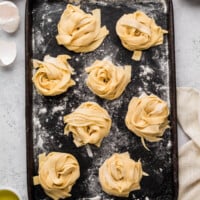
- Dust a baking sheet with flour and unroll the pasta pieces, wrapping them around themselves to make little nests. Or, you can lay the pasta on a towel or hang from a pasta drying rack to dry. Allow pasta to dry for at least 30 minutes.
To Cook Sourdough Pasta
- When you’re ready to cook the fresh pasta, boil 6 cups of salted water (how much salt you add depends on personal preference). Drop the pasta into the water and cook for 2-5 minutes depending on thickness of the pasta.
Notes
Here are my best pasta-making tips.
- Make sure you let the pasta rest. All you need is 20 minutes in the fridge, and the pasta will be much easier to roll out. This allows the flour to absorb the moisture while also letting the gluten relax, so the dough is easier to roll out into long, thin pasta sheets.
- Keep extra flour nearby for dusting so the pasta does not stick as you work. You can even sprinkle a bit of flour directly into the rollers of the pasta crank.
- Depending on how thick or runny your sourdough starter is, you may need to add some extra flour. The dough will start out feeling a bit dry, but as you knead it, the flour will start to absorb the liquid, and the ball of dough will be smooth and elastic. If the dough feels too sticky, add flour a little at a time until it is smooth and no longer sticks to your fingers.
- If your pasta sheets end up so long that they’re hard to manage, don’t be afraid to cut them in half so they aren’t as long.
Nutrition
Serving: 1serving | Calories: 347kcal | Carbohydrates: 60g | Protein: 11g | Fat: 6g | Saturated Fat: 1g | Polyunsaturated Fat: 1g | Monounsaturated Fat: 3g | Trans Fat: 0.01g | Cholesterol: 82mg | Sodium: 33mg | Potassium: 106mg | Fiber: 2g | Sugar: 0.3g | Vitamin A: 120IU | Calcium: 23mg | Iron: 4mg
