This post may contain affiliate links. Please read our disclosure policy.
This sourdough pasta recipe is a simple way to turn sourdough discard into fresh homemade pasta with just four basic ingredients. The dough is made with flour, sourdough discard, eggs, and olive oil, then rolled and cut into noodles that cook in just a few minutes.
You don’t need to plan far ahead for this recipe, either. The dough only needs about 20 minutes of resting time in the refrigerator before it’s ready to roll out. You can use a pasta machine to make the process easier, but a rolling pin and sharp knife work too.
If you’re looking for more ways to put extra sourdough discard to use, try Sourdough Everything Bagel Crackers, Sourdough Hawaiian Rolls, and Sourdough Crepes. They’re all great recipes to have on hand when there’s discard waiting in the fridge.
Why You’ll Love This Sourdough Pasta Recipe
Once you make your own fresh sourdough pasta, you’ll never want to go back to store-bought pasta. Here’s why I think your family will love this recipe for homemade sourdough pasta as much as mine:
- It only takes 4 simple ingredients that you probably already have on hand, so there’s no need to make a special trip to the store.
- It is a fun hands-on activity to do with the kids on a weekend. Kneading dough is great for strengthening the muscles in the hands (fantastic for pre-writing skills for younger kids). They can each work their own piece of dough and (with help from a grown-up) feed their dough through the pasta crank.
- Fresh pasta cooks in just a few minutes, so dinner comes together fast. When you’re ready to eat, you only need a few minutes in boiling water before you have a meal on the table.
- It is a great way to use up sourdough discard. I’ve used this recipe with room temperature freshly fed sourdough starter and starter that’s been neglected and left in the back of the fridge for weeks. They both work great.
Ingredients
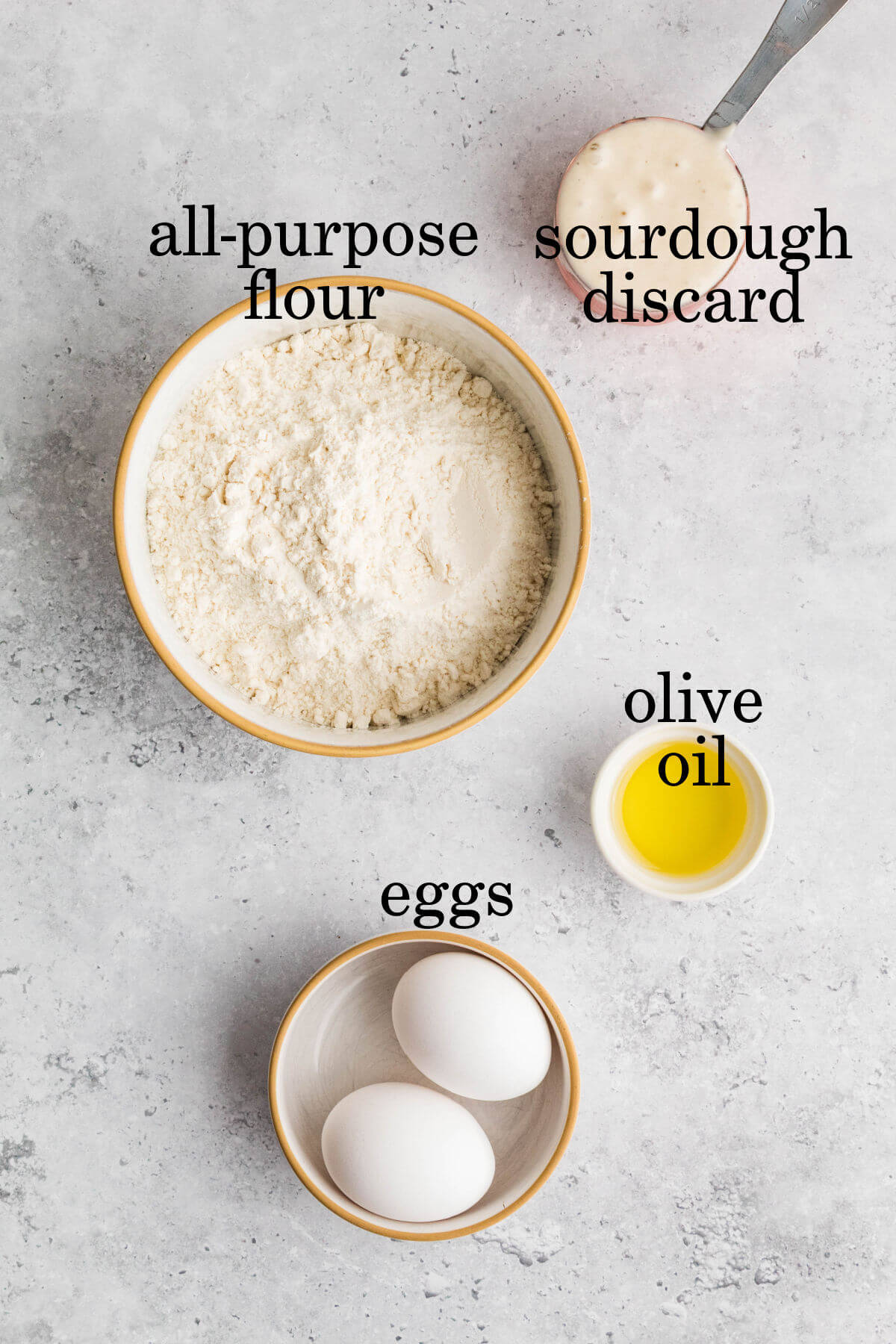
Find the full list of ingredients, amounts, and instructions in the recipe card at the bottom of this post.
- All-purpose flour – You’ll need 2¼–2½ cups of all-purpose flour. Depending on how thick or runny your sourdough starter is, you may need to add a little extra flour.
- Sourdough discard – This recipe works with freshly fed active sourdough starter as well as discard that has been stored in the refrigerator.
- Eggs – Two large eggs add moisture and richness to the pasta dough.
- Olive oil – A tablespoon of olive oil is the final ingredient in this simple four-ingredient pasta dough.
How to Make Sourdough Pasta
Here are the step-by-step instructions for making this Sourdough Pasta:
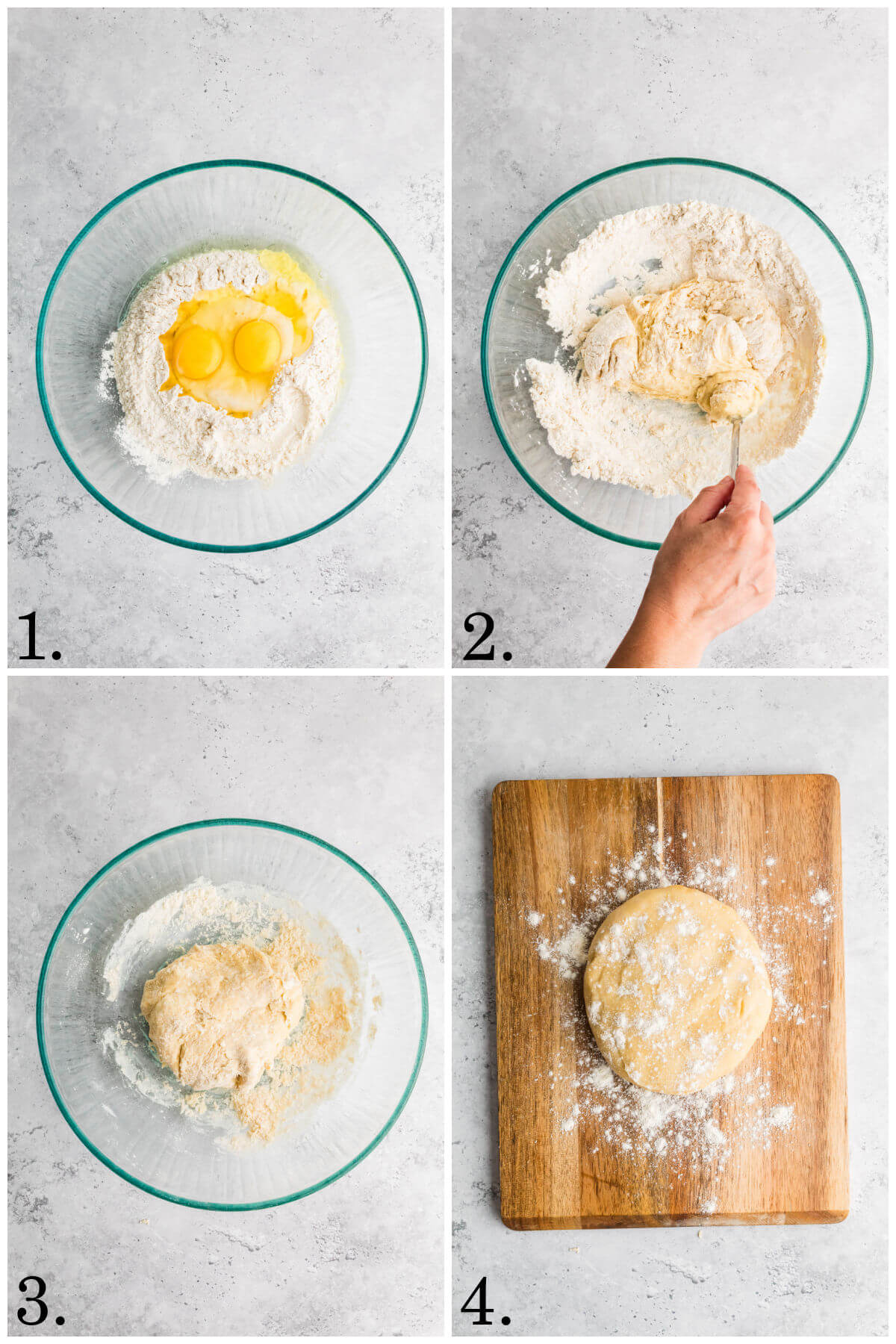
Step 1. In a large bowl, make a mountain out of your flour. Create a crater in the center of the flour with your hands or the back of a measuring cup. Into the crater, add the starter, eggs, and olive oil.
Step 2. Use a fork to mix the eggs and starter, slowly incorporating the flour, little by little, into the mixture.
Step 3. Once the mixture has formed a sourdough pasta dough, remove it from the bowl to a clean surface and knead it for about 15 minutes by hand until it’s soft and supple. You can also do this in a stand mixer using the dough hook attachment.
Step 4. The dough should be supple and soft but not sticky or tacky. If it’s still slightly tacky, dust it with a little more flour and knead a few more times.
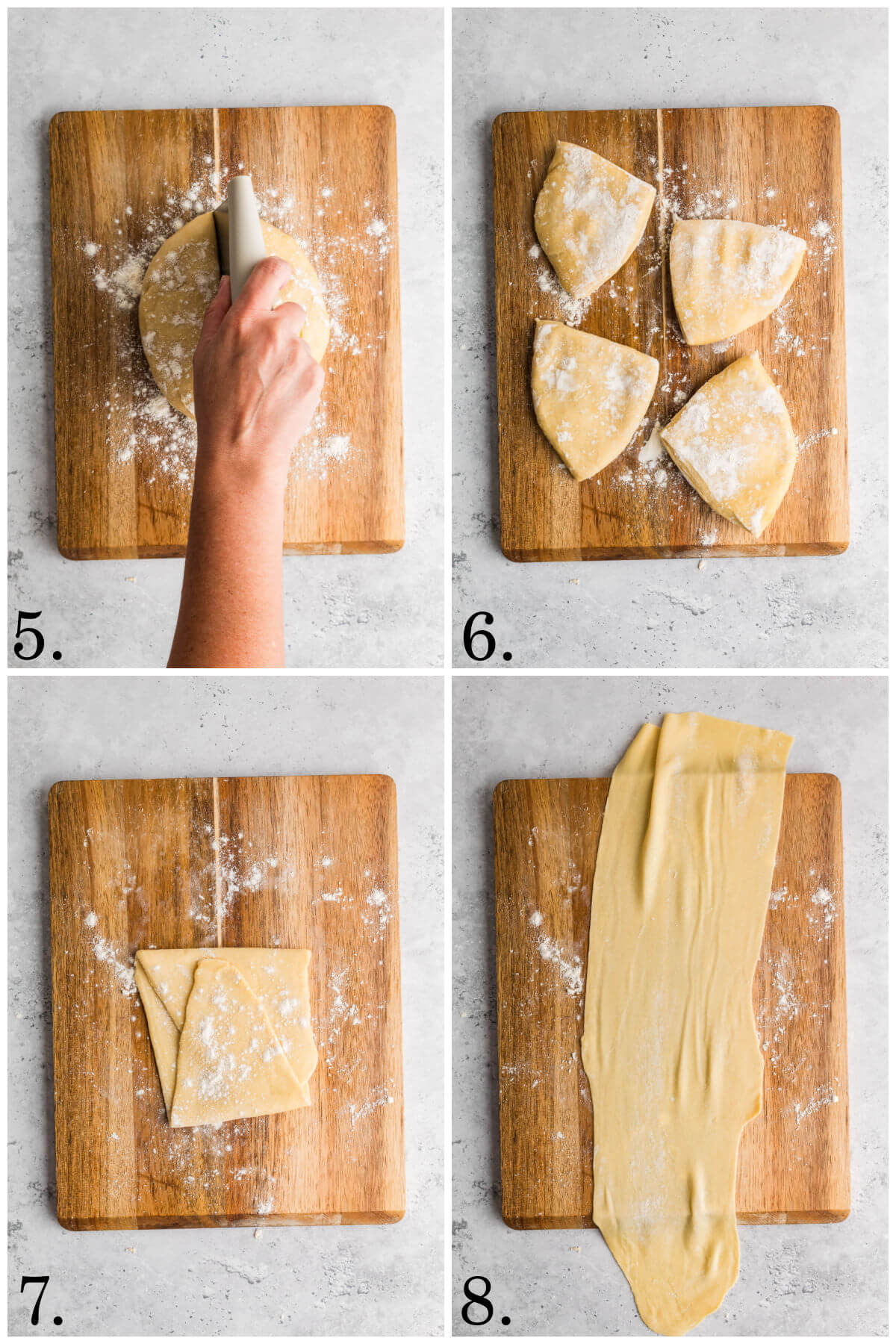
Step 5. Wrap the dough ball in plastic wrap or cover it with a damp tea towel to prevent it from drying out, and let it rest in the refrigerator for about 20 minutes. When you’re ready, divide the pasta dough into 4 equal pieces
Step 6. When you’re ready, divide the pasta dough into 4 equal pieces and use a pasta roller or rolling pin to roll each piece, one at a time, to about ⅛ of an inch thick (around the thickness of a credit card).
Step 7. I use my KitchenAid pasta attachment, starting at 1, and roll the dough through the pasta crank 2 times. Fold the pasta sheet into thirds and run it through 2 more times before adjusting to 2 and running the dough twice more. Keep running the pasta sheet through the crank twice on each number setting until you get to 6. You can also use a manual pasta maker.
Step 8. Sprinkle the sheets with a light dusting of additional flour when needed.
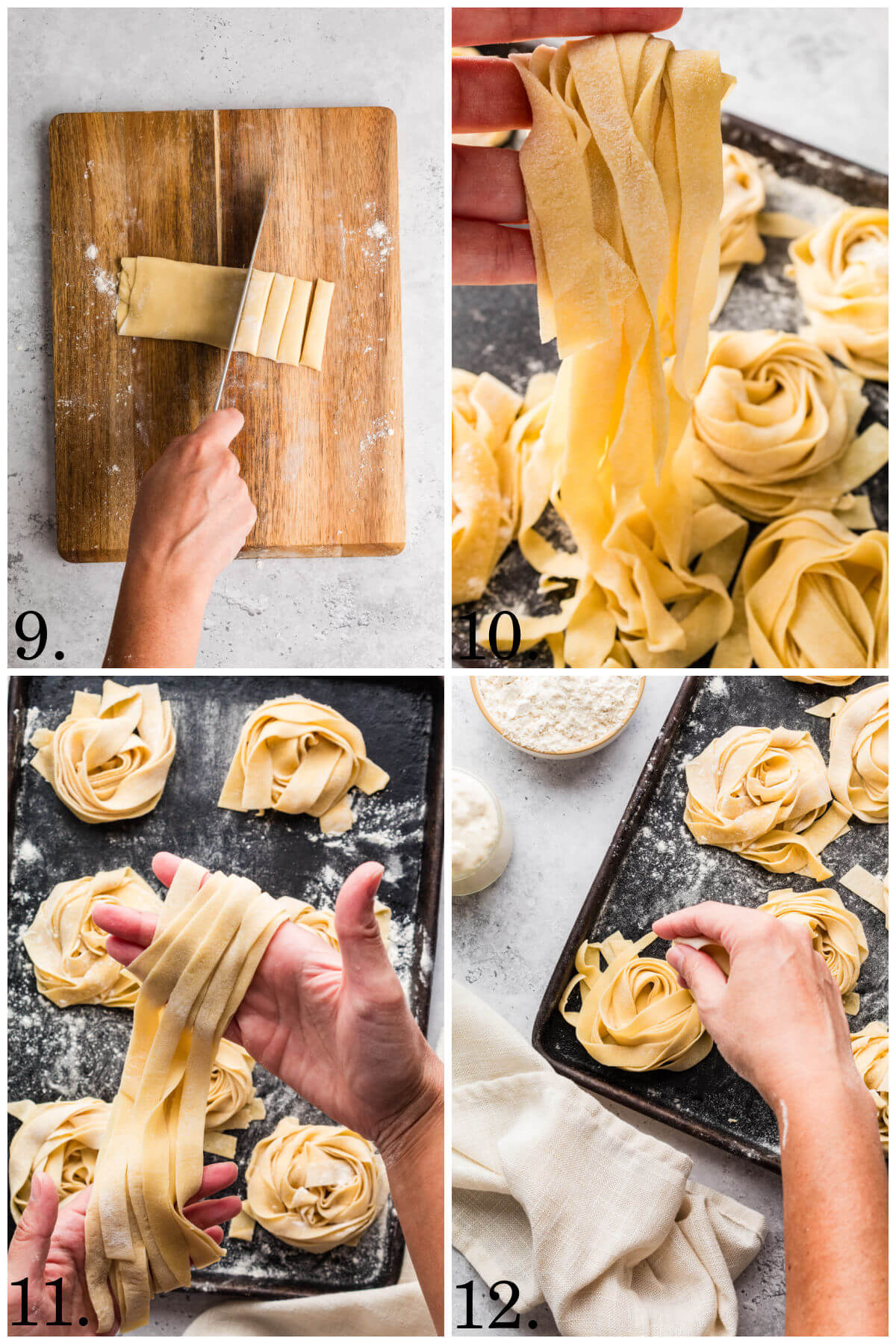
Step 9. Fold the sheets over themselves in about 3–4 inch sections and use a sharp knife or a pizza cutter to slice the pasta sheets into strips about ¼ of an inch thick.
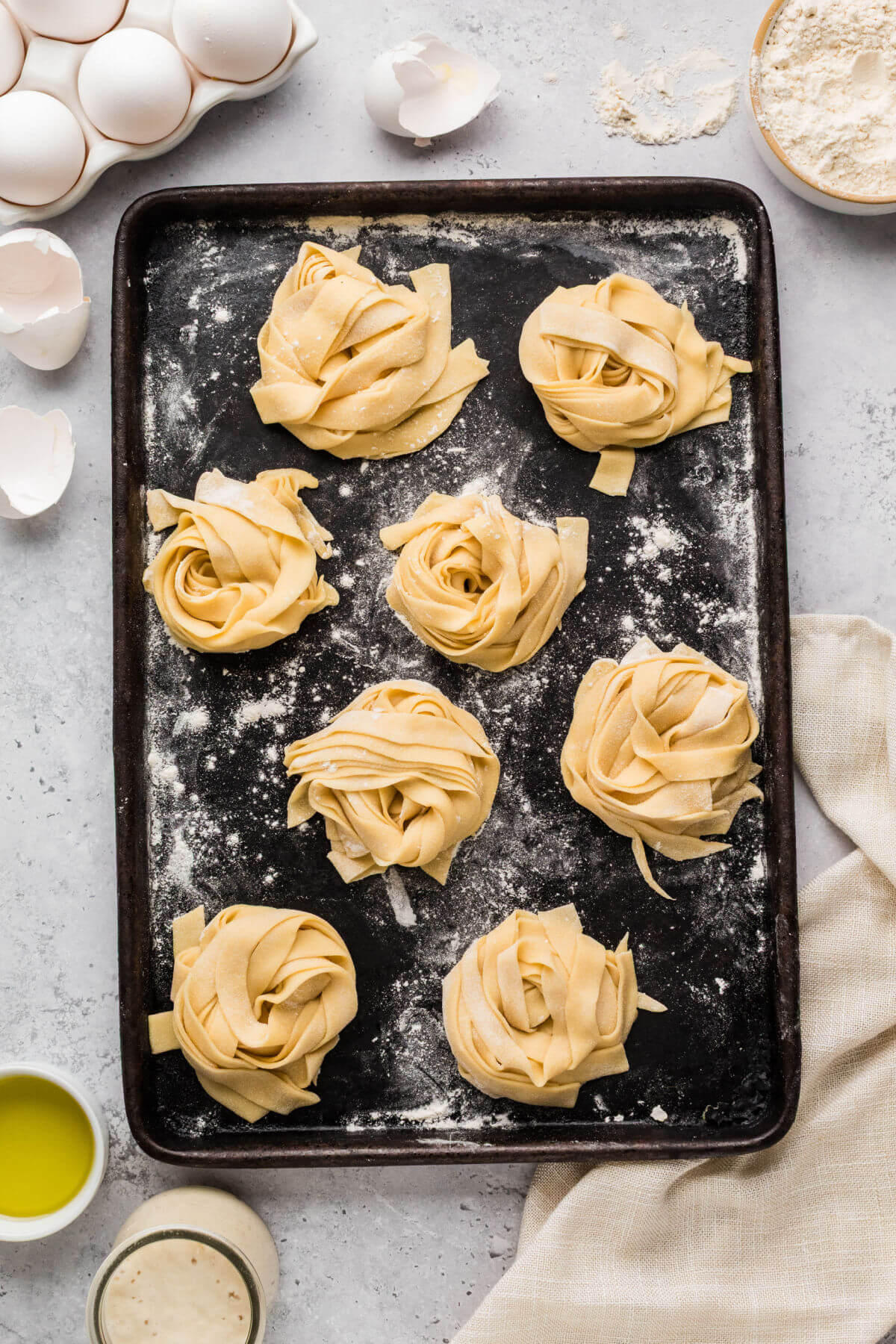
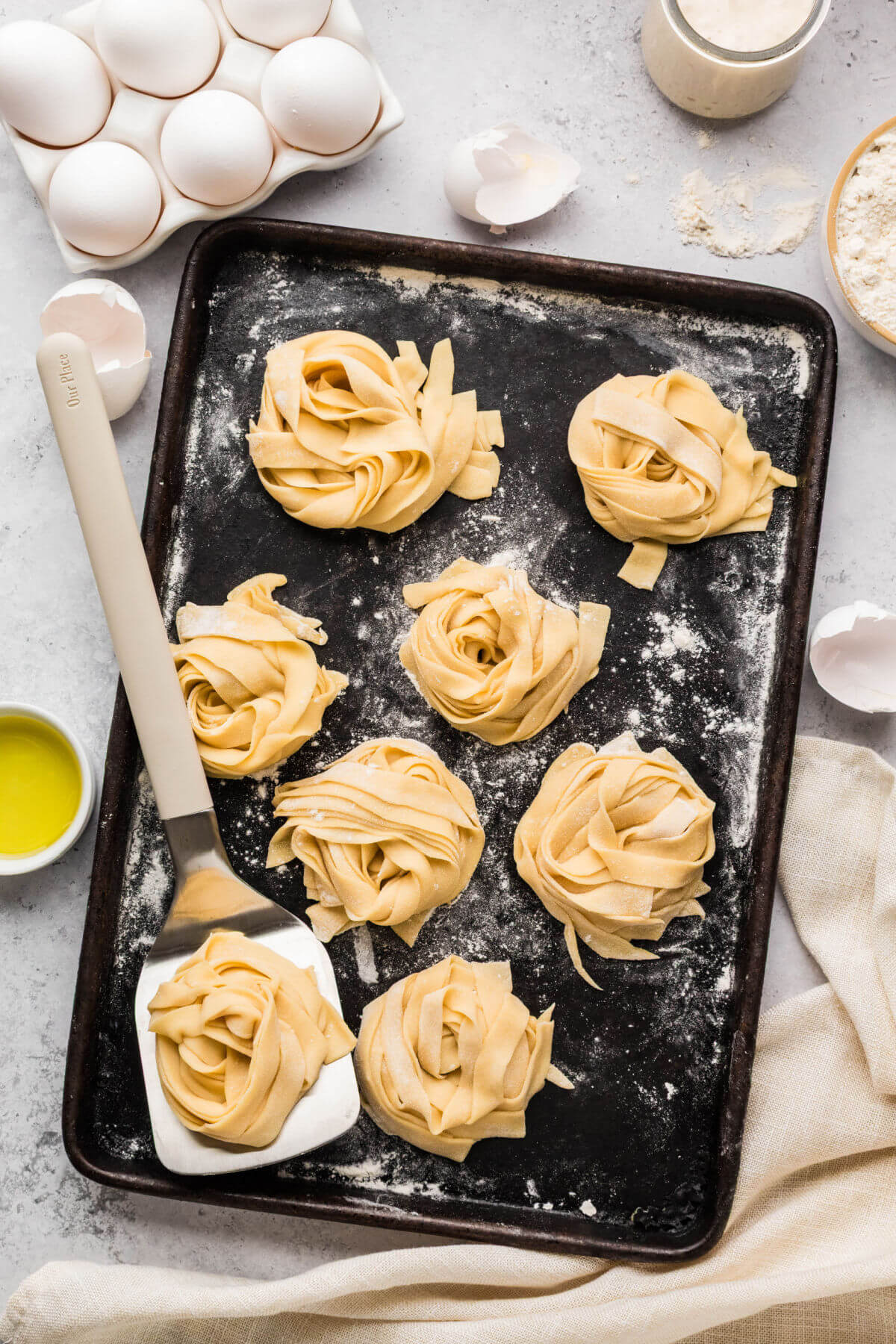
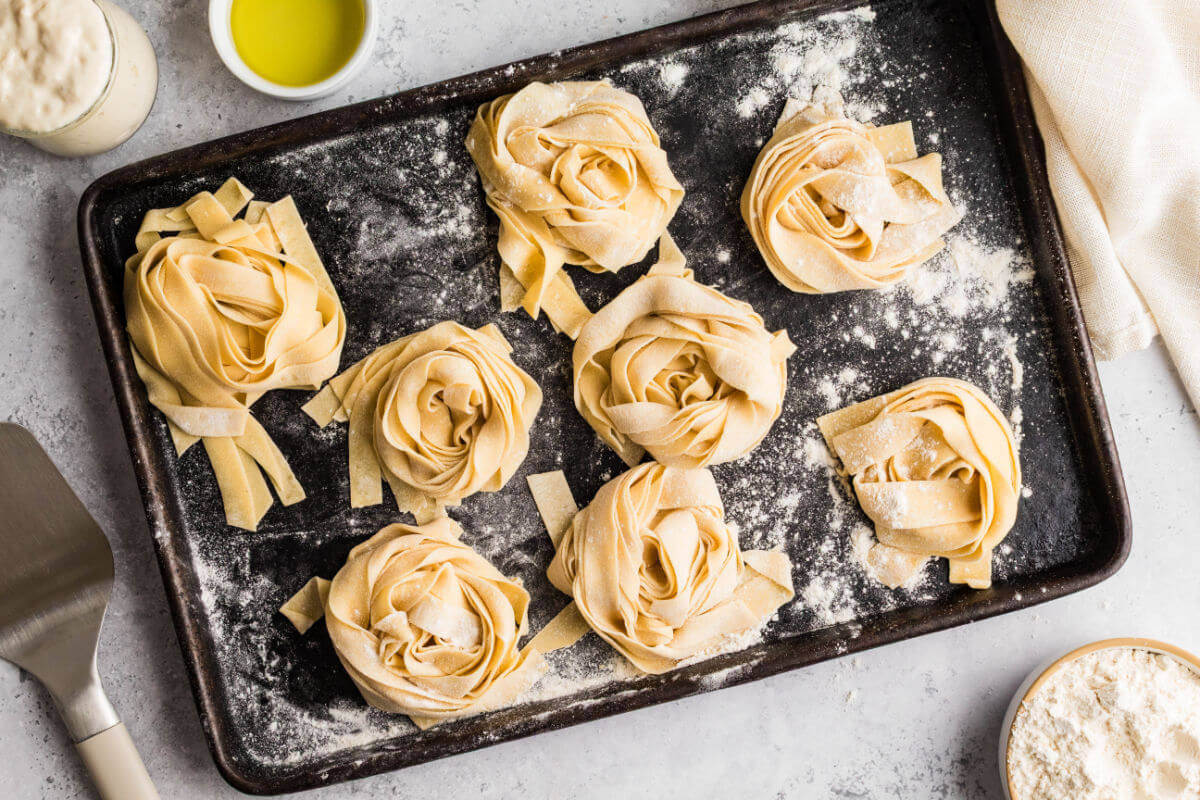
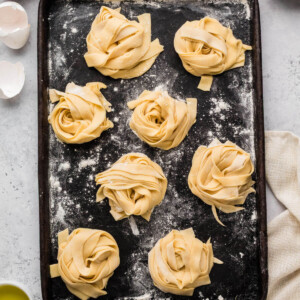
Step 10. Dust a cookie sheet with flour and unroll the pasta pieces, wrapping them around themselves to make little nests. You can also dry the pasta on a pasta drying rack. Allow to dry for about 30 minutes.
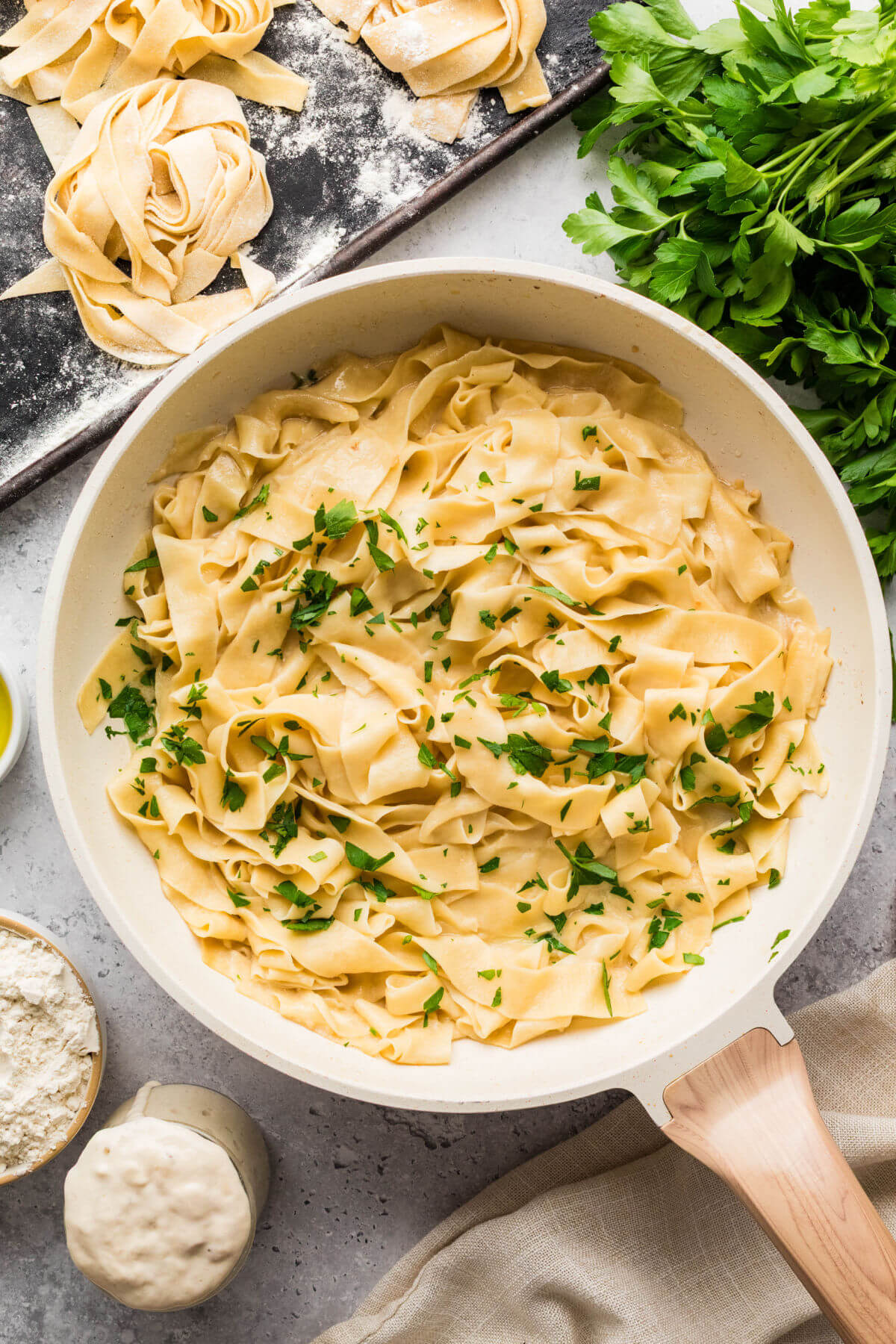
To Cook the Pasta: When you’re ready to cook your pasta, boil 6 cups of water with the salt. Drop the pasta into the water and cook for 2–3 minutes. Fresh pasta cooks much faster than dried.
Recipe Tips
I love how simple this recipe is to make. It takes less than an hour, and it’s so interactive. You can try making it for your next girls’ night in or get the kids in the kitchen and make some memories. Here are my best pasta-making tips.
- Make sure you let the pasta rest. All you need is 20 minutes in the fridge, and the pasta will be much easier to roll out. This allows the flour to absorb the moisture while also letting the gluten relax, so the dough is easier to roll out into long, thin pasta sheets.
- Keep extra flour nearby for dusting so the pasta does not stick as you work. You can even sprinkle a bit of flour directly into the rollers of the pasta crank.
- Work in batches so the dough does not dry out while you wait.
- Depending on how thick or runny your sourdough starter is, you may need to add some extra flour. The dough will start out feeling a bit dry, but as you knead it, the flour will start to absorb the liquid, and the ball of dough will be smooth and elastic. If the dough feels too sticky, add flour a little at a time until it is smooth and no longer sticks to your fingers.
- If your pasta sheets end up so long that they’re hard to manage, don’t be afraid to cut them in half so they aren’t as long.
Serving Ideas
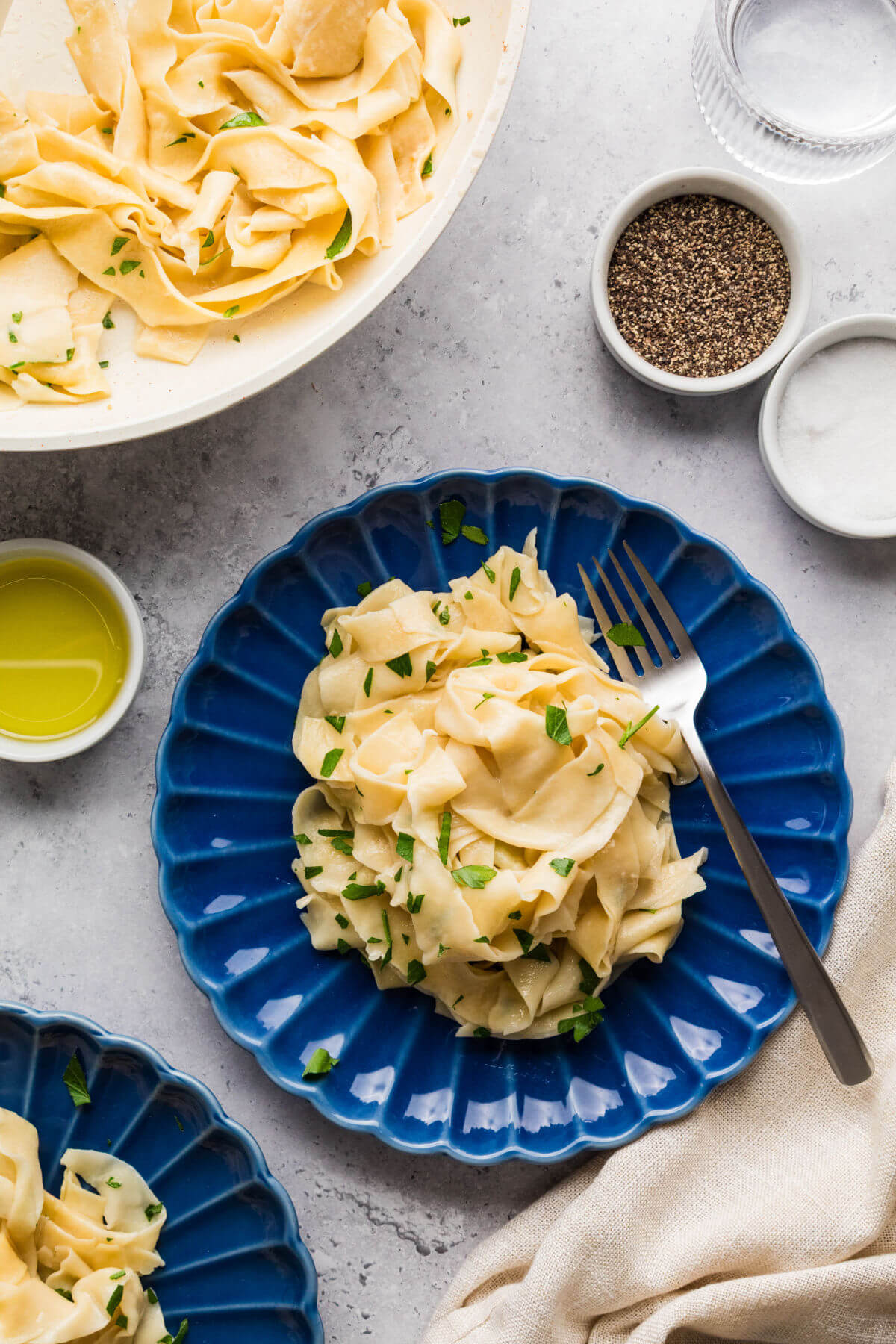
You can serve this sourdough discard pasta in the same way you would eat any other type of pasta dish. Here are some of my favorite ways to make this pasta special even on the busiest of days.
- When in doubt, add cheese. Cook the pasta and toss it with some butter and a sprinkle of cheese for nights when your battery is low and you don’t want to fight over what’s for dinner.
- Marinara or your favorite sauce. When you’re short on time, a quality jarred sauce can be the life ring you desperately need. Look for one with just a short list of ingredients or make a big batch of homemade sauce every couple of months to have on hand when life gets chaotic.
- Garlic and olive oil. I love a simple sauce with just a little garlic, olive oil, a pat of butter, and some fresh herbs. If you want to get a little fancy, add a splash of cream. It’s quick and comforting and great for when everyone is starving and you need to get something on the table quickly.
- Add a protein. Toss in some grilled chicken or meatballs to make it a full meal.
- Add a side salad. Add a salad on the side, and you’ll have the perfect meal in no time.
- Veggies. This pasta is an excellent base for any seasonal veggies you have on hand, making it a great way to clear out the fridge of any scraps too.
How to Store Sourdough Pasta
You can store the pasta overnight for use the next day in an airtight container, but any longer than that and it will get discolored. It will still taste great but will be darker.
How to Dry Sourdough Pasta
To dry your pasta for longer storage, you can arrange the pasta into nests on a baking tray and leave it to dry overnight for 1–2 days. When the pasta snaps easily, it is dry enough to be stored in a resealable bag or container. It will keep fresh in a cool, dry place for up to 6 months.
You can also hang the pasta over a wooden dowel or use a pasta drying rack to hang the noodles on until they dry. When the pasta is fully dry, it will snap easily. It can then be stored in an airtight container (like a glass jar) for up to 2 months. To cook dried pasta, boil for 8-10 minutes (depending on how thick your pasta is).
Freezing Instructions
If you don’t want to dry your pasta, freezing is a great option. Lay a piece of parchment paper on a baking sheet and freeze your pasta nests for 1–2 hours until they’re completely solid.
From there, transfer them to a resealable plastic bag labeled with the date. They’ll stay good for about 6 months. No need to thaw; just toss the nests straight into salted boiling water from the freezer. They’ll take about 5 minutes from frozen.
Frequently Asked Questions
This easy homemade sourdough pasta can be made into any pasta shapes that you love or flavored for some extra fun. Here are a few ideas to get you going.
1. Swap the shape by rolling the dough thicker for fettuccine or thinner for angel hair.
2. Add a tablespoon of finely chopped fresh herbs like basil or parsley right into the dough for extra flavor. I also love adding lemon zest for a bright flavor.
3. Use whole wheat flour for half of the all-purpose flour for a heartier pasta.
Choosing a good quality olive oil doesn’t mean that you have to choose the most expensive oil on the shelf. Here are a few key things to look for to choose a high-quality olive oil and still stay on budget:
1. A dark or opaque bottle. Clear glass bottles let in too much light, and oil will turn rancid faster.
2. A single country of origin. Look for a bottle that mentions only one country that the oil is from.
3. Look for a harvest or crush date within the last 1–2 years.
4. Check the label to see that it’s extra virgin olive oil. This means that it’s not refined.
5. Give it a smell. When you open the bottle, it should smell slightly fruity or grassy or maybe even a little like pepper or citrus.
Sure! Make sure it’s wrapped tightly in plastic wrap and stored in the refrigerator overnight. I wouldn’t leave it in there more than 1 night, or it will get discolored and look less appetizing. If you leave this pasta to ferment on the counter overnight, it will be a mess. Keep it in the fridge for a long fermentation if you choose this method.
More Sourdough Recipes
- Sourdough Discard Crackers
- Sourdough Discard Rolls
- Sourdough Cheddar Biscuits
- Sourdough Irish Soda Bread
- Easy Sourdough Bread Recipe
If you make this sourdough pasta recipe and enjoy it, please leave a comment with a 5-star recipe rating and let me know! Thank you!
Sourdough Pasta
Equipment
- Pasta maker or rolling pin or KitchenAid pasta attachment
- Baking sheet rimmed
- Parchment paper optional
- Pasta drying rack optional
Ingredients
- 2 1/4 cups all-purpose flour, 300 g, may need up to 2 1/2 cups
- 1/2 cup sourdough discard, 130 g
- 2 large eggs, 108 g
- 1 Tablespoon olive oil, 10 g
Instructions
- In a large bowl, make a mountain out of your flour. Create a crater in the center of the flour with your hands or the back of a measuring cup.
- Into the crater, add the starter, eggs, and olive oil.
- Use a fork to mix the eggs and starter, slowly incorporating the flour, little by little, into the mixture.
- Once the mixture has formed a dough, remove it from the bowl to a clean surface and knead it for about 15 minutes by hand until it's soft and supple. (You can also do this in a stand mixer using the dough hook attachment, and mixing for about 10 minutes on low/medium.) The dough should be supple and soft but not sticky or tacky. If it’s still slightly tacky, dust it with a little more flour and knead a few more times.
- Wrap the dough in plastic wrap or cover it with a damp tea towel to prevent it from drying out, and let it rest in the refrigerator for about 20 minutes.
- Remove pasta dough from the refrigerator and divide into 4 equal pieces. Use a pasta machine or rolling pin to roll each piece, one at a time, to about 1/8 of an inch thick (around the thickness of a credit card). While working with one piece of dough, keep the others covered with plastic wrap to prevent the dough from drying out.If you have a KitchenAid pasta attachment, starting at 1, roll the dough through the pasta roller 2 times. Fold the pasta sheet into thirds and run it through 2 more times before adjusting to 2 and running the dough through twice more. Keep running the pasta sheet through the roller twice on each number setting until you get to 6.
- Sprinkle the sheets with a light dusting of additional flour when needed.
- Fold the dough sheets over themselves in about 3-4 inch sections and use a sharp knife or a pizza cutter to slice the pasta sheets into strips about 1/4 of an inch thick.
- Dust a baking sheet with flour and unroll the pasta pieces, wrapping them around themselves to make little nests. Or, you can lay the pasta on a towel or hang from a pasta drying rack to dry. Allow pasta to dry for at least 30 minutes.
To Cook Sourdough Pasta
- When you’re ready to cook the fresh pasta, boil 6 cups of salted water (how much salt you add depends on personal preference). Drop the pasta into the water and cook for 2-5 minutes depending on thickness of the pasta.
Notes
- Make sure you let the pasta rest. All you need is 20 minutes in the fridge, and the pasta will be much easier to roll out. This allows the flour to absorb the moisture while also letting the gluten relax, so the dough is easier to roll out into long, thin pasta sheets.
- Keep extra flour nearby for dusting so the pasta does not stick as you work. You can even sprinkle a bit of flour directly into the rollers of the pasta crank.
- Depending on how thick or runny your sourdough starter is, you may need to add some extra flour. The dough will start out feeling a bit dry, but as you knead it, the flour will start to absorb the liquid, and the ball of dough will be smooth and elastic. If the dough feels too sticky, add flour a little at a time until it is smooth and no longer sticks to your fingers.
- If your pasta sheets end up so long that they’re hard to manage, don’t be afraid to cut them in half so they aren’t as long.
Nutrition
Nutrition information is automatically calculated, so should only be used as an approximation.