
This post may contain affiliate links. Please read our disclosure policy.
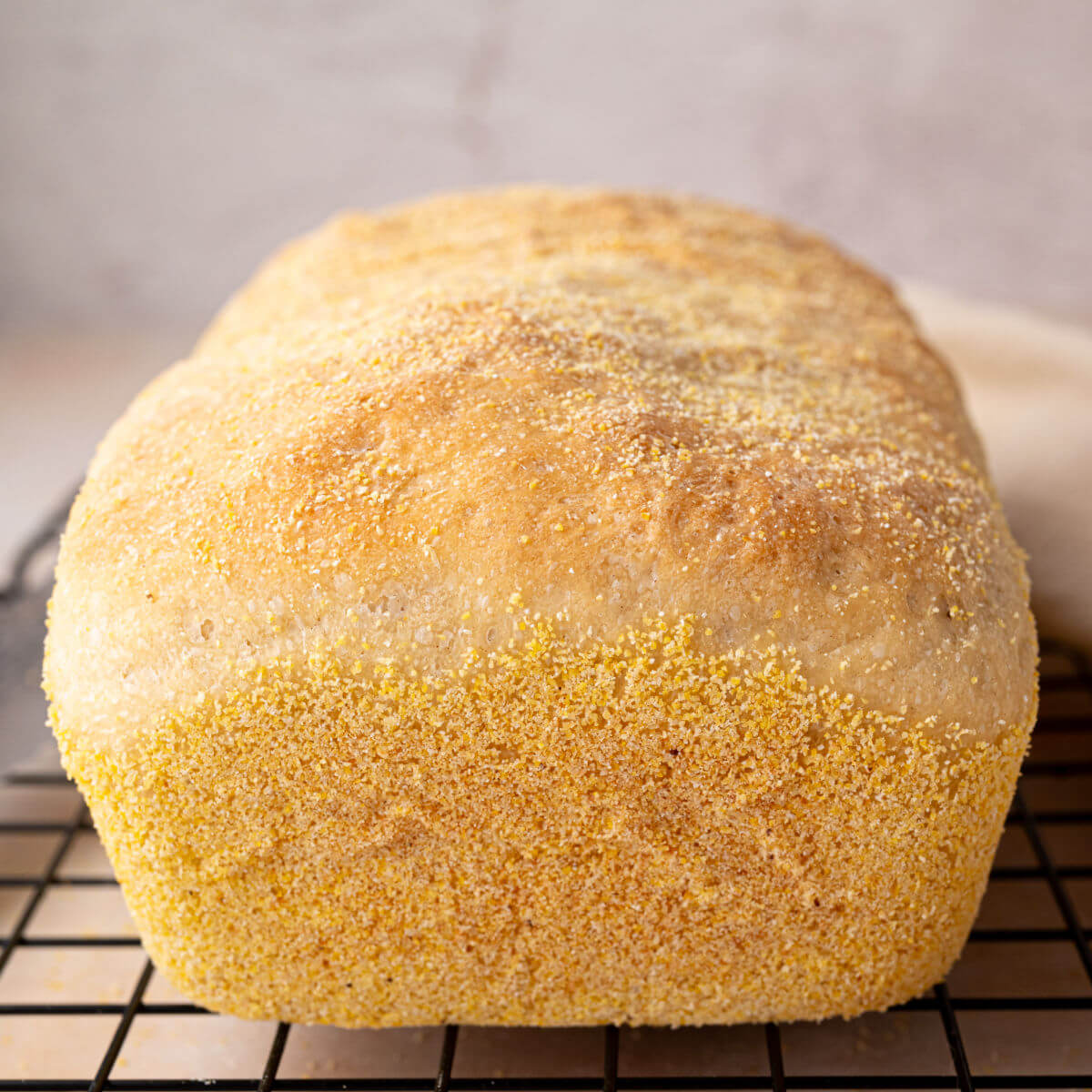
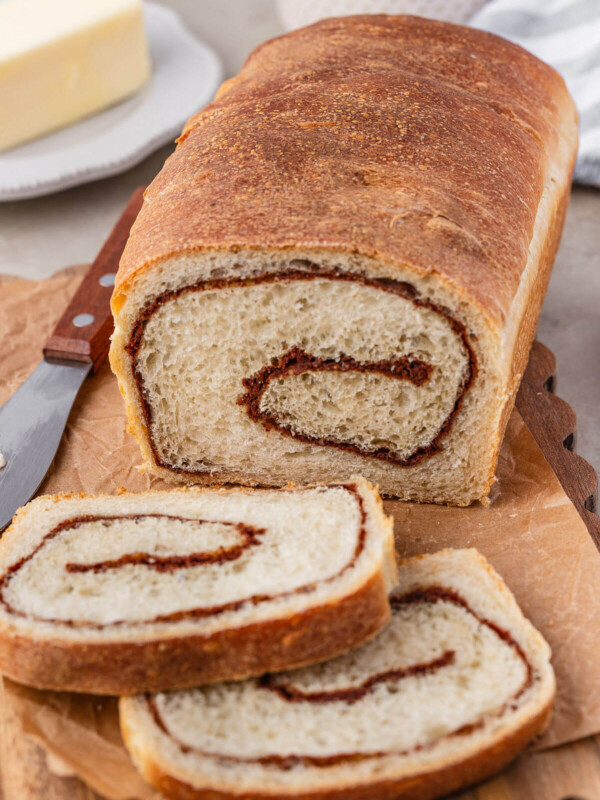
Sourdough English muffin bread is a soft, chewy loaf with a golden crust dusted in cornmeal and a tender, craggy crumb. With a tangy flavor not found in standard English muffins, it’s perfect for toasting and surprisingly easy to make!
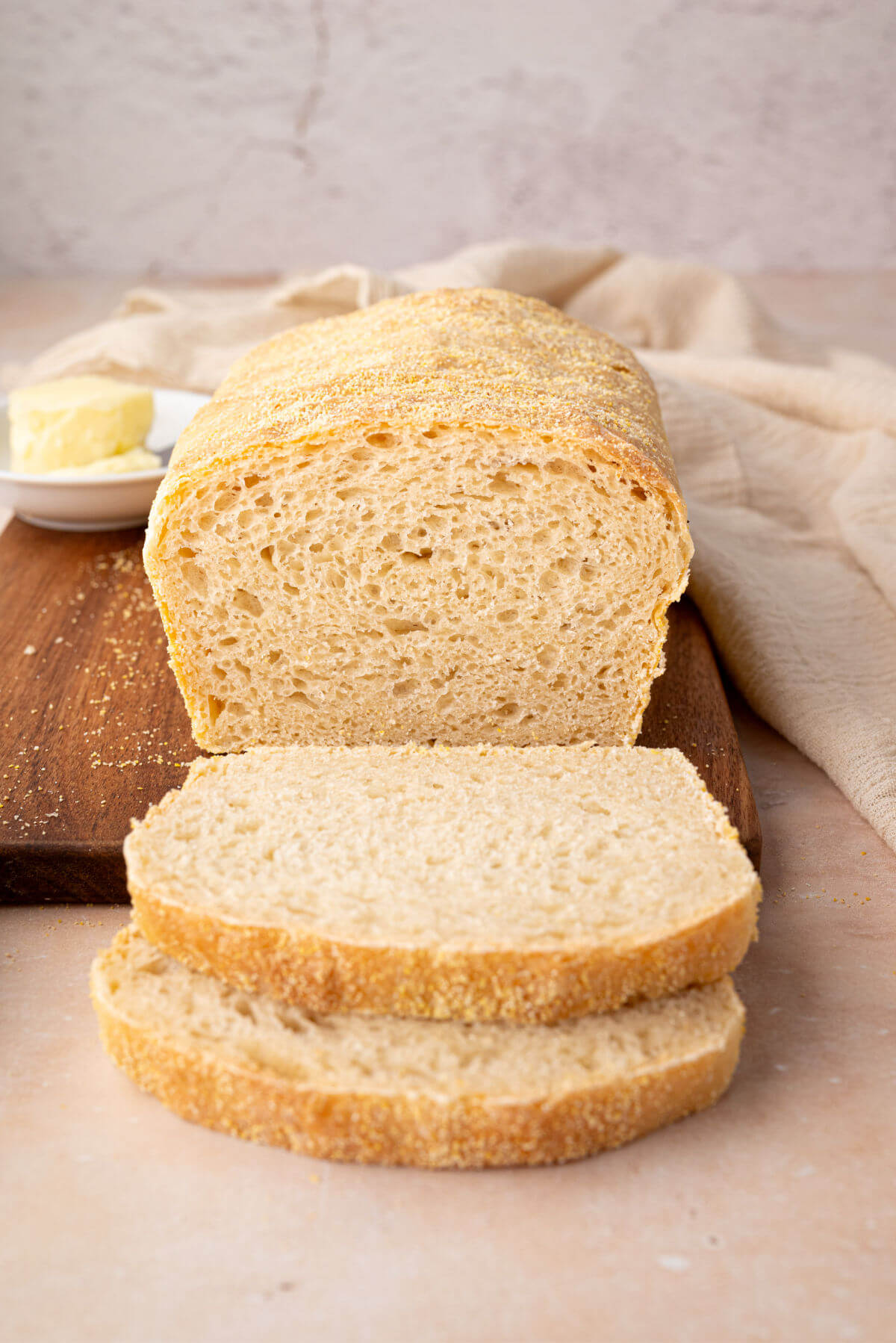
The first time you try this bread loaf version of sourdough English muffins, you’ll know it’s a keeper. If you love the classic tang and cornmeal crunch of English muffins, this loaf-style variation delivers all that in an easy, sliceable form.
For more flavorful fermented breakfast ideas, try my sourdough English muffins, everything bagel sourdough bread, or tender, slightly sweet blueberry cream cheese sourdough bread.
This English muffin-inspired sourdough loaf is perfect for toasting. With a craggy crumb and golden crust dusted in cornmeal, it brings the best of English muffins into an easy-to-bake format. Minimal hands-on time and an overnight rise make it ideal for busy home bakers.
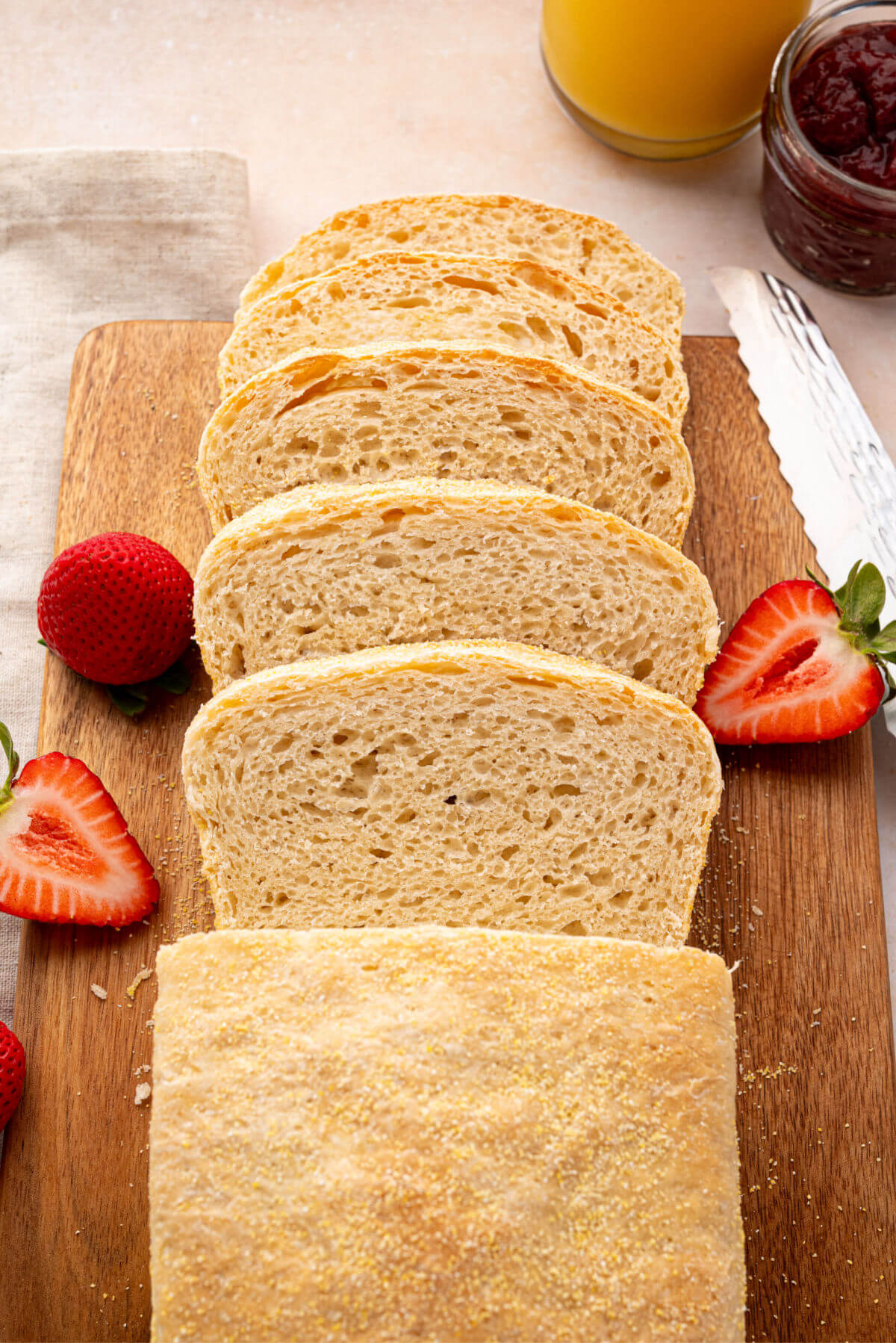
Why You’ll Love Sourdough English Muffin Bread
- Fermented sourdough recipe: This long-fermented loaf develops deep flavor, chewy texture, and easier-to-digest bread—just like my easy sourdough sandwich bread and easy artisan sourdough bread.
- Classic breakfast flavor: Homemade English muffins just got simpler with this loaf-style bread version—perfect for slicing and serving with butter or blueberry jam for a satisfying breakfast.
- Overnight ease: Let the dough rise overnight and wake up the next day to dough that’s ready to go—ideal for busy mornings or weekend brunch.
Ingredients
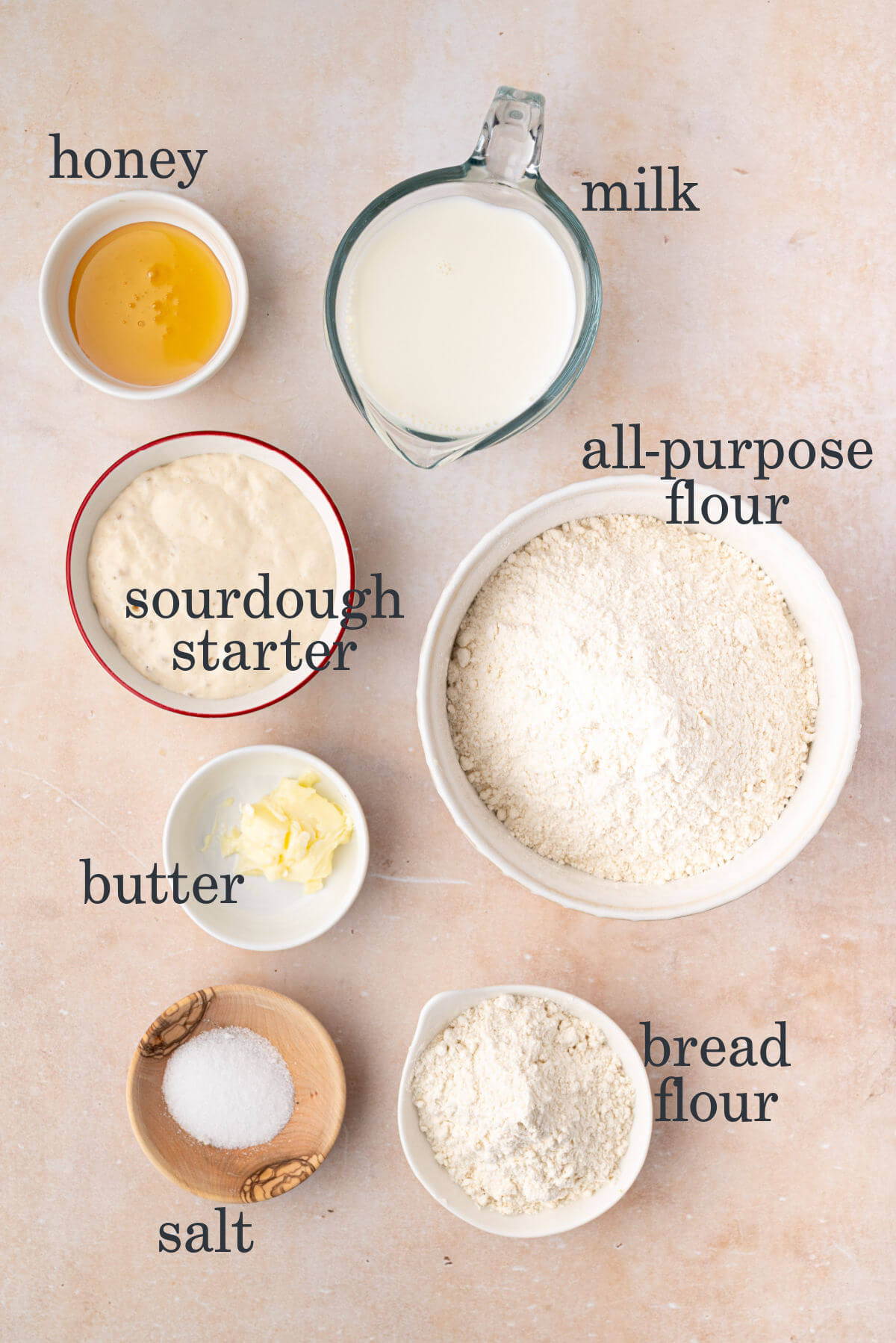
Find the full list of ingredients, amounts, and instructions in the recipe card at the bottom of this post.
- Milk: Use warm whole milk (about 100°F) to gently activate the starter and give the dough a head start.
- Honey: Adds a touch of natural sweetness and balances the tang from the sourdough.
- Sourdough starter: An active, bubbly starter is key—it’s what ferments and rises this flavorful loaf.
- Flour: A mix of all-purpose and bread flour gives the perfect balance of softness and chew.
- Butter: Unsalted, softened butter gets kneaded into the dough for incredible richness and flavor.
- Cornmeal: Optional for dusting—but please don’t skip it! That signature cornmeal crunch is what makes English muffin bread so special.
Equipment
How to Make Sourdough English Muffin Bread
Here are the step-by-step instructions for making sourdough English muffin bread.
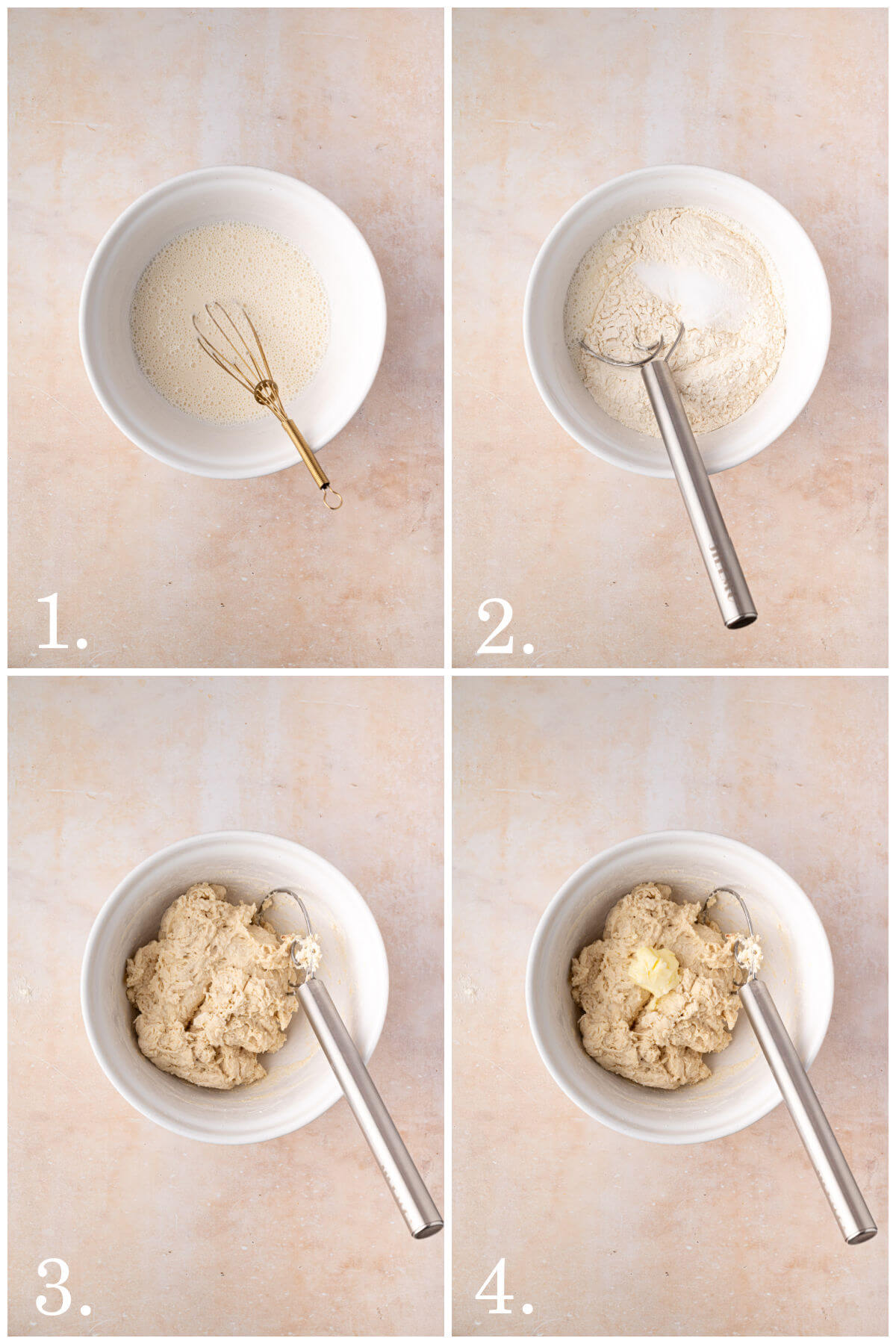
Step 1: In a large mixing bowl, combine the warm milk and honey. Stir in the sourdough starter until fully dissolved (Photo 1). Add the flours and salt (Photo 2), then mix with a rubber spatula or your hands until a shaggy dough forms (Photo 3). Scrape down the sides as needed. Add the softened butter and knead it into the dough until fully incorporated—it will go from oily to slightly sticky (Photo 4). You can do this right in the bowl (Photo 5).
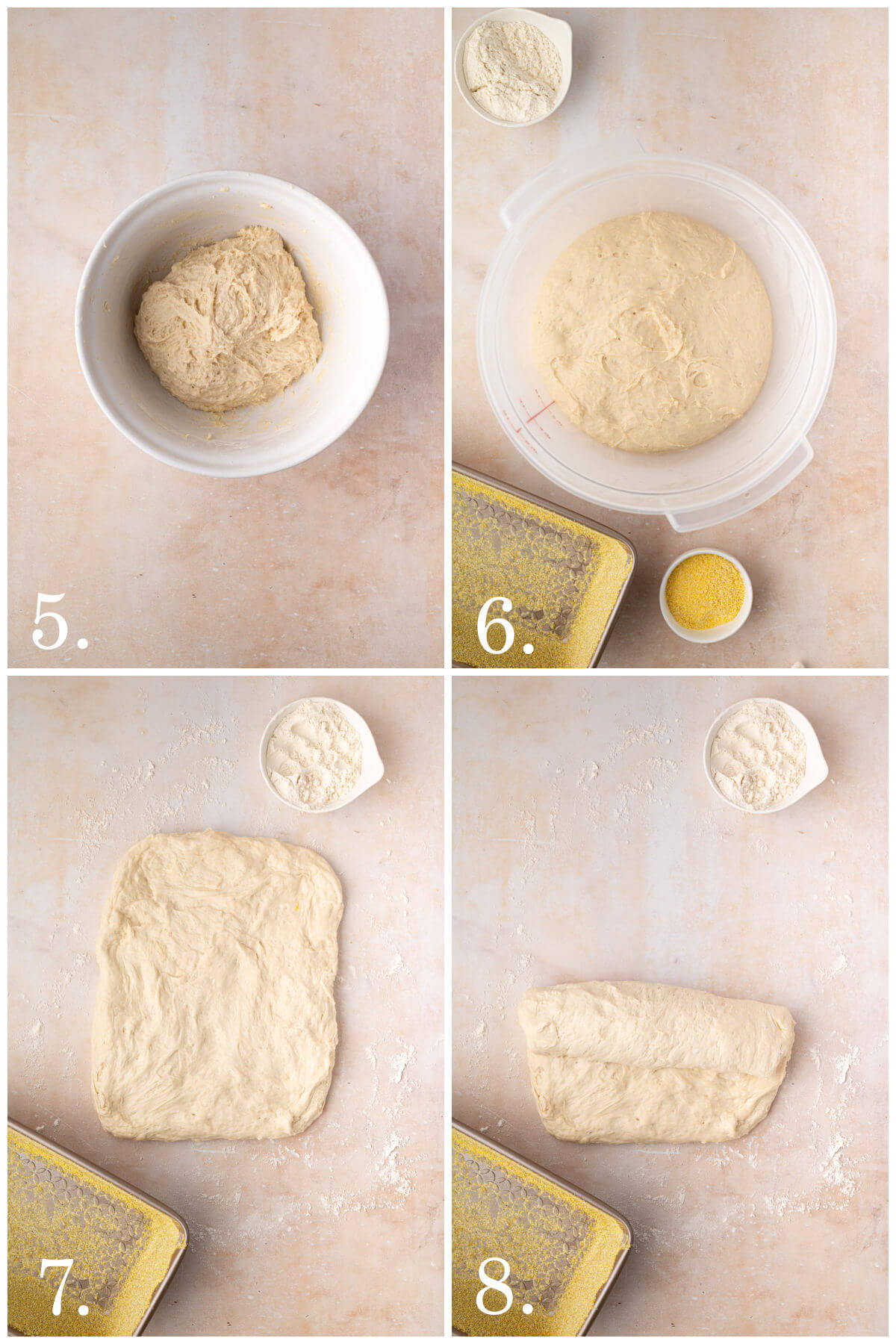
Step 2: Cover the bowl with plastic wrap or a damp towel and let the dough bulk rise at room temperature (68–75°F) for 8–10 hours, or until puffy and doubled (Photo 6). This bulk fermentation is best done overnight. Fermentation time can vary. A warm place may speed up the rise. Use the poke test to check readiness.
How to Do the Poke Test: Press your finger gently into the dough. If the dough springs back very slowly, it is correctly proofed. If it springs back quickly, it’s a sign that it’s underproofed. If it doesn’t spring back at all, that means the dough is overproofed.
Step 3: Generously grease a 9×5″ loaf pan and sprinkle the bottom and sides with cornmeal to give it that classic English muffin texture.
Step 4: Turn the dough out onto a lightly floured work surface. Gently press it into a rectangle (Photo 7), then roll it up like a jelly roll (Photo 8) and tuck the ends under. Place it seam-side down in the prepared pan (Photo 9). Sprinkle the top with cornmeal (Photo 10), cover loosely, and let it rise for 1.5 to 2.5 hours, or until it’s slightly above the rim (Photo 11).
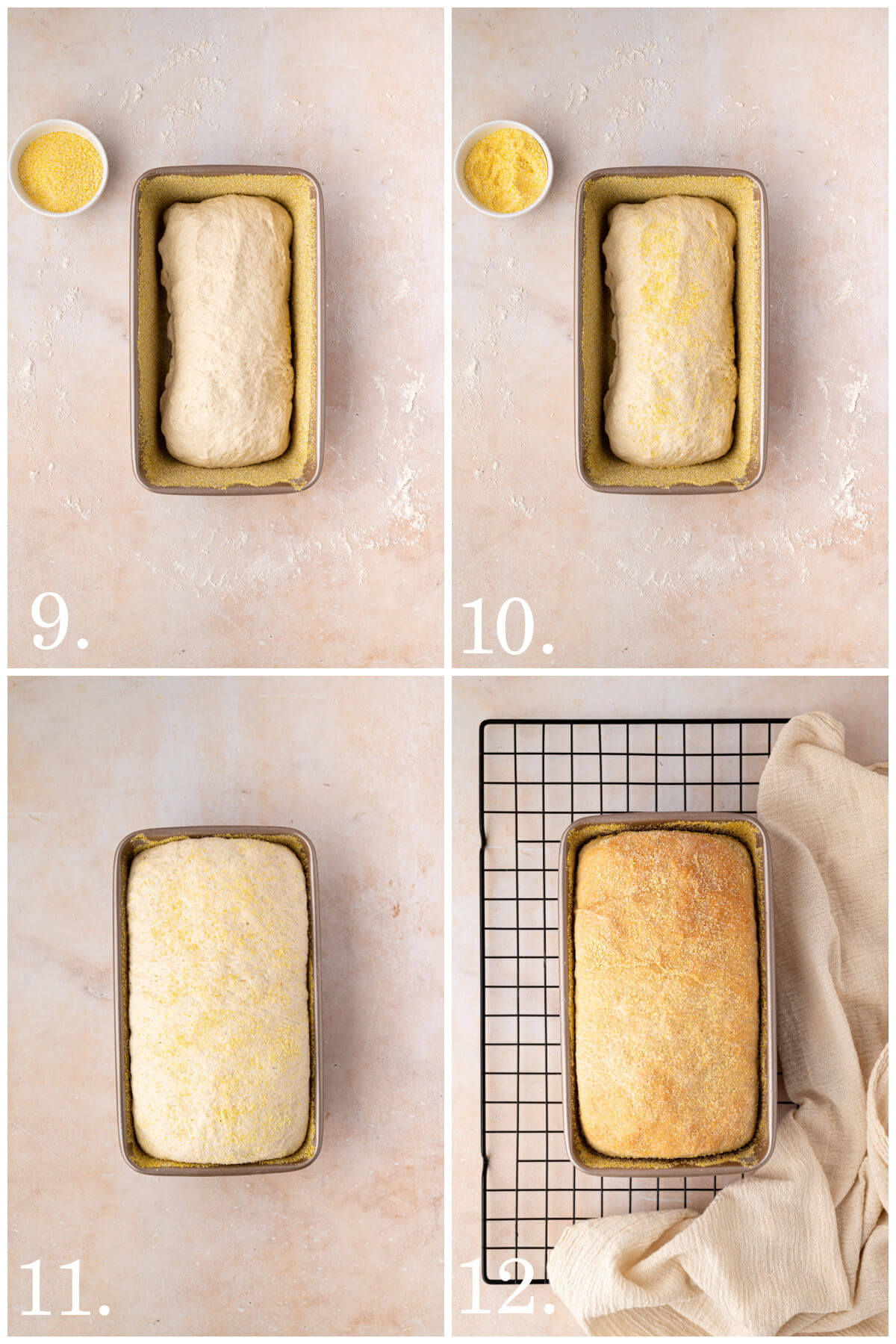
Step 5: Preheat the oven to 375°F (190°C). Bake for 30–35 minutes, until the top is golden and the internal temperature reaches 200–205°F.
Step 6: Remove the loaf from the pan and transfer it to a wire rack (Photo 12). Let it cool for at least 1 hour before slicing. Toast slices to enjoy the full English muffin experience!
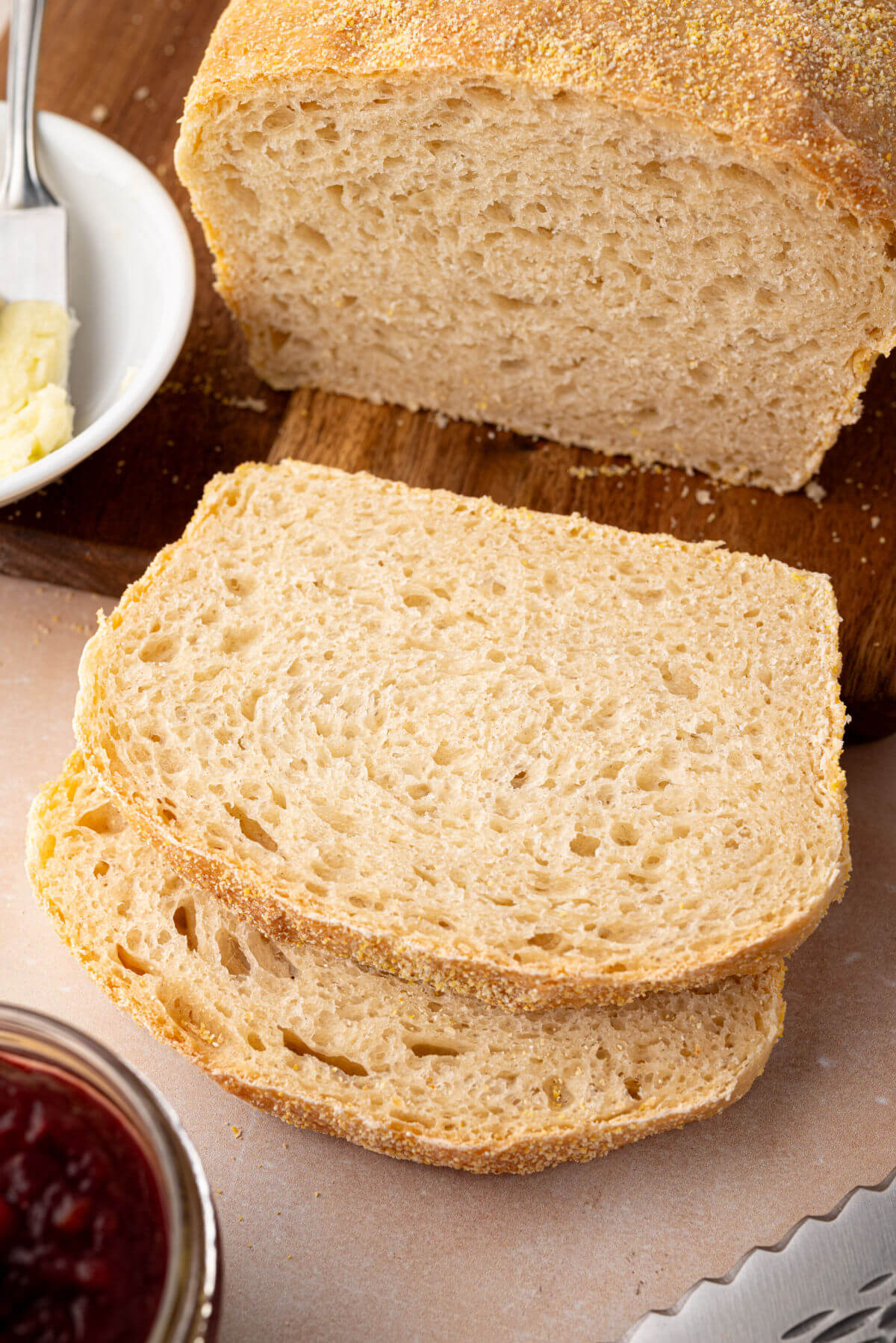
Serve this English muffin sourdough bread with butter and jam for breakfast, or melted cheese for lunch or a snack. There are so many delicious ways to enjoy it!

How To Store
Best enjoyed freshly baked, but fully cooled bread can be stored in a bread bag or an airtight container at room temperature for up to 3 days.
You can also freeze the bread after fully cooling it. Slice it and wrap tightly with plastic wrap or seal in a freezer bag, then store in the freezer for up to 3 months.
Tips
- Use an active, bubbly starter for the best rise and that classic sourdough flavor.
- Warm your whole milk to about 100°F—this helps jumpstart the dough, especially during cooler months.
- Use a mix of all-purpose and bread flour for the perfect balance of softness and chew in the final loaf.
- Thoroughly incorporate the butter. It takes a few minutes, but it’s worth it for a richer flavor and smoother dough.
- Don’t skip the cornmeal! That gritty dusting on the crust gives the bread its signature English muffin texture.
- Homemade sourdough bread should cool completely before slicing to avoid a gummy interior—this step really makes a difference.
Recipe FAQs
Yes, while I haven’t tested it personally, an unsweetened, unflavored rich non-dairy milk—like original oat milk—should work.
You can use all-purpose for the full amount, but for best results, bread flour adds structure and chew to the crumb.
It’s optional, but highly recommended. It gives that classic English muffin feel—gritty on the outside, soft and craggy inside. If you’re not a fan of the texture, you can omit it altogether.
Slicing too early leads to a gummy or sticky crumb. Letting it cool gives the loaf proper structure and the best texture.
Absolutely! Slice it first and freeze in an airtight container. That way you can pop a slice straight in the toaster whenever you want.
More Sourdough Recipes
- Sourdough English Muffins Recipe
- Fluffy Sourdough Biscuits
- Everything Bagel Sourdough Bread
- Easy Sourdough Sandwich Bread
- Easy Sourdough Artisan Bread Recipe
If you make this recipe and enjoy it, please leave a comment with a 5-star recipe rating and let me know! Thank you so much!

Sourdough English Muffin Bread
Equipment
- rubber spatula or mixing spoon
Ingredients
- 240 grams whole milk, 1 cup, warm (about 100°F)
- 15 grams honey, 2 teaspoons
- 125 grams active sourdough starter, 1/2 cup, 100% hydration
- 300 grams all-purpose flour, about 2 1/2 cups
- 50 grams bread flour, about 1/3 cup
- 7 grams fine sea salt, 1 1/4 teaspoons
- 15 grams unsalted butter, 1 tablespoon, softened
- Cornmeal, for dusting
Instructions
- Mix the Dough: In a large bowl, combine the warm milk and honey. Stir in the sourdough starter until dissolved. Add the flours and salt. Mix with a spatula or your hands until a shaggy dough forms, scraping the sides of the bowl as you mix. Add the butter and knead it into the dough until fully incorporated. This will take a few minutes. The dough will go from oily to slightly sticky. You can knead the dough right in the bowl.
- Bulk Ferment (1st Rise): Cover the bowl and let the dough rise at room temperature (68–75°F) for 8–10 hours or until puffy and doubled in volume. This is ideal to do overnight. The warmer the room, the faster the dough doubles. Check on the rise by giving the dough the poke test.
- Prepare the Pan: Generously grease a 9×5" loaf pan and sprinkle the bottom and sides with cornmeal. This mimics the classic English muffin texture.
- Shape and Second Rise: Turn the dough out onto a lightly floured surface and gently press it into a rectangle, then roll it up like a jelly roll and tuck the ends under. Place the dough seam-side down in the prepared loaf pan. Sprinkle the top with cornmeal (if desired). Cover loosely and let rise at room temperature for 1.5 to 2.5 hours.
- Bake: Preheat the oven to 375°F (190°C). Bake the loaf for 30–35 minutes, until golden brown and the internal temperature reaches 200–205°F.
- Cool: Remove from pan and let cool on a wire rack for at least 1 hour before slicing. Toast the slices to enjoy the full English muffin experience!
Notes
Nutrition
Nutrition information is automatically calculated, so should only be used as an approximation.









Can I do part of the bulk fermentation at room temp (maybe 5 hours or so?) and then put it in the fridge for a day before shaping it and letting it rise again? OR could i let do the bulk fermentation for 10 full hours at room temp and then put the dough in the fridge for a day? New to sourdough and trying to figure out the timelines lol.
Hi Emily! I know the timelines can be confusing! This recipe has only been tested with a room temperature first rise (for 8-10 hours) and then a room temperature second rise. The easiest way is to allow the bulk fermentation to happen overnight and then check it in the morning. With cooler temperatures, it can take longer to rise. However, you should be able to allow the second rise to happen in the fridge if you prefer. You might try placing the dough in the refrigerator for the second rise (after shaping and placing the dough in the loaf pan). I would cover the pan well with lightly oiled plastic wrap, a shower cap, or a reusable cover. You want to prevent drying. You can probably refrigerate for 8–24 hours. The dough will continue to rise slowly in the fridge. If the dough hasn’t fully risen above the rim of the pan, take it out of the fridge and let it sit at room temperature for 1-2 hours, until the dough rises about 1/2-1 inch above the rim and looks puffy. If the dough has already risen well in the fridge (or if you don’t have time to wait), you can bake straight from the fridge, but expect slightly less oven spring. Then bake exactly as written. If you decide to try it, I’d love to hear how it turns out!
I did bulk fermentation on the counter, shaped the dough into pans, and stuck them in the fridge for almost 24 hours, took them out to rise at room temp until the dough was above the rim, then baked. The loaves turned out perfectly! Thank you so much!
I’m so happy to hear they turned out! Thank you so much for letting me know, and for the positive review!
All the taste of English muffins with the convenience of a loaf that can be used for sandwiches or toasting!