This post may contain affiliate links. Please read our disclosure policy.
Ever wish you had a sourdough glossary to explain all the sourdough baking terms you keep hearing? Well, here you go!
Getting into sourdough baking can feel like entering a whole new world—one filled with unique tools, techniques, and terminology that can be a little overwhelming at first.
That’s why I put together this helpful resource. This sourdough baking glossary breaks down the most important sourdough terms so you can feel more confident and informed on your sourdough journey.
This A–Z glossary is your go-to guide for understanding all the essential sourdough terms.
Sourdough Glossary
In this guide, I’ve made sure to list each term in alphabetical order to make it easier for you to find what you’re looking for.
Autolyse
A rest period after mixing flour and water, but before adding salt and levain. It helps hydrate the flour, develop gluten, and improve dough extensibility and flavor.
Some sourdough recipes tell you to wait to add the salt, but my beginner sourdough bread recipe adds the flour, water, salt, and starter all at once, and then you allow the dough to rest. It just depends on the recipe.
Baker’s Percentages
A method of expressing ingredient amounts relative to the total flour weight, which is always 100%. This makes scaling and recipe comparisons easier.
Baking Timeline
The schedule of events from feeding your starter to pulling your loaf out of the oven. Includes autolyse, bulk fermentation, shaping, proofing, and baking.
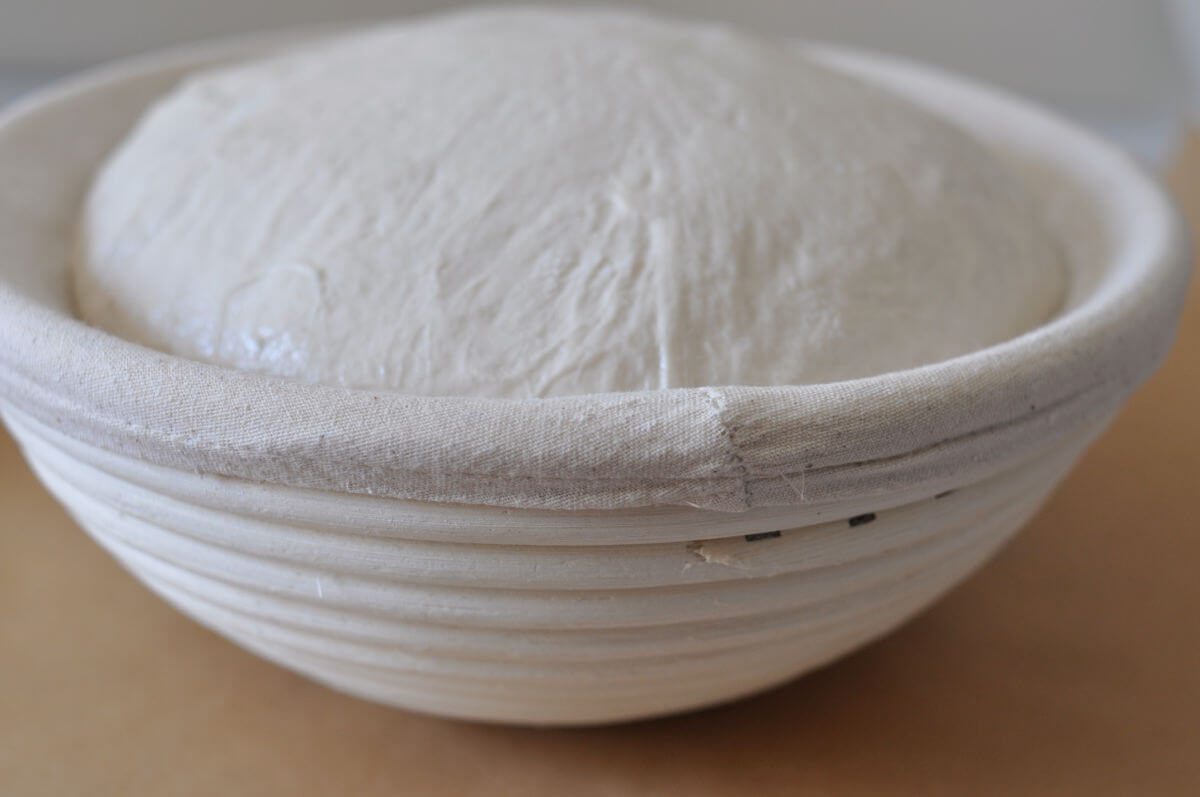
Banneton
A basket used to support the dough during the final proof. Usually made from rattan, a banneton helps the dough keep its shape and creates a pattern on the crust (if you don’t use the liner). See also: proofing basket, brotform.
Batard
An oval-shaped loaf of sourdough. Easier to fit in rectangular Dutch ovens.
Bench Rest
A short resting period (usually 15–30 minutes) after pre-shaping the dough and before final shaping. It allows the gluten to relax for easier handling.
Bench Scraper
A flat, rectangular tool used to move dough, divide it, and clean your work surface. A bench scraper is essential for sticky doughs!
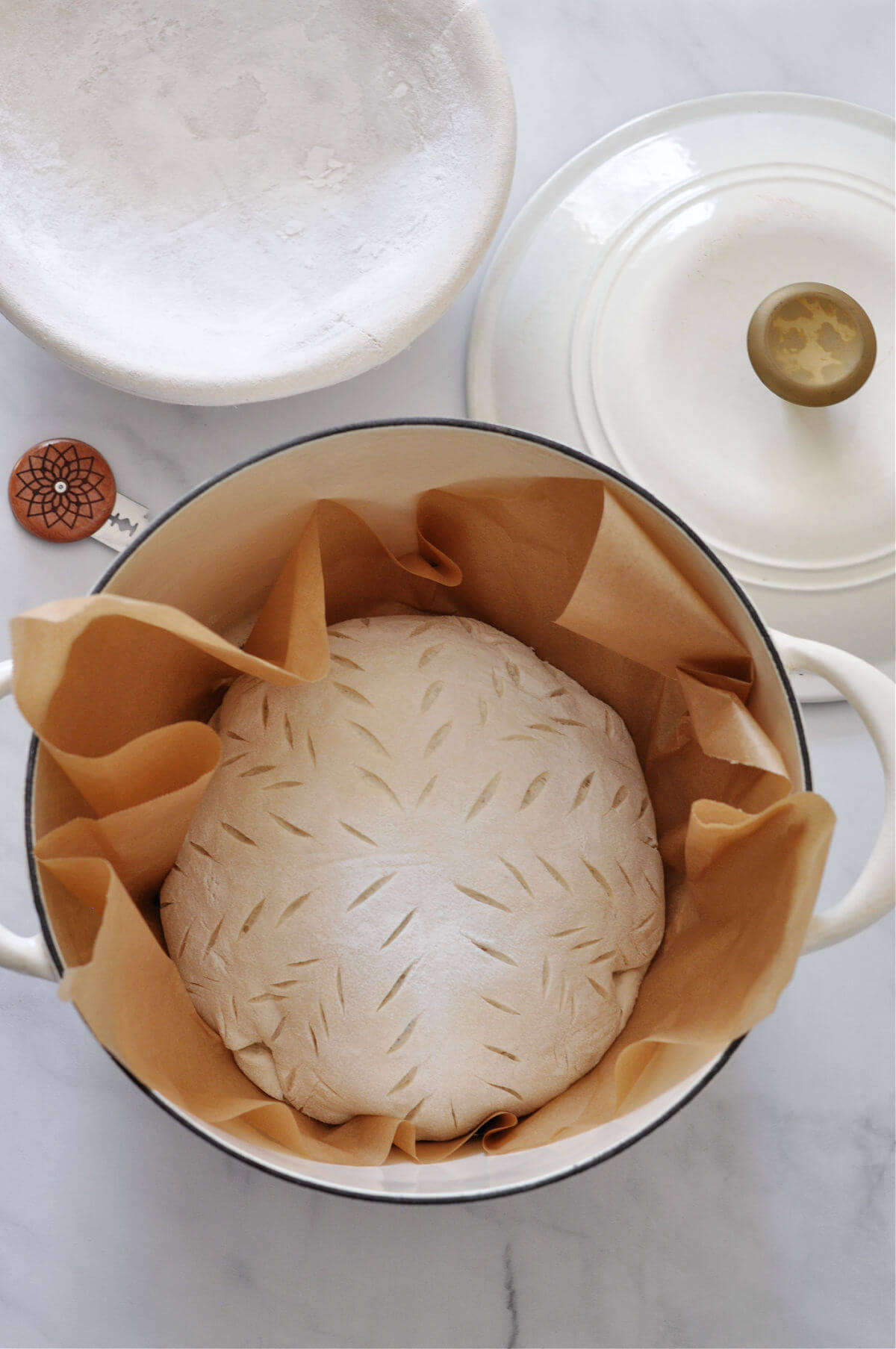
Boule
A round-shaped sourdough loaf (like my easy sourdough bread recipe). Classic and rustic, it’s often baked in a round Dutch oven.
Bread Flour
Bread flour is made from hard wheat, and it contains a higher percentage of protein than all-purpose flour, which is made from a mix of hard and soft wheat. Because it contains more protein, bread flour is able to develop more gluten than all-purpose flour. This helps it to make sourdough bread rise higher.
Brotform
Another word for a banneton, typically referring to German-style proofing baskets. They help maintain the dough’s shape and wick moisture from the surface for a crisp crust.
Bulk Fermentation (Bulk Rise)
The first rise after mixing your dough, during which the dough ferments and strengthens. During the bulk rise (or bulk ferment), the gluten will develop. You don’t want to rush the fermentation process. This fermentation period can take 3-12+ hours, depending on the temperature. This first rise is done at room temperature.
Cold Proof
A slow fermentation in the refrigerator after shaping and placing in the banneton. The cold ferment can improve flavor, makes the dough easier to score, and leads to a more complex crust. Also referred to as a “cold ferment,” or “cold retard,” this is sometimes called the “second rise.”
Couche
A heavy linen cloth used to support and separate shaped loaves during the final proof. Prevents sticking and helps hold shape, especially for baguettes.
Crumb
The interior texture of a baked loaf. A “tight crumb” has small, even holes, while an “open crumb” has large, irregular holes—often desired in artisan loaves.
Danish Whisk
A sturdy, looped wire whisk (also called a “dough whisk” used for mixing dough. It cuts through sticky dough more effectively than traditional whisks or spoons.
Discard
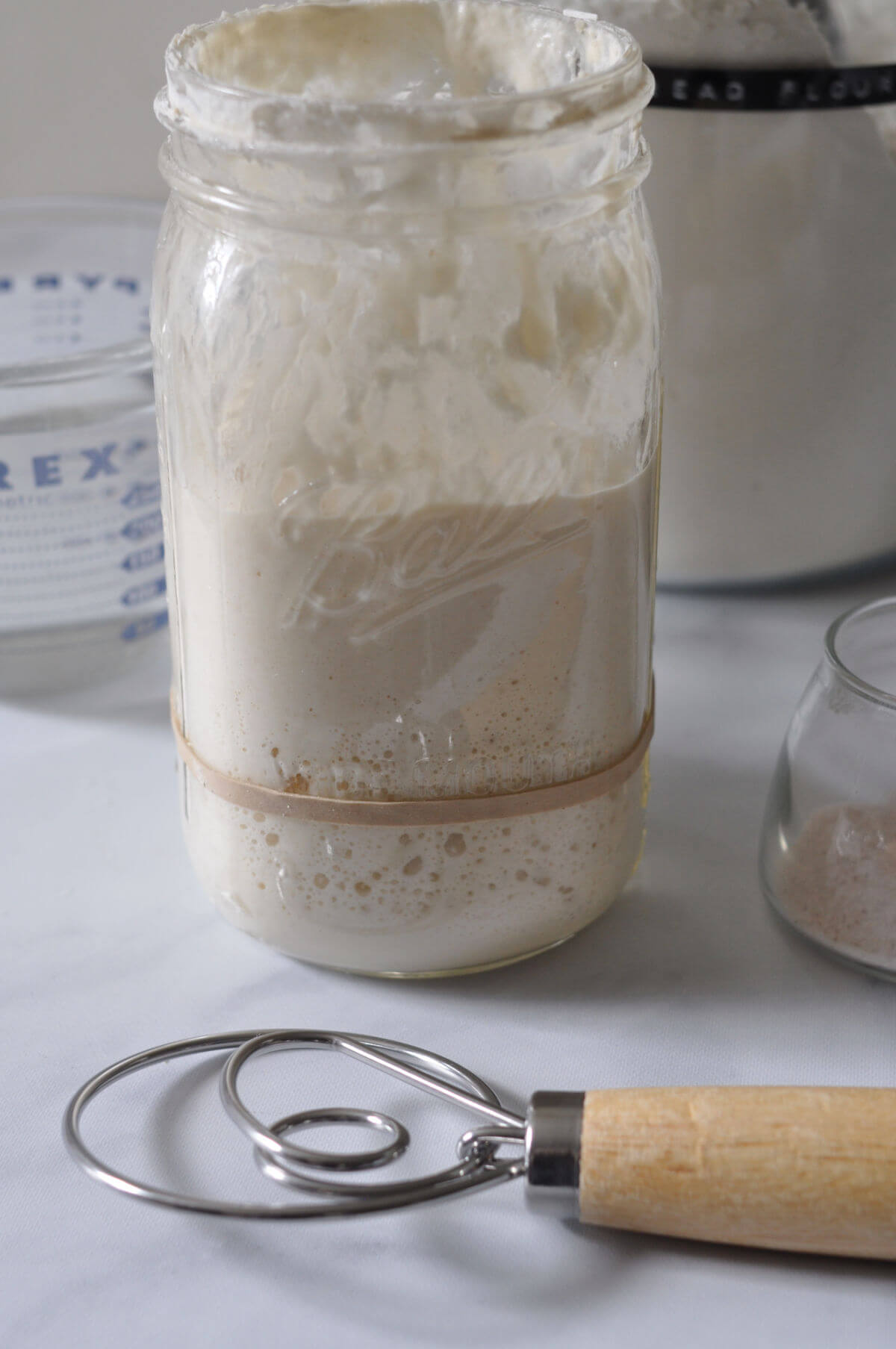
Excess sourdough starter removed during feeding. Sourdough discard is great to use in recipes like pancakes, cakes, muffins, and crackers. Some of my favorite ways to use discard are sourdough granola, sourdough blueberry muffins, and overnight sourdough biscuits!
Ear
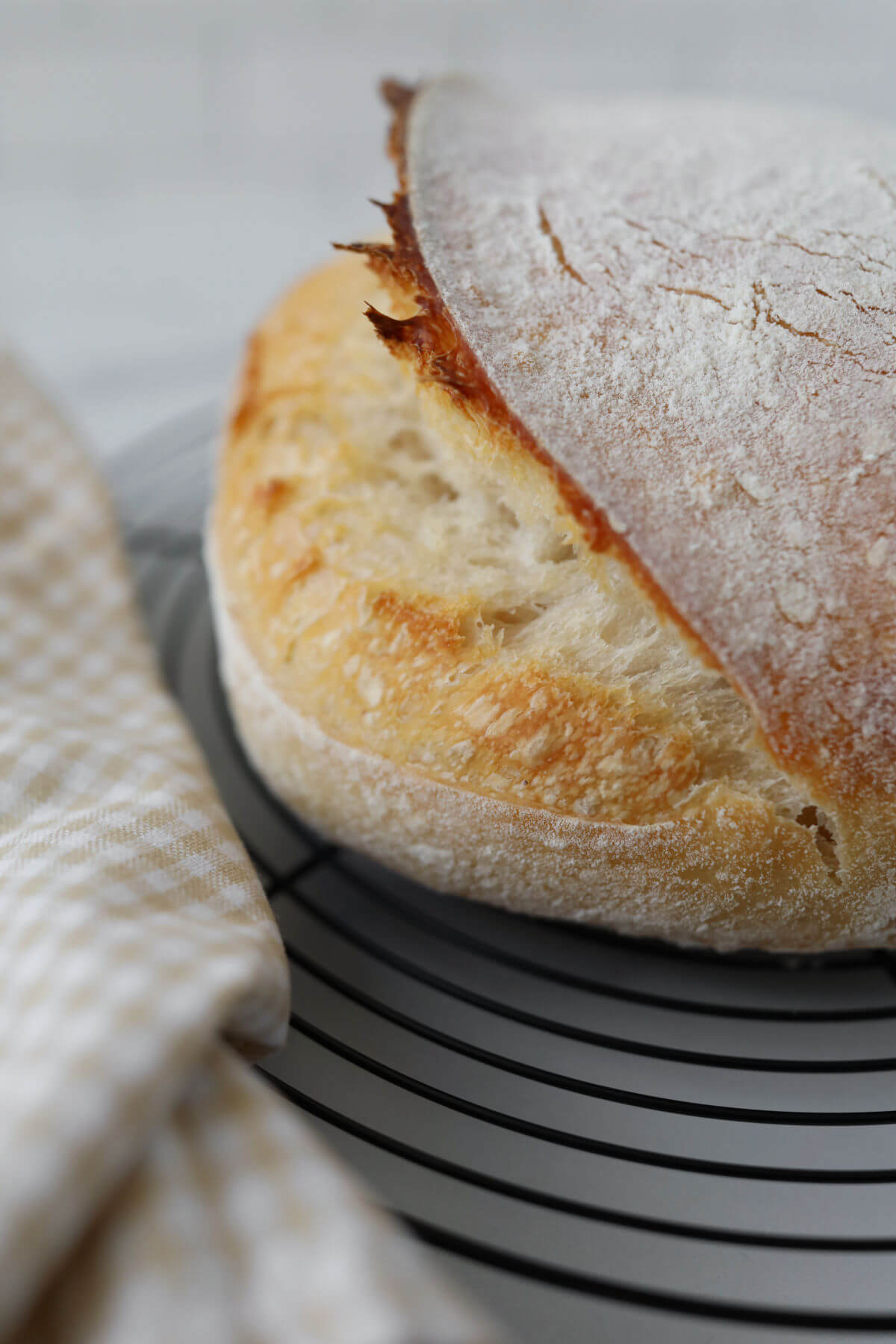
A raised flap of crust that peels back during baking due to scoring. A sign of good oven spring and proper scoring technique.
Feeding
Adding fresh flour and water to your sourdough starter to keep it alive and active. Done regularly to maintain strength and prevent spoilage.
Ferment0lyse
This is the combination of water, flour, salt, and sourdough starter, like the first step in my beginner’s sourdough bread recipe. As with autolyse, this step helps hydrate the flour, develop gluten, and improve dough extensibility and flavor.
Float Test
A way to check if your levain or starter is ready. Drop a spoonful into water—if it floats, it’s supposedly airy and active enough to use. This method isn’t foolproof (and isn’t always accurate), but it can sometimes be a useful test to check to see if your starter is ready to use.

Hooch
A layer of liquid (usually grayish or brown) that can form on top of an unfed starter. It’s alcohol produced by fermentation and a sign your starter needs feeding.
Hydration
The ratio of water to flour in a dough. Higher hydration doughs (70–85%) usually lead to a more open crumb but they’re wetter and may be more challenging to work with.
Hydration can also refer to a sourdough starter. 100% hydration refers to a starter that is fed with equal parts flour and water (by weight).
Knead
Kneading refers to pressing, stretching, and folding the dough with your hands or a bread mixer to develop the gluten in the dough.
Lame (Pronounced “lahm”)
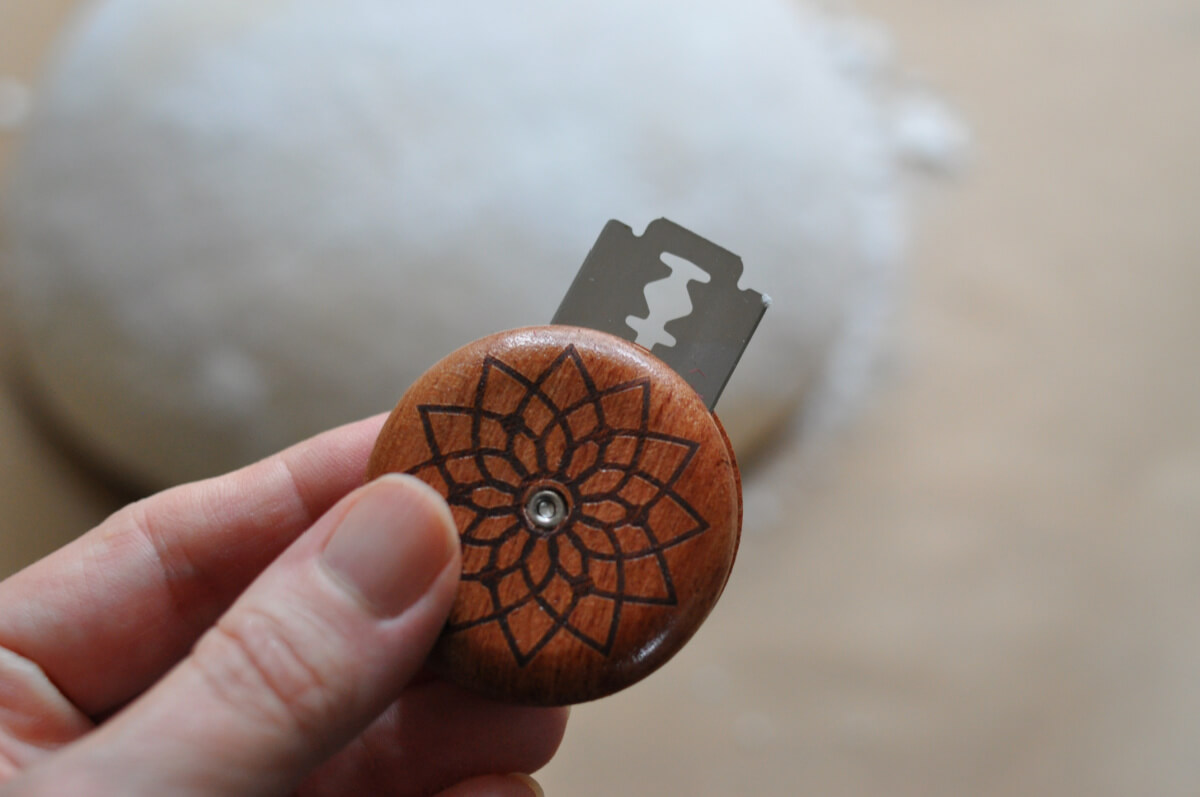
A lame is a razor blade tool used to score dough just before baking. Helps control how the dough expands in the oven.
Lamination
A technique used during bulk fermentation where the dough is stretched very thin and folded like a letter. Helps develop strength and build structure.
Levain
A portion of your starter that you feed and grow specifically to ferment a batch of dough. Typically used at peak activity.
Naturally Leavened
A term used to describe breads made with wild yeast (sourdough starter) rather than commercial yeast. Sourdough is a naturally leavened bread.
Oven Spring
The rapid rise of dough in the first 10–15 minutes of baking due to heat expansion and gas release. Good oven spring results in a tall, airy loaf.
Poke Test
The “poke test” is just one way to help you determine if your bread dough has finished proofing. Here’s how to do the poke test. Press your finger gently into the dough. If the dough springs back very slowly, it is correctly proofed. If it springs back quickly, it’s a sign that it’s underproofed. If it doesn’t spring back at all, that means the dough is overproofed.
Pre-ferment
A mixture of flour, water, and a small amount of starter or yeast, fermented before being added to the main dough. Includes levain, poolish, and biga.
Proofing
The final fermentation after shaping and before baking. Can be done at room temperature or in the fridge (cold proof).
Proofing Basket
Another name for a banneton. Used to hold and shape the dough during the final rise.
Score (Scoring)
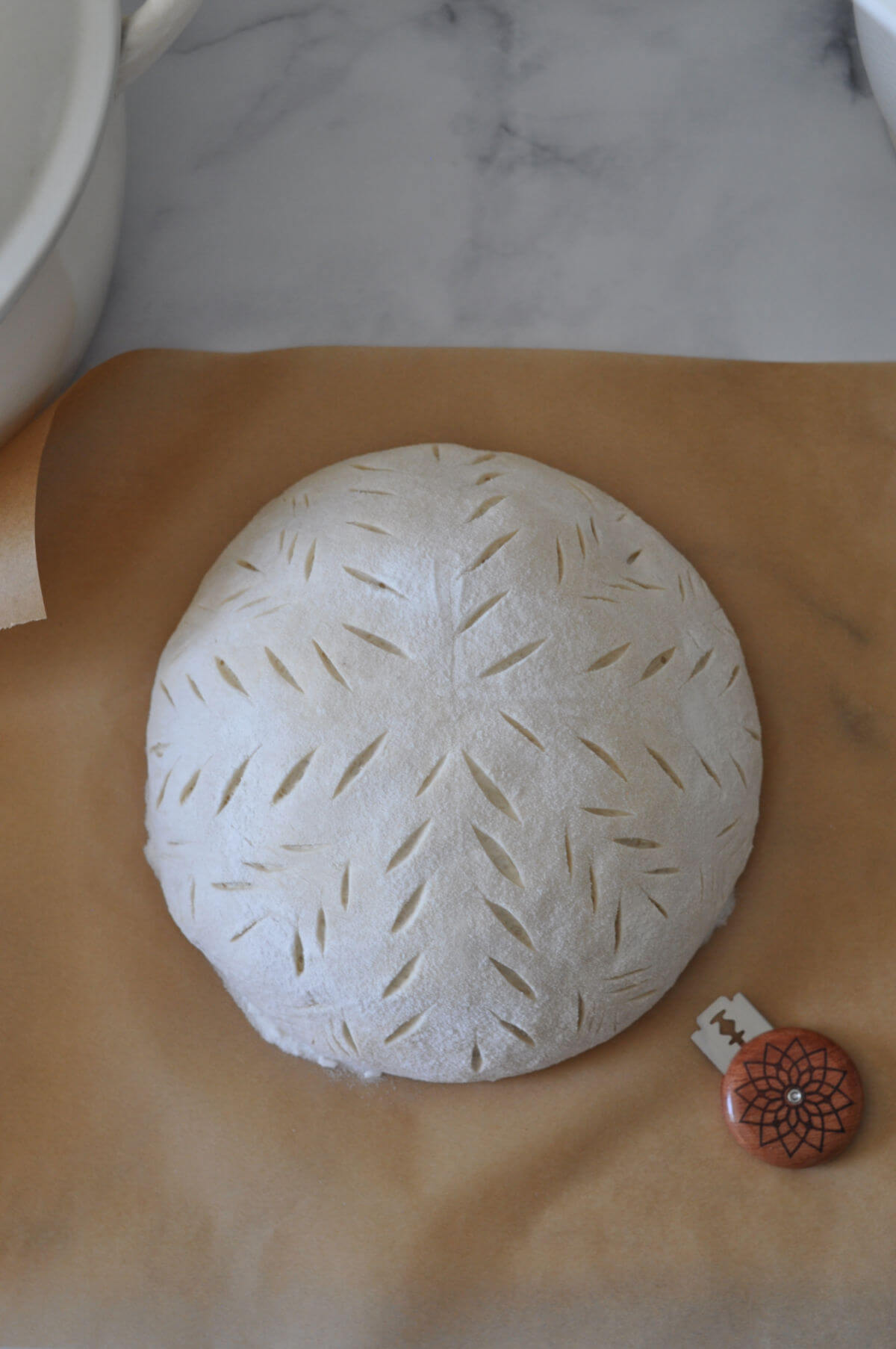
Making deliberate cuts in the dough surface before baking. Helps control the direction of the rise and can add decorative flair.
Second Rise
Also called the final proof. The last fermentation stage after shaping and before baking.
Shaping
Forming your dough into a boule, batard, or other shape before the final proof. Proper shaping builds surface tension for better oven spring.
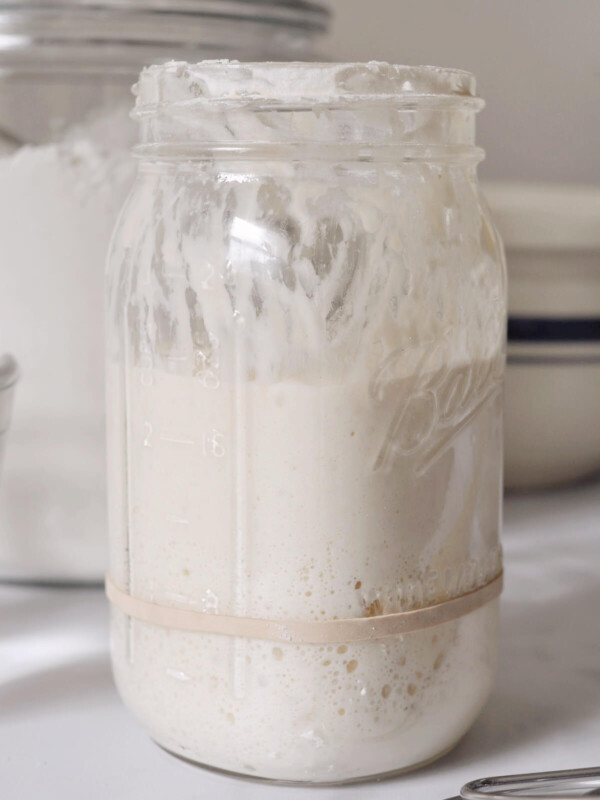
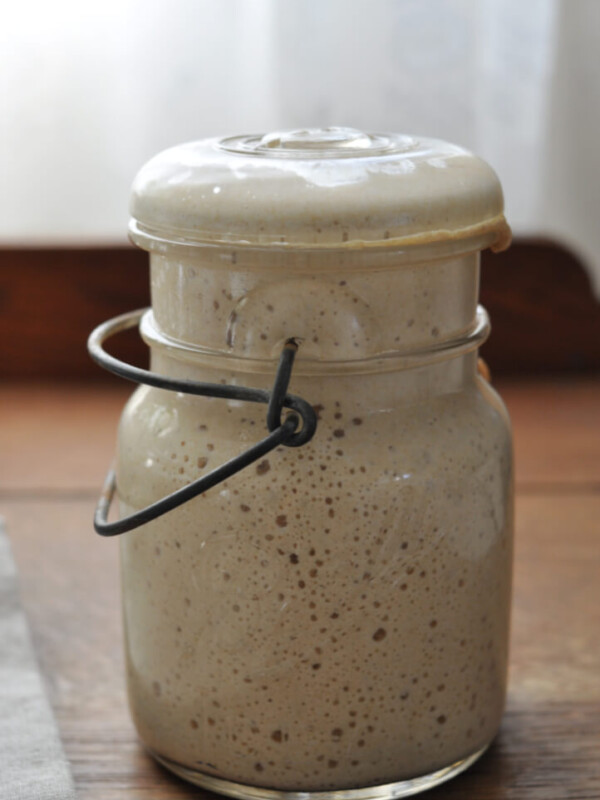
Sourdough Starter
A living culture of flour and water teeming with wild yeast and lactic acid bacteria. It’s what naturally leavens your bread instead of using commercial yeast. You’ll need active sourdough starter when you make sourdough bread, but discard starter is great for so many things that don’t require your starter to be in its active state.
Sourdough Discard
Sourdough discard is the portion of the sourdough starter that is removed when feeding. You don’t actually have to ever discard any of your sourdough starter. It’s possible to maintain your starter without discarding any of it, or you can also use it in delicious sourdough discard recipes!
Stretch and Fold
A method to strengthen dough during bulk fermentation. One side is stretched and folded over the center, repeated around the dough to build gluten structure. This is a gentler process than kneading dough, and it helps develop the gluten.

Windowpane Test
A test for gluten development. Stretch a small piece of dough—if it can be pulled thin enough to let light through without tearing, the gluten is well developed.
I hope this sourdough glossary is helpful to you!