This post may contain affiliate links. Please read our disclosure policy.
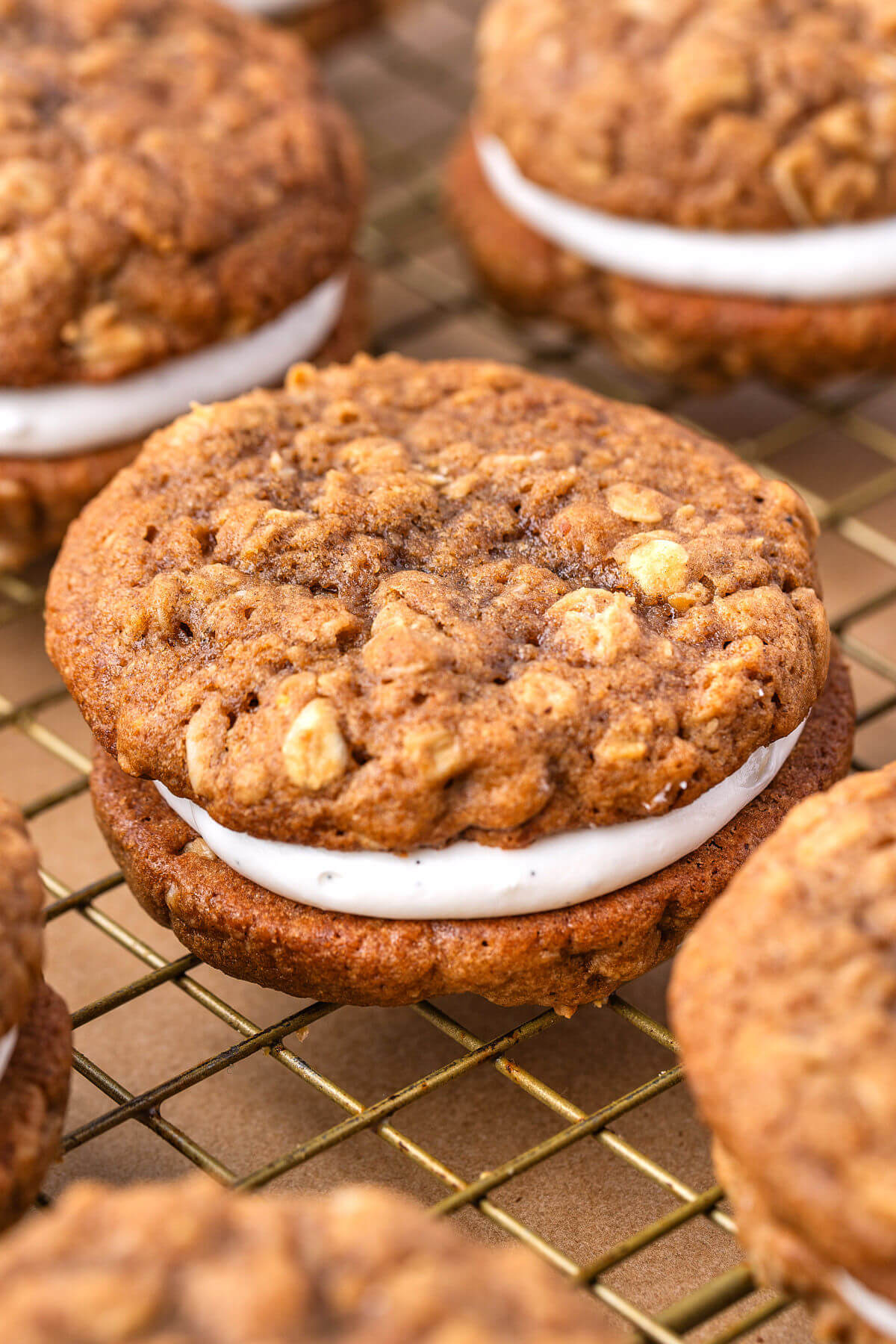
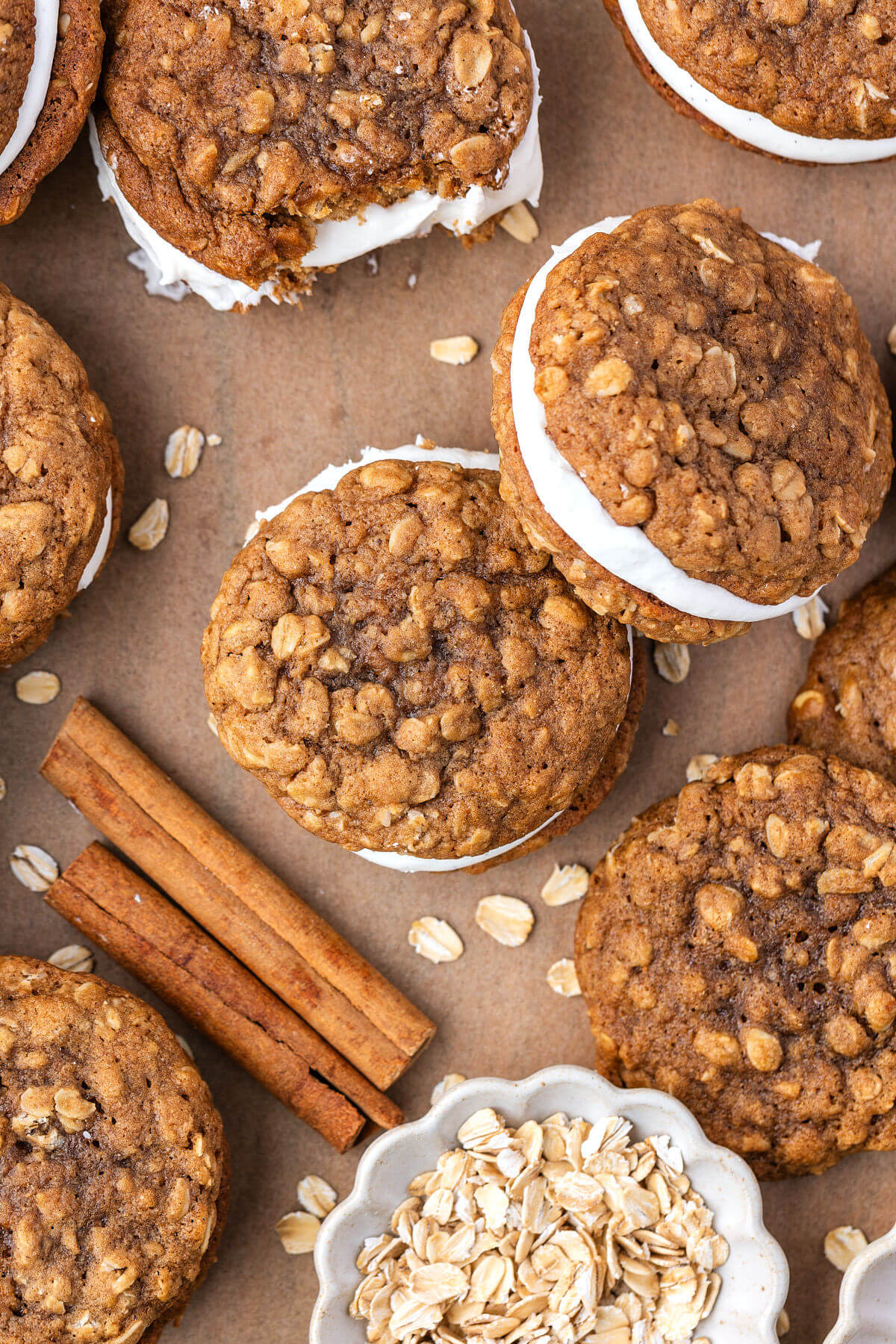
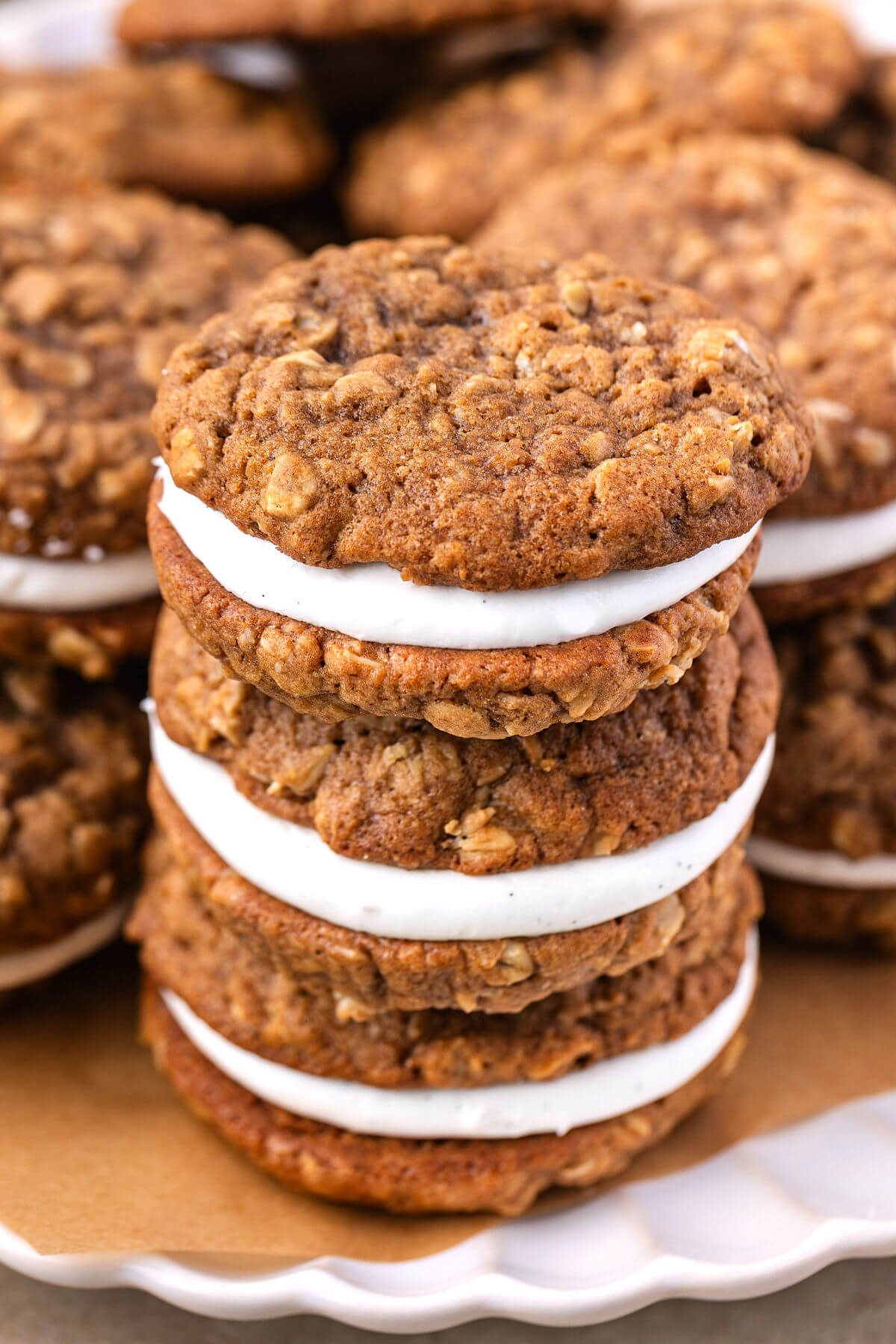
These sourdough oatmeal cream pies are a fun homemade version of the oatmeal cream pies you may remember from childhood.
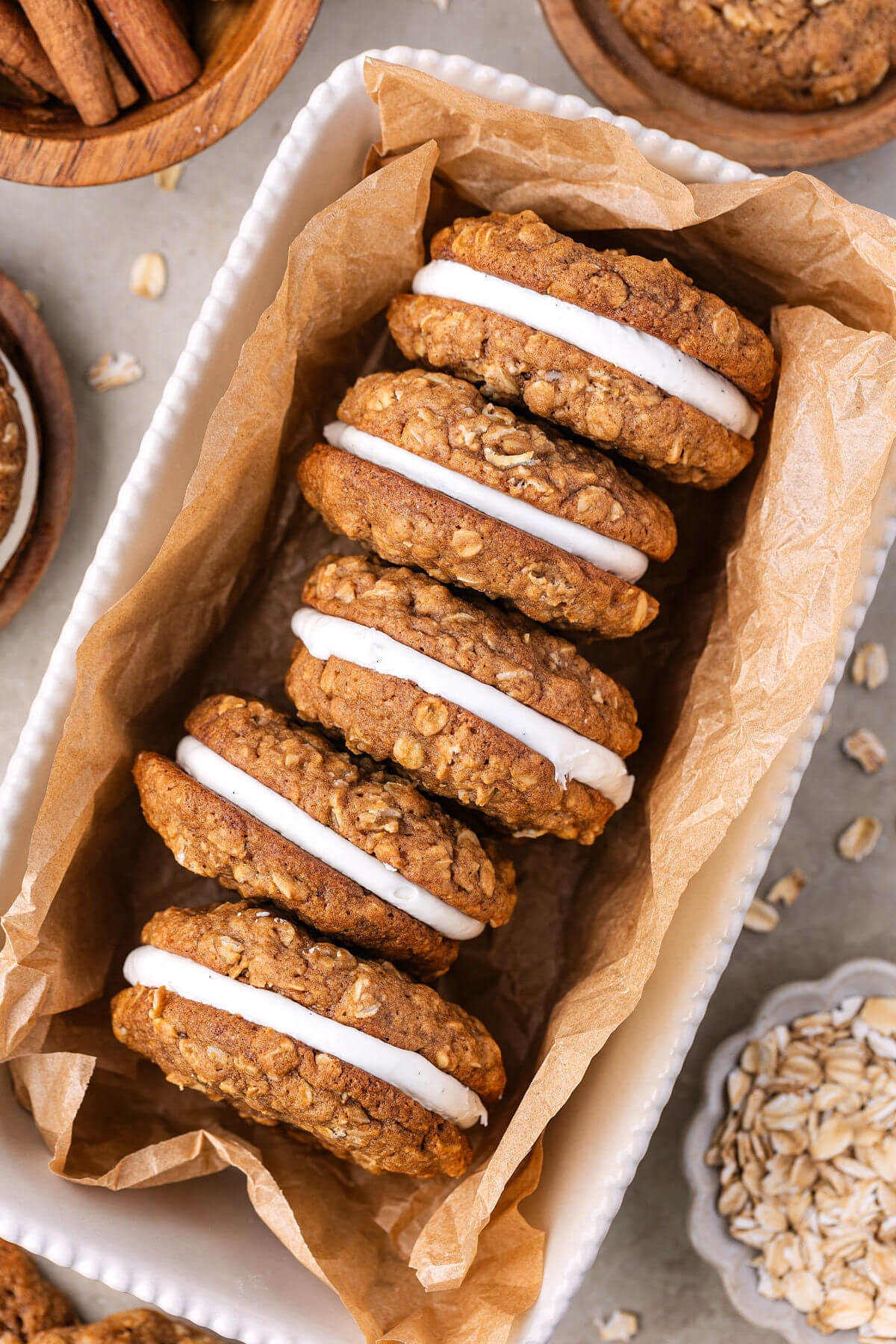
They have soft, chewy oatmeal cookies with plenty of cinnamon flavor and a fluffy marshmallow buttercream filling sandwiched in the middle.
Brown sugar and molasses give the cookies that familiar oatmeal cookie flavor, and the sourdough discard adds extra softness to the cookie.
If you’re looking for more treats to make with sourdough discard, try these Sourdough S’mores Cookies, Brown Butter Chocolate Chip Sourdough Cookies, and Sourdough Pop Tarts.
Why You’ll Love Sourdough Oatmeal Cream Pies
- Soft and chewy: The oatmeal cookies stay soft and tender, making them perfect for sandwiching with the creamy filling.
- A great use for sourdough discard: Sourdough discard adds another layer of flavor while giving you one more delicious way to use up extra discard.
- Make them ahead: The cookie dough can be refrigerated overnight, so you can mix it up one day and bake the cookies the next.
Ingredients
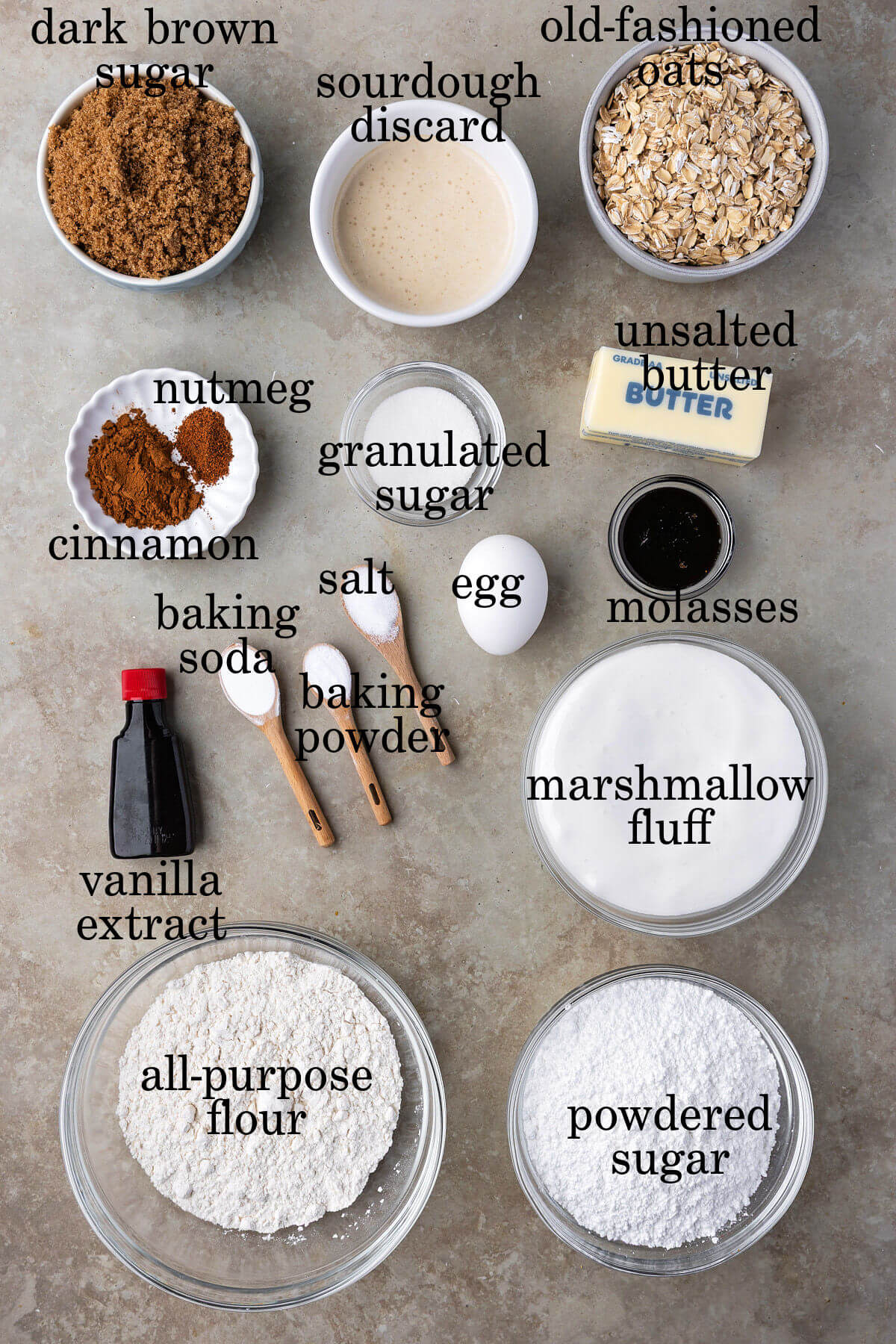
Find the full list of ingredients, amounts, and instructions in the recipe card at the bottom of this post.
- Sourdough discard – Adds a subtle tang to the cookies and works especially well with the brown sugar and molasses.
- Old-fashioned rolled oats – Gives these chewy cookies their texture. Old-fashioned oats work better here than quick oats.
- Dark brown sugar and molasses – Add sweetness, moisture, and a deeper molasses flavor that gives the cookies their old-fashioned oatmeal cookie taste.
- Cinnamon and nutmeg – A little warm spice complements the oats and brown sugar without overpowering the cookies.
- Marshmallow fluff – Combined with butter, powdered sugar, and vanilla to make the soft, fluffy cream filling.
How to Make Sourdough Oatmeal Cream Pies
Here are the step-by-step instructions for making these cream pies:
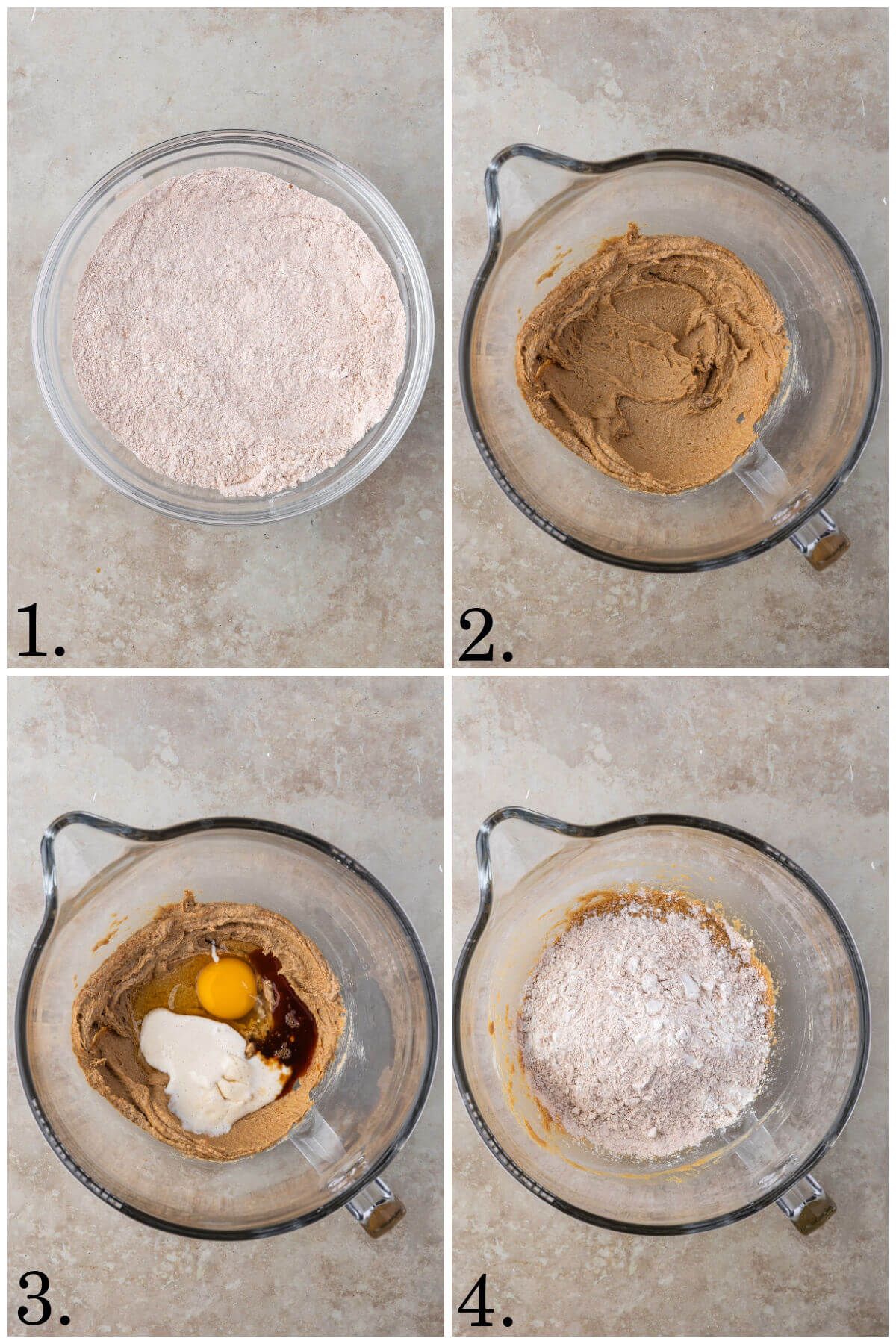
Step 1: In a medium mixing bowl, whisk together the flour, baking soda, baking powder, salt, cinnamon, and nutmeg. Set aside.
Step 2: In a large mixing bowl, beat the softened butter, brown sugar, and granulated sugar with a hand mixer or stand mixer fitted with the paddle attachment until light and creamy, about 2–3 minutes.
Step 3: Add the molasses and mix until well combined. Add the egg, sourdough discard, and vanilla extract. Mix until smooth and fully incorporated, scraping down the sides and bottom of the bowl as needed.
Step 4: Add the dry ingredients in two additions, mixing on low speed after each addition. Mix only until most of the flour is incorporated; do not overmix.
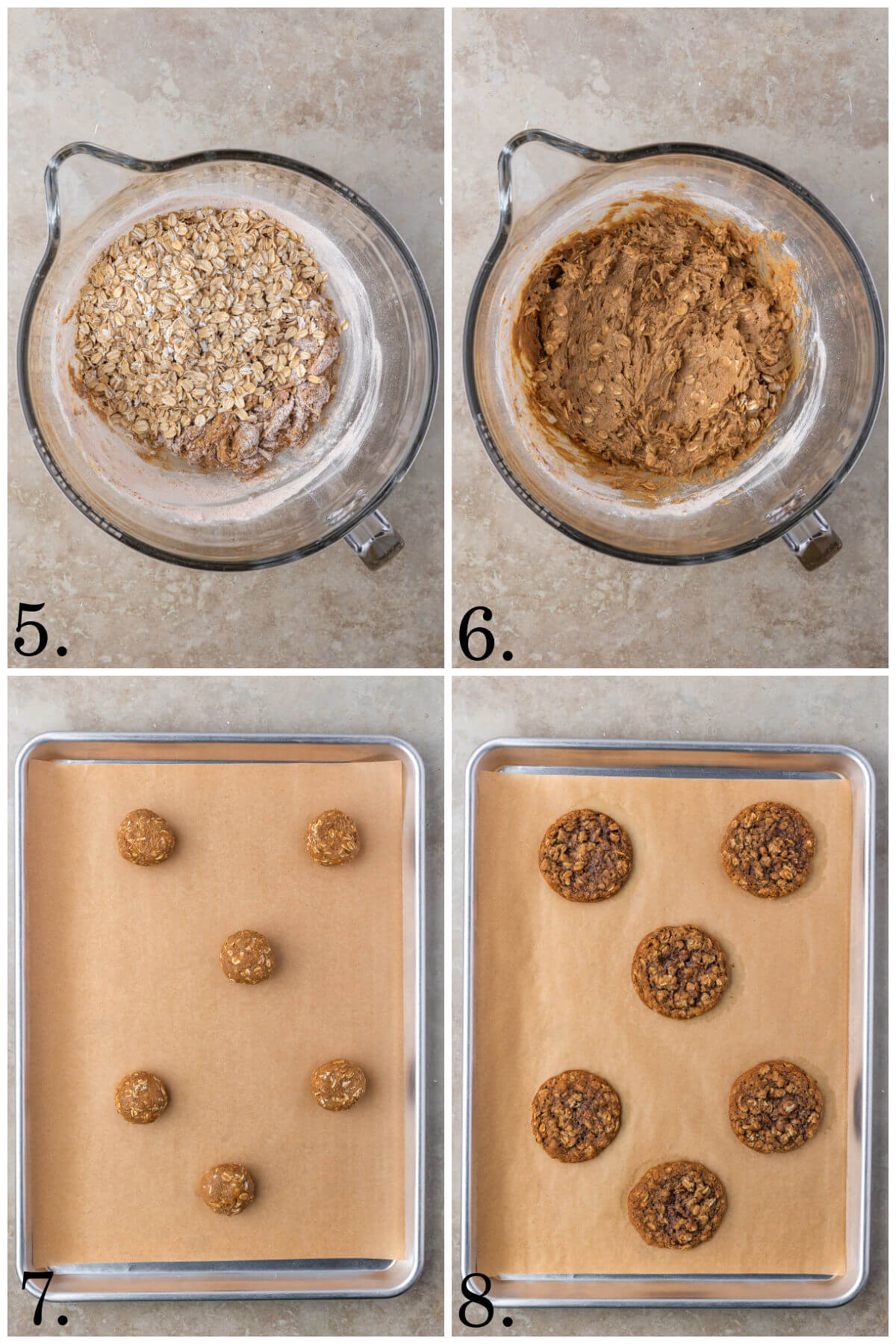
Step 5: Add the oats and mix on low just until evenly distributed. If needed, finish folding the oats in by hand with a rubber spatula.
Step 6: Cover the dough and refrigerate for at least 30–45 minutes, or overnight.
Step 7: When ready to bake, preheat the oven to 350°F and line baking sheets with parchment paper. Using a #40 cookie scoop, portion the chilled dough into approximately 35g portions. Place the dough several inches apart on the prepared baking sheets.
Step 8: Bake for 9–11 minutes, or until the edges are lightly golden and the centers look set but still soft. Allow the cookies to cool on the baking sheet for about 5 minutes before transferring them to a wire rack to cool completely.
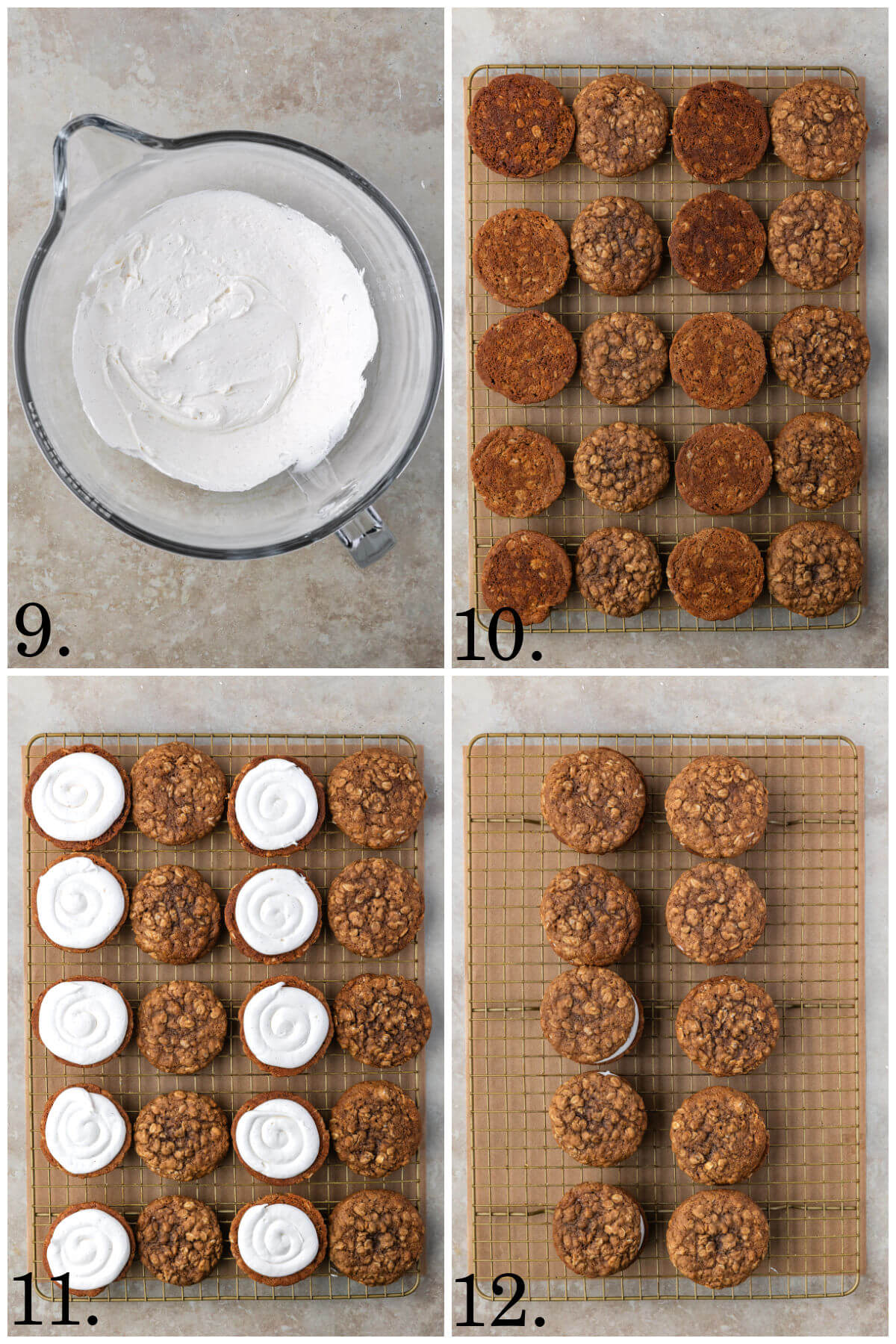
Step 9: While the cookies cool, prepare the filling. Beat the softened butter until smooth and creamy. Gradually add the powdered sugar, mixing on low speed until incorporated. Increase the speed and beat until light and fluffy.
Add the marshmallow fluff, vanilla extract, and salt. Beat until the filling is smooth and fluffy.
Steps 10 and 11: Once the cookies are completely cool, pipe or spread a generous layer of filling onto the flat side of half of the cookies.
Step 12: Top with the remaining cookies and gently press together.
Tips for Success
- Dark brown sugar is recommended for the richest flavor and pairs especially well with the molasses in these cookies. Light brown sugar can also be used if you prefer a more subtle molasses flavor.
- Don’t skip the chilling step. The rest allows the oats to absorb some of the moisture in the dough, which contributes to the soft, chewy texture. It also helps control spreading. The dough can be chilled for 30–45 minutes or prepared the night before and refrigerated overnight.
- Once the flour is added, mix only until most of it is incorporated before adding the oats. The oats only need a brief mix to distribute them evenly. If necessary, finish incorporating them with a spatula to avoid overmixing.
- A #40 cookie scoop works well for these cookies and produces a good size for sandwiching. For the most consistent results, portion the dough at approximately 35g per cookie.
- The cookies should still look soft in the center when removed from the oven. They will continue to set as they cool, so avoid overbaking to keep the finished sandwich cookies soft and tender.
- Allow the cookies to cool completely before adding the filling. Filling warm cookies can cause the marshmallow filling to soften too much.
How to Store
- Store assembled sourdough oatmeal cream pies in an airtight container at room temperature for up to 3 days.
- For longer storage, refrigerate in an airtight container for up to 1 week. Allow refrigerated cookies to sit at room temperature before serving for the softest texture.
- Unfilled cookies can be frozen in an airtight container for up to 2 months. Thaw completely before filling.
Frequently Asked Questions
Yes. Both work well. Dark brown sugar is recommended for a deeper, richer flavor and more pronounced molasses notes. Light brown sugar will give you a slightly milder molasses flavor.
Yes. A hand mixer works perfectly for this recipe. Use low speed when adding the dry ingredients and oats, and finish with a spatula if the dough becomes difficult to mix.
Chilling helps prevent excessive spreading and gives the oats time to absorb moisture from the dough. This contributes to the soft, chewy texture these cookies are meant to have.
Old-fashioned rolled oats are recommended for the best texture. Quick oats will produce a softer, less textured cookie and may absorb moisture differently.
Make sure the dough is thoroughly chilled before baking and that your butter was softened but not melted or overly warm. Also make sure you’re placing the dough on a cool baking sheet rather than one that is still warm from a previous batch.
The recipe makes approximately 10–11 sandwich cookies, or 20–22 individual cookies. The exact yield will depend on the size of your scoops.

More Sourdough Desserts
- Sourdough Brownies
- Sourdough Lemon Bars
- Sourdough Carrot Cake
- Sourdough Chocolate Cookies
- Sourdough Apple Cider Donuts
If you make this sourdough oatmeal cream pies recipe and enjoy it, please leave a comment with a 5-star recipe rating and let me know! Thank you!

Sourdough Oatmeal Cream Pies
Equipment
- stand mixer with paddle attachment or hand mixer
- Round Cookie Cutter for the cookie-scoot method
Ingredients
- 152 grams all-purpose flour, 1 1/4 cups
- 1/2 teaspoon baking soda
- 1/4 teaspoon baking powder
- 1/2 teaspoon salt
- 1 1/4 teaspoons ground cinnamon
- 1/8 teaspoon ground nutmeg
- 113 grams unsalted butter, softened, 1/2 cup
- 165 grams packed dark brown sugar, 3/4 cup
- 25 grams granulated sugar, 2 tablespoons
- 20 grams molasses, 1 tablespoon
- 1 large egg, room temperature
- 70 grams sourdough discard, 100% hydration, about 1/4 cup
- 2 teaspoons vanilla extract
- 135 grams old-fashioned rolled oats, 1 1/2 cups
Cream Filling
- 113 grams unsalted butter, softened, 1/2 cup
- 170 grams powdered sugar, 1 1/2 cups
- 120 grams marshmallow fluff, about 1 cup, or marshmallow cream
- 2 teaspoons vanilla extract
- Pinch of salt
Instructions
- In a medium mixing bowl, whisk together the flour, baking soda, baking powder, salt, cinnamon, and nutmeg. Set aside.
- In a large mixing bowl, beat the softened butter, brown sugar, and granulated sugar with a hand mixer or stand mixer fitted with the paddle attachment until light and creamy, about 2–3 minutes.
- Add the molasses and mix until well combined.
- Add the egg, sourdough discard, and vanilla extract. Mix until smooth and fully incorporated, scraping down the sides and bottom of the bowl as needed.
- Add the dry ingredients in two additions, mixing on low speed after each addition. Mix only until most of the flour is incorporated; do not overmix.
- Add the oats and mix on low just until evenly distributed. If needed, finish folding the oats in by hand with a rubber spatula.
- Cover the dough and refrigerate for at least 30–45 minutes, or overnight.
- When ready to bake, preheat the oven to 350°F and line baking sheets with parchment paper.
- Using a #40 cookie scoop, portion the chilled dough into approximately 35g portions. Place the dough several inches apart on the prepared baking sheets.
- Bake for 9–11 minutes, or until the edges are lightly golden and the centers look set but still soft.
- Immediately after removing the cookies from the oven, use the cookie-scoot method to reshape them into neat, round circles. Place a round cookie cutter slightly larger than the cookie over each one and gently scoot the cookie in a circular motion until the edges are smooth and uniform.
- Allow the cookies to cool on the baking sheet for about 5 minutes before transferring them to a wire rack to cool completely.
- Make the Cream Filling: While the cookies cool, prepare the filling.
- Beat the softened butter until smooth and creamy.
- Gradually add the powdered sugar, mixing on low speed until incorporated. Increase the speed and beat until light and fluffy.
- Add the marshmallow fluff, vanilla extract, and salt. Beat until the filling is smooth and fluffy.
- Once the cookies are completely cool, pipe or spread a generous layer of filling onto the flat side of half of the cookies. Top with the remaining cookies and gently press together.
Notes
- Dark brown sugar is recommended for the richest flavor and pairs especially well with the molasses in these cookies. Light brown sugar can also be used if you prefer a more subtle molasses flavor.
- Don’t skip the chilling step. The rest allows the oats to absorb some of the moisture in the dough, which contributes to the soft, chewy texture. It also helps control spreading. The dough can be chilled for 30–45 minutes or prepared the night before and refrigerated overnight.
- Once the flour is added, mix only until most of it is incorporated before adding the oats. The oats only need a brief mix to distribute them evenly. If necessary, finish incorporating them with a spatula to avoid overmixing.
- A #40 cookie scoop works well for these cookies and produces a good size for sandwiching. For the most consistent results, portion the dough at approximately 35g per cookie.
- Use the cookie-scoot method immediately after the cookies come out of the oven while they’re still soft. This creates smooth, uniform edges and makes the cookies easier to sandwich.
- The cookies should still look soft in the center when removed from the oven. They will continue to set as they cool, so avoid overbaking to keep the finished sandwich cookies soft and tender.
- Allow the cookies to cool completely before adding the filling. Filling warm cookies can cause the marshmallow filling to soften too much.
Nutrition
Nutrition information is automatically calculated, so should only be used as an approximation.