
This post may contain affiliate links. Please read our disclosure policy.
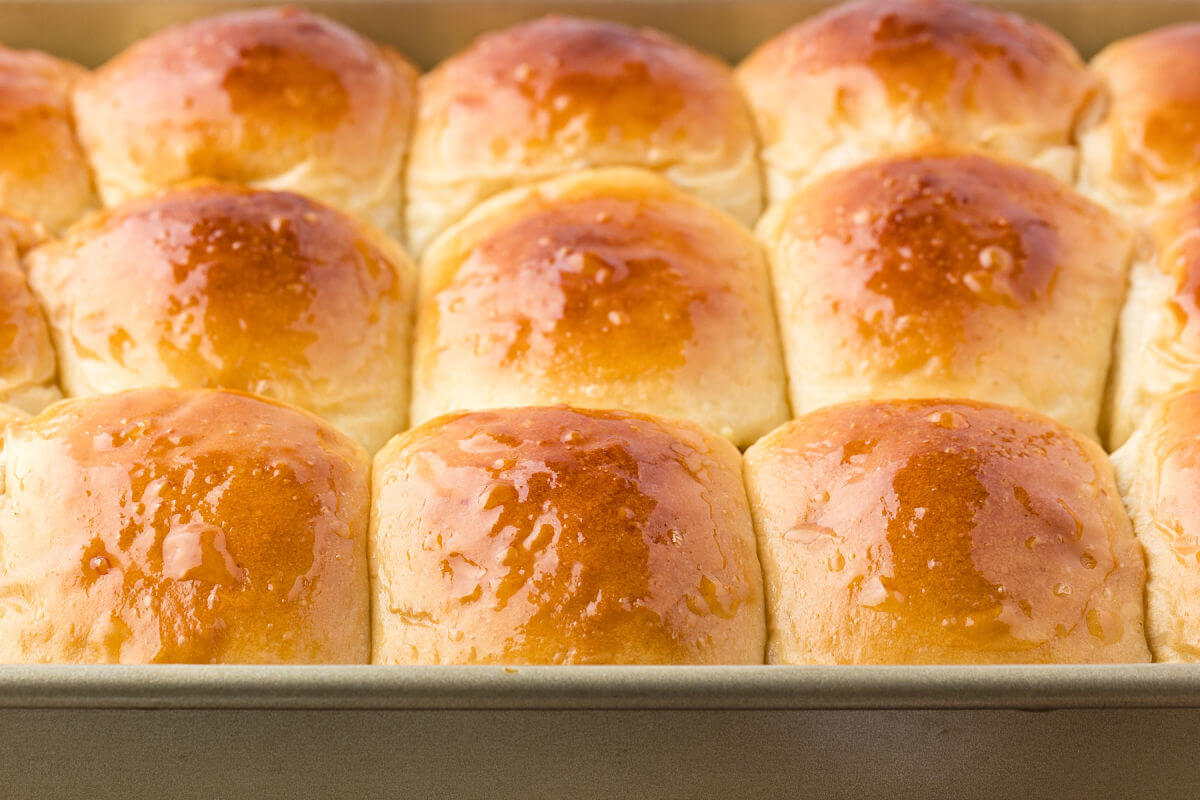
These soft, fluffy sourdough discard Hawaiian rolls are lightly sweet from pineapple juice and honey, with a tender, pull-apart texture.
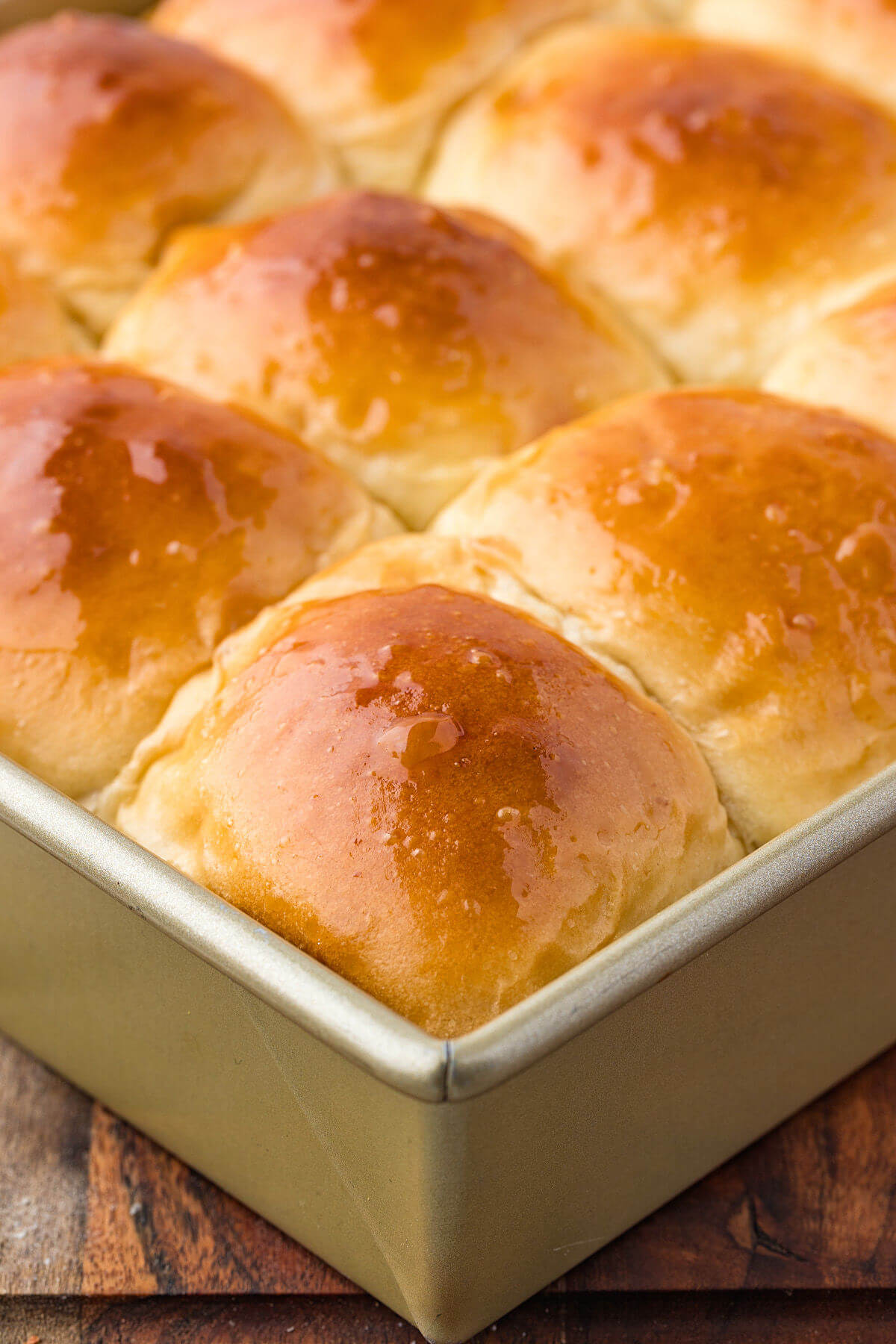
Made with sourdough discard and instant yeast, they’re approachable, reliable, and perfect for everything from holiday dinners to homemade sliders.
For more sourdough discard recipes, try these sourdough discard rolls, overnight sourdough biscuits, sourdough cheddar biscuits, and sourdough discard cinnamon rolls.
Why You’ll Love Sourdough Discard Hawaiian Rolls
- Great Way to Use Up Discard: This is another delicious way to use up sourdough starter discard.
- Can Make Them Ahead: This sourdough Hawaiian roll recipe can be made the day before, stored in the refrigerator, and baked the next morning, which is so convenient.
- Perfect for Holidays: Hawaiian sweet rolls are often served at Thanksgiving and Christmas, but they’re also perfect for any holiday, and they make a delicious slider.
Ingredients
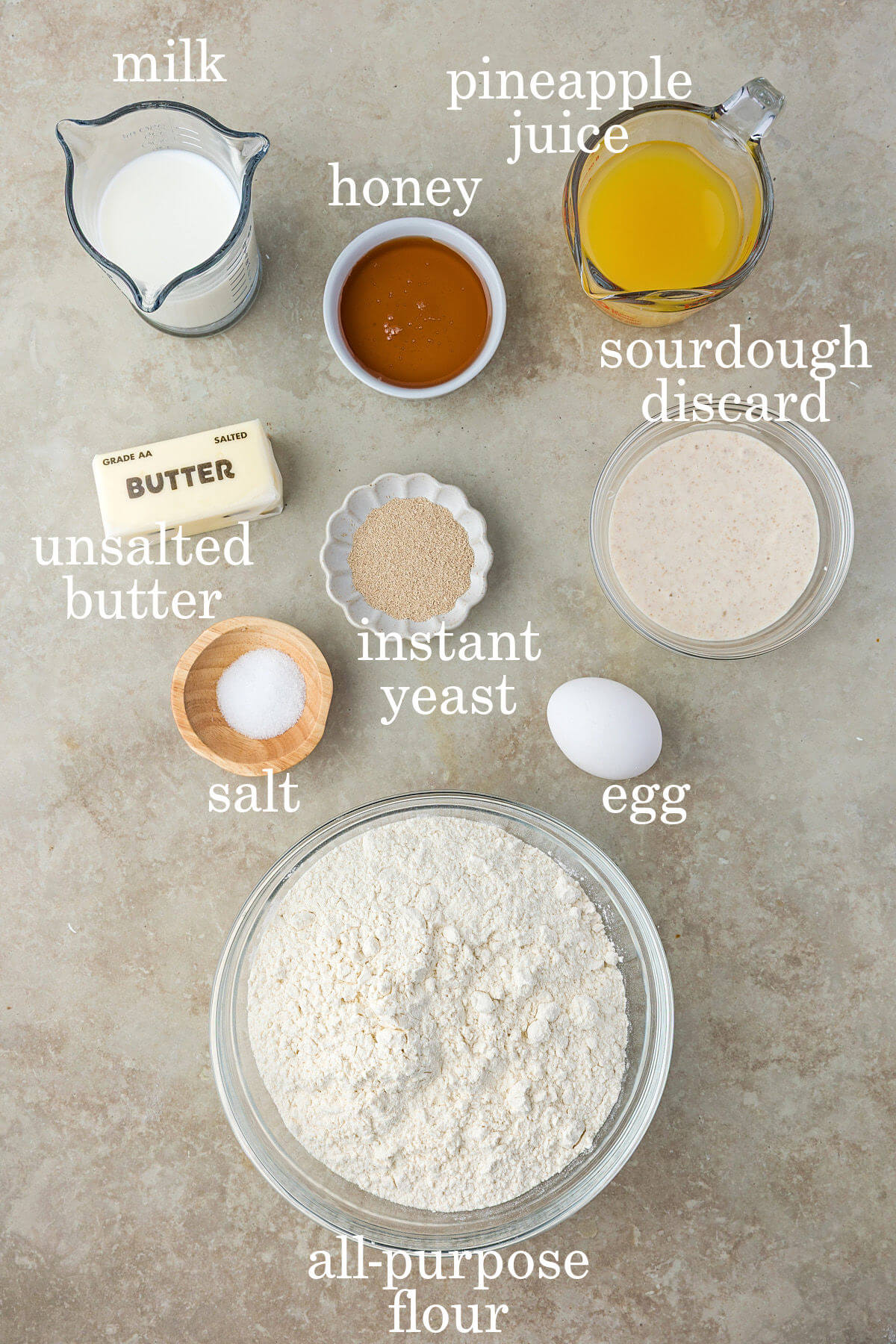
Find the full list of ingredients, amounts, and instructions in the printable recipe card at the bottom of this post.
- Pineapple Juice: This recipe was developed using a standard 6 oz can of pineapple juice, making it easy to keep on hand and bake multiple batches.
- Milk: Whole milk
- Egg: 1 large egg for the rolls, and 1 egg for the egg wash.
- Honey: The honey provides just the right amount of sweetness along with the pineapple juice.
- Sourdough Discard: You can also use active sourdough starter.
- All-Purpose Flour: Simple all-purpose flour is used.
- Yeast: This recipe calls for instant yeast, but you can also use active yeast.
- Salt: I use sea salt.
- Butter: Unsalted butter is used. If you only have salted butter, you can reduce some of the salt in the recipe.
How to Make Sourdough Discard Hawaiian Rolls
Here are the step-by-step instructions for making this sourdough Hawaiian rolls recipe.
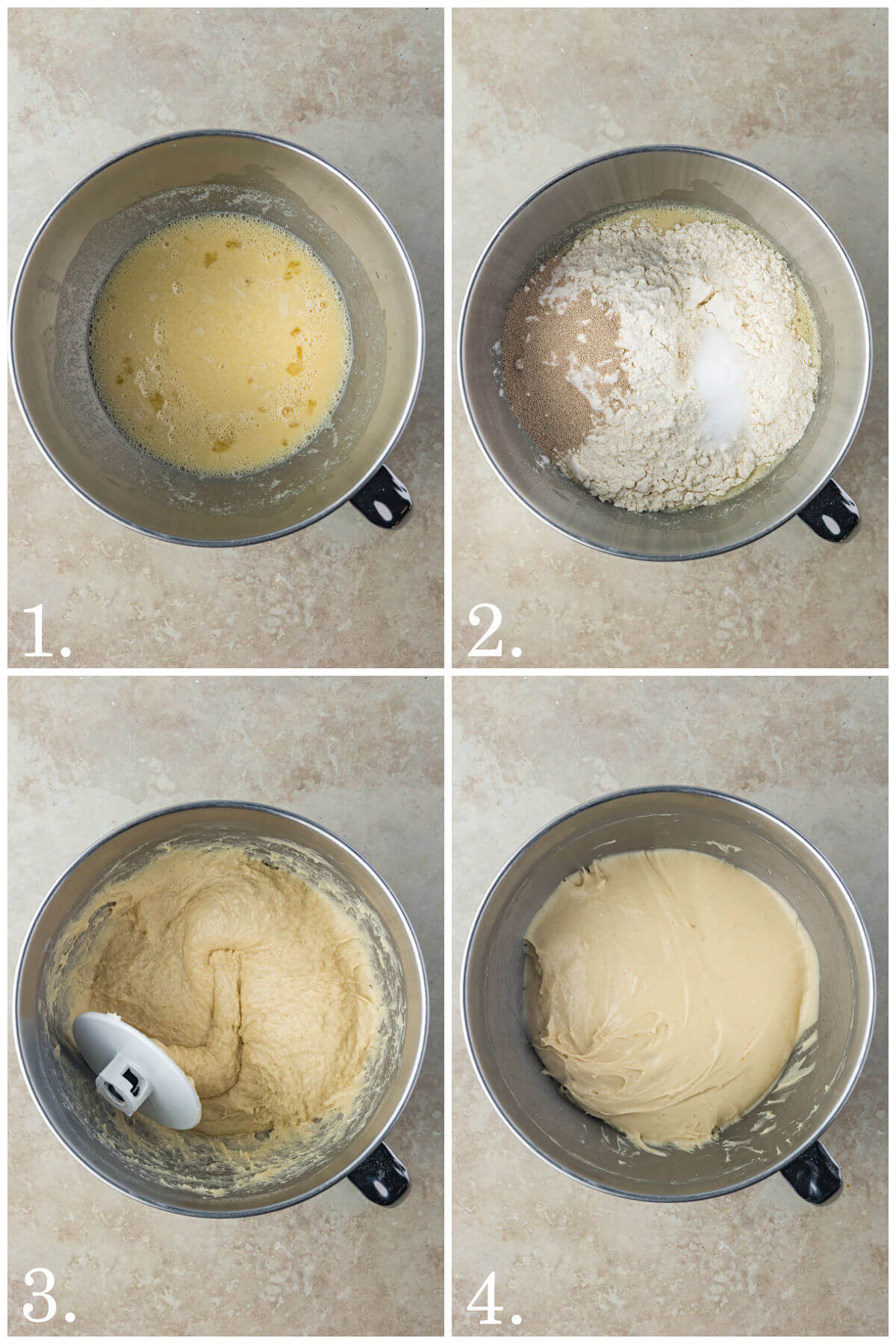
Step 1: In the bowl of a stand mixer, whisk together the pineapple juice, milk, honey, egg, and sourdough discard until smooth.
Step 2: Add 4 ½ cups (540g) flour, yeast, and salt. Mix on low speed until a shaggy dough forms. It will look rough and slightly sticky at this stage.
Step 3: Add the softened butter one tablespoon at a time, mixing on medium-low speed. The dough may look like it’s falling apart or not coming together at first. This is normal—keep mixing and let the dough absorb the butter.
Step 4: Continue kneading with the dough hook attachment for 8–10 minutes. The dough will go through a sticky, messy phase before becoming smooth and elastic. Avoid adding extra flour too early, even if it looks too soft.
The dough should be soft and slightly tacky and mostly pulling away from the sides of the bowl.
To check readiness, stretch a small piece of dough. It should stretch thin enough to let light through without tearing immediately.
Only if the dough is still very loose after kneading, add flour 1 tablespoon at a time.
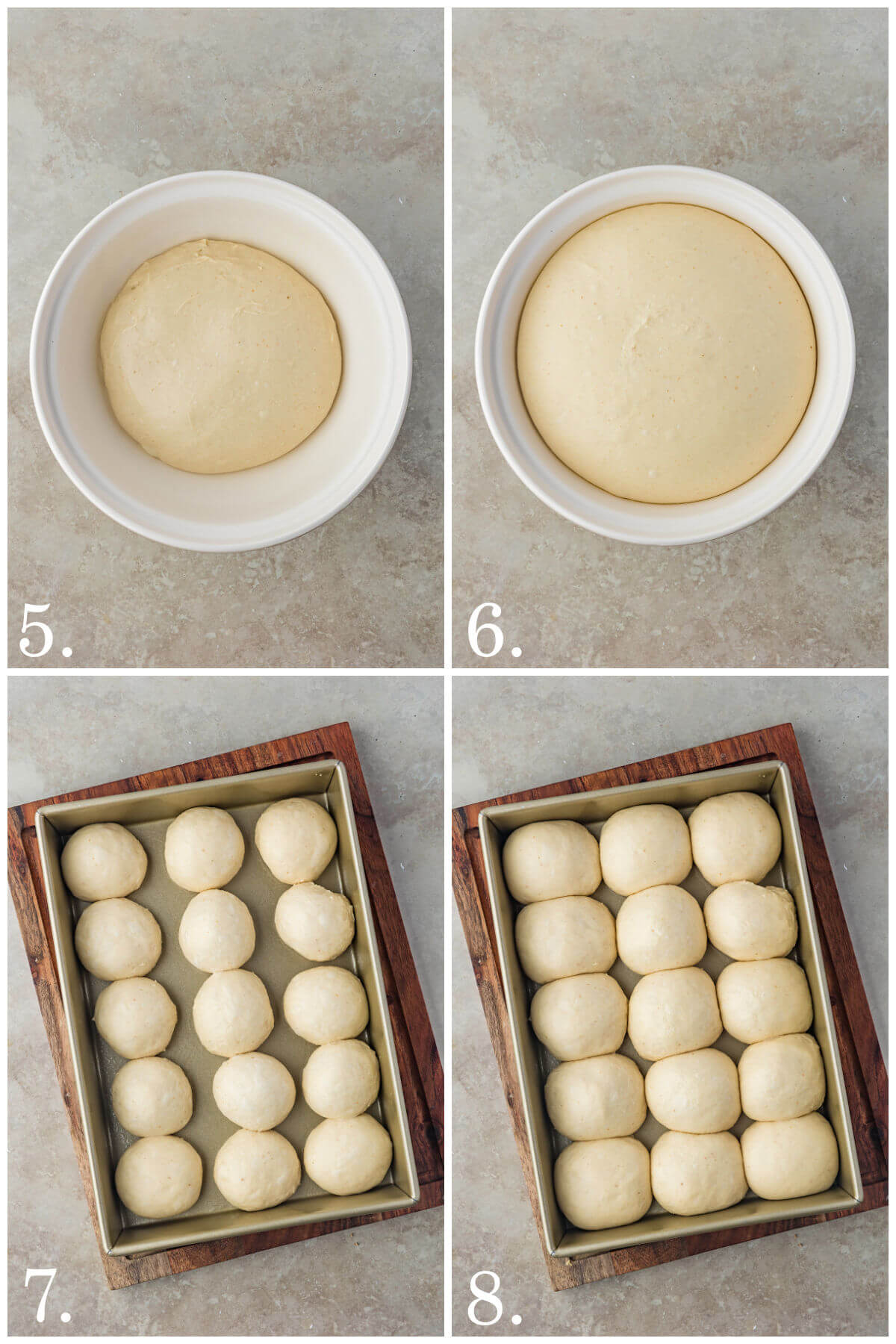
Step 5: Transfer the dough ball to a lightly greased bowl, cover, and let rise for 60–90 minutes, or until doubled in size.
Step 6: Turn the dough out onto a lightly floured surface and divide into 15 equal portions (about 65–70g each). Shape into smooth balls, keeping the tops tight.
Step 7: Arrange in a greased 9×13-inch pan.
Step 8: Cover and let rise in a warm place for 45–75 minutes, until puffy and touching.
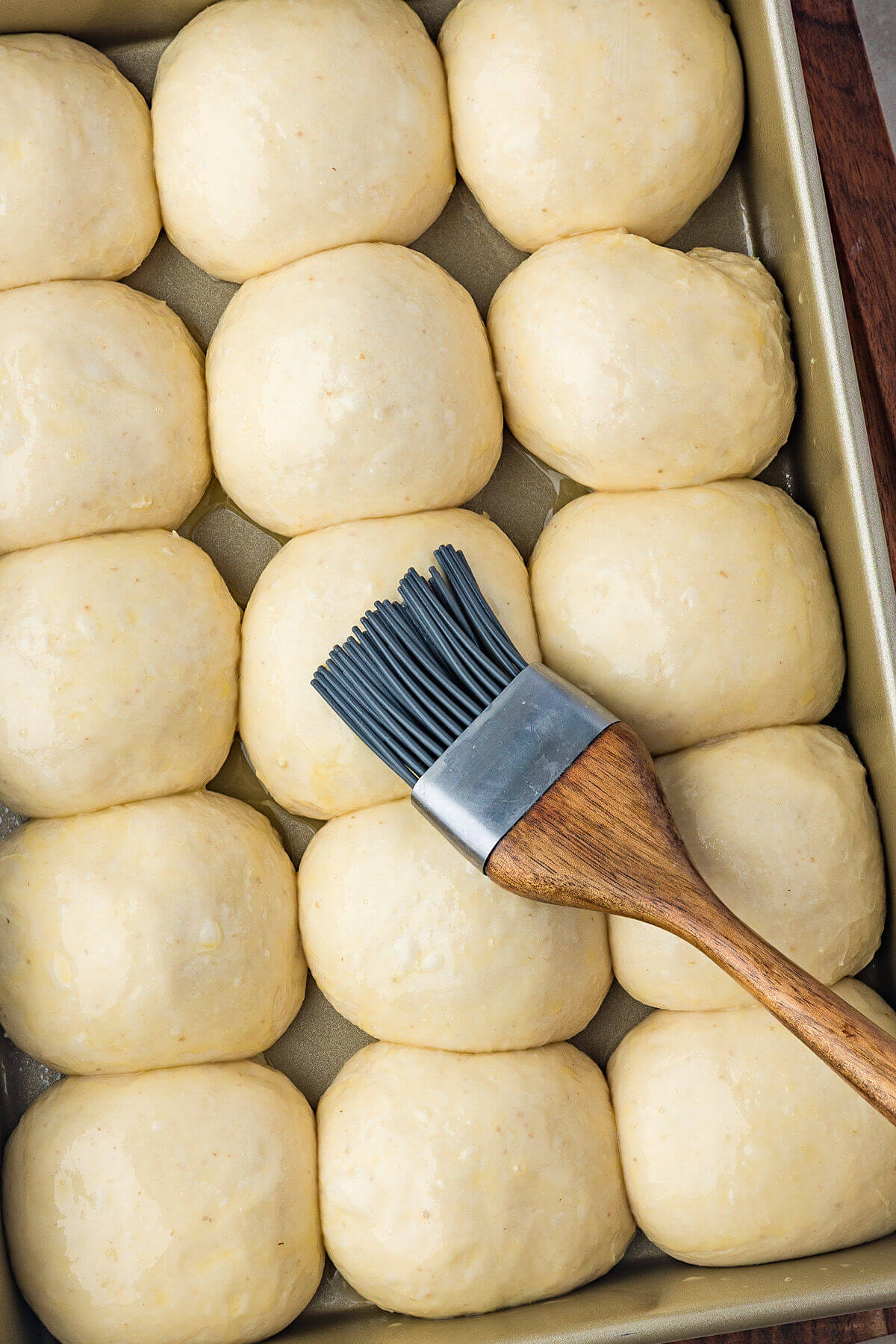
Preheat oven to 350°F. In a small bowl, whisk together the egg and milk, then gently brush over the tops of the rolls.
Bake for 18–22 minutes, rotating halfway through, until golden brown and the center reaches 190°F. Let cool slightly before serving.
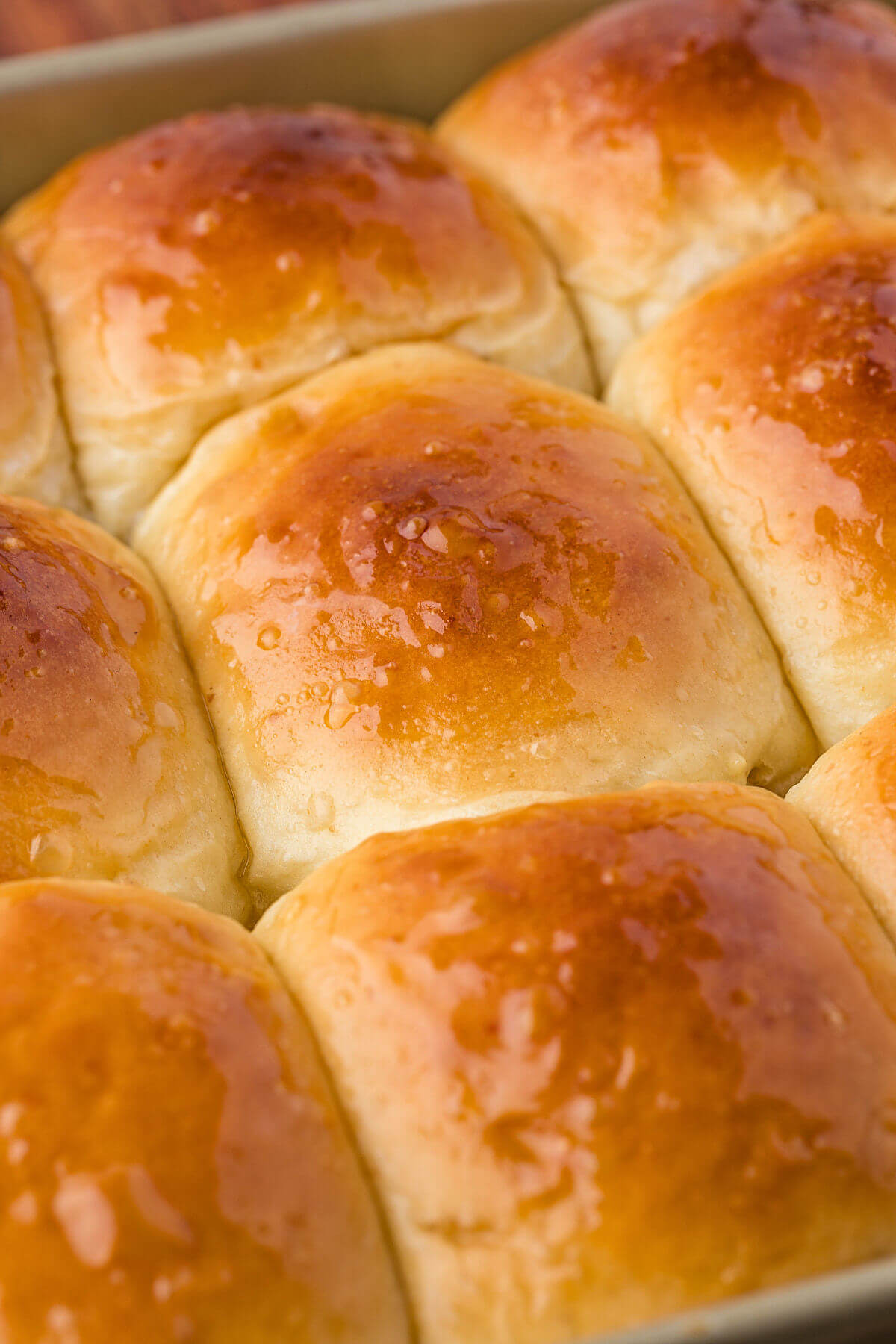
Let cool slightly before serving.
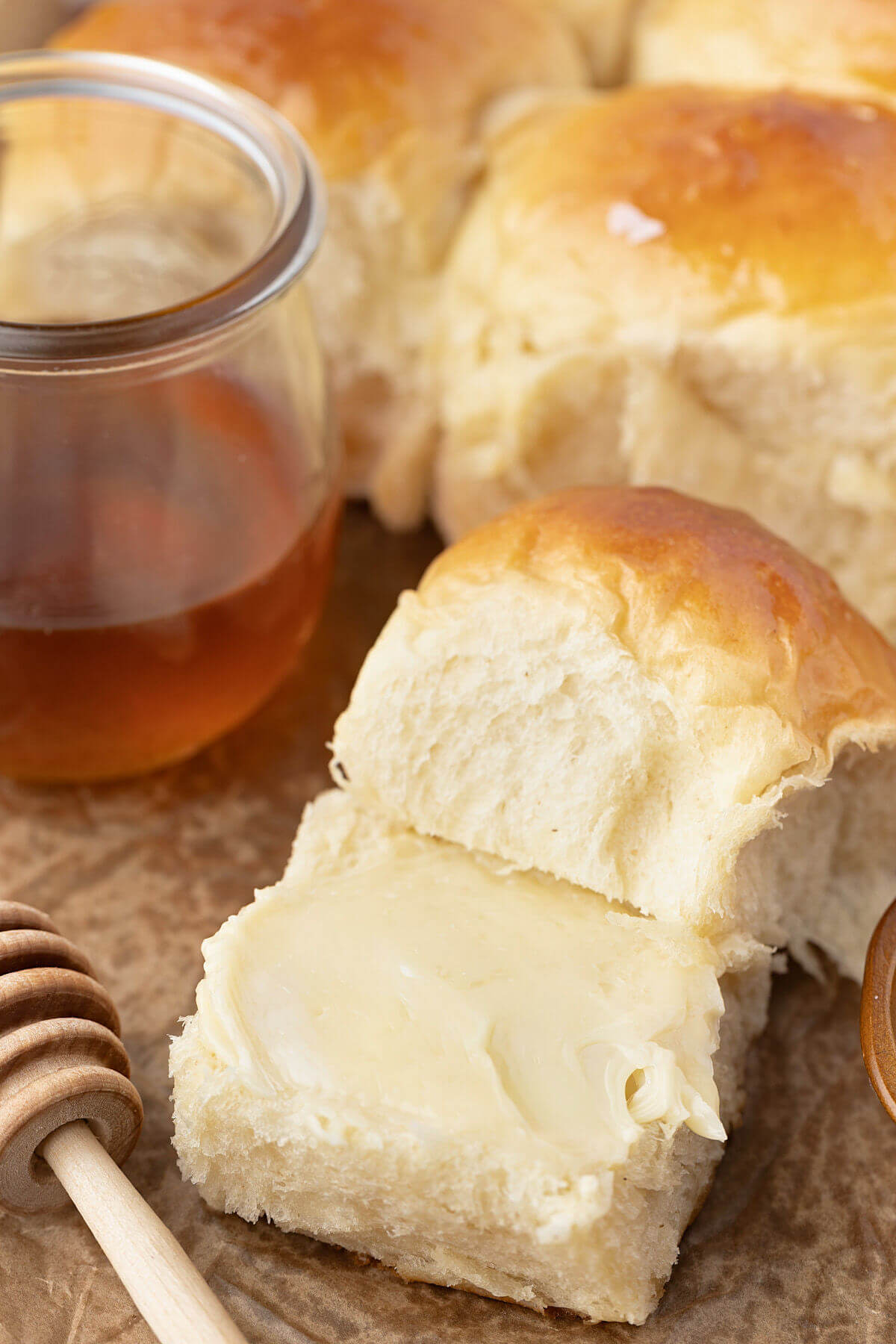
How to Store
Store leftover rolls in an airtight container at room temperature for up to 3 days. Reheat at 300°F for 8–10 minutes to refresh softness.
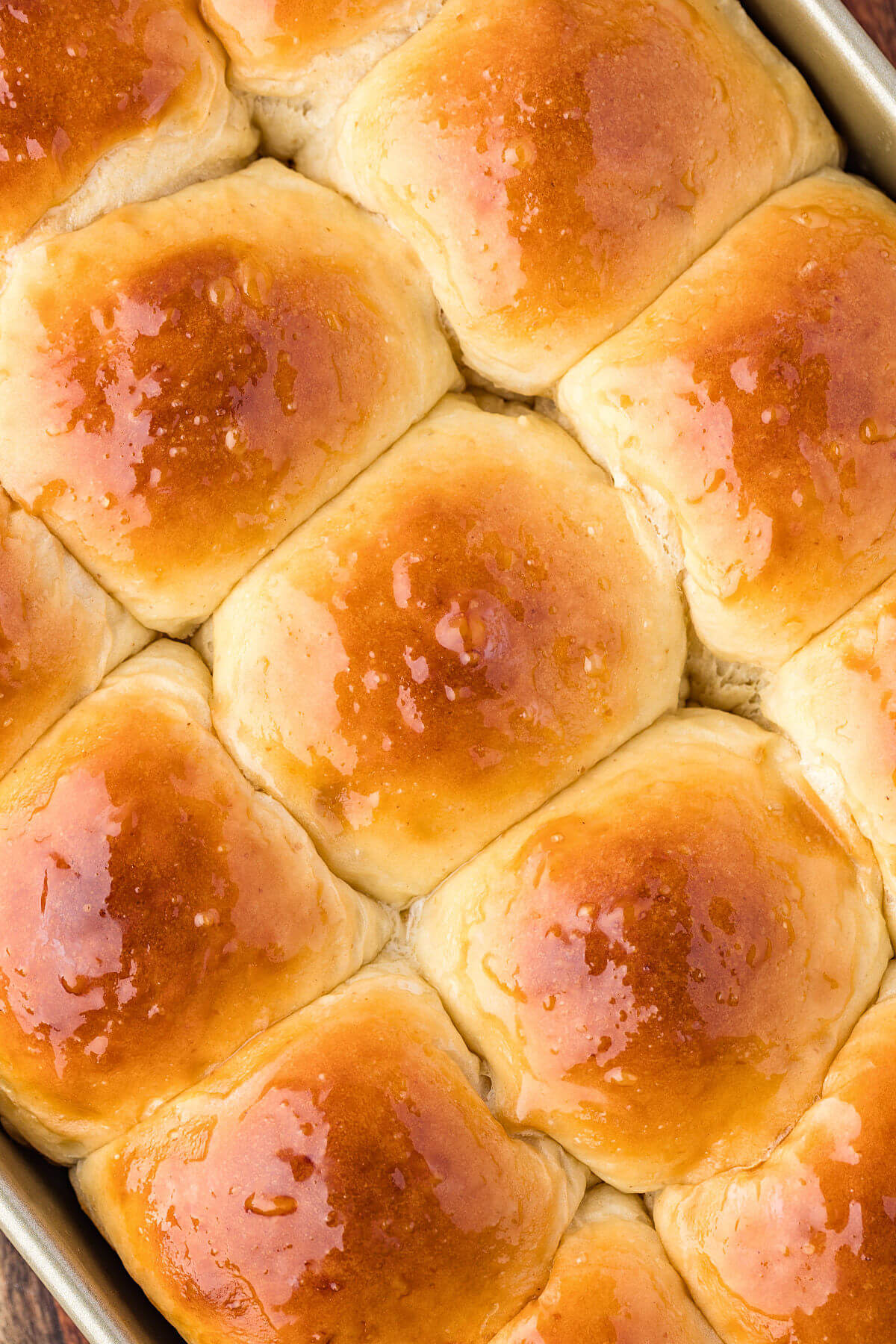
Make-Ahead Instructions
After shaping, cover the pan and refrigerate overnight. The next day, let the rolls sit at room temperature for 1 to 1½ hours until puffy, then bake as directed.
Recipe Tips
- Use recent sourdough discard for best results. Very old discard can affect both flavor and structure.
- Do not add too much flour too early. The dough will look sticky after adding butter—this is normal. Let it fully knead before making adjustments.
- Start with less flour if using higher-protein flour (such as Costco organic or bread flour), as it absorbs more liquid.
- The dough should feel soft and slightly tacky, not dry. This is key for a fluffy, tender roll.
- Smooth, tight shaping will give you the best final appearance.
- Rotate the pan during baking for even browning.
- If the tops brown too quickly, loosely tent with foil.
Serving Ideas
Serve with easy roast chicken, orange-glazed turkey, or honey-glazed turkey breast. Or, use these sourdough Hawaiian rolls to make cheeseburger sliders, marry me chicken sliders, or sloppy joe sliders.
Recipe FAQs
Yes. Bloom it in the warm milk and pineapple juice with a pinch of sugar for 5–10 minutes before mixing.
This recipe was tested with canned pineapple juice (such as Dole). Fresh pineapple juice has not been fully tested and may affect the dough due to natural enzymes.
This is normal, especially after adding butter. Let it fully knead before adding any extra flour.
More Sourdough Discard Recipes
- Sourdough Cornbread Muffins
- Sourdough Discard Cinnamon Roll Focaccia
- Sourdough Discard Focaccia Pizza
- Sourdough Irish Soda Bread
If you make this recipe and enjoy it, please leave a comment with a 5-star recipe rating and let me know! Thank you so much!
Sourdough Discard Hawaiian Rolls
Equipment
- Stand Mixer (5 quart with dough hook)
- Kitchen scale optional, but recommended
Ingredients
For Rolls
- 3/4 cup pineapple juice, 180g from one 6 oz can, such as Dole), slightly warmed
- 3/4 cup whole milk, 180g, slightly warmed
- 1 large egg
- 1/4 cup honey, 85g
- 1/2 cup sourdough discard, 120g, (recent discard works best; if very liquidy, you may need a bit more flour)
- 4 ½ to 5 cups all-purpose flour , 540–600g (start with less and add as needed)
- 2 ¼ teaspoons instant yeast, 7g
- 1 ½ teaspoons salt
- 6 tablespoons unsalted butter, 85g, softened
For Egg Wash
- 1 egg
- 1 tablespoon milk
Instructions
- In the bowl of a stand mixer, whisk together the pineapple juice, milk, honey, egg, and sourdough discard until smooth.
- Add 4 ½ cups (540g) flour, yeast, and salt. Mix on low speed until a shaggy dough forms. It will look rough and slightly sticky at this stage.
- Add the softened butter one tablespoon at a time, mixing on medium-low speed. The dough may look like it’s falling apart or not coming together at first. This is normal—keep mixing and let the dough absorb the butter.
- Continue kneading for 8–10 minutes. The dough will go through a sticky, messy phase before becoming smooth and elastic. Avoid adding extra flour too early, even if it looks too soft.
- The dough should be soft and slightly tacky and mostly pulling away from the sides of the bowl.
- To check readiness, stretch a small piece of dough. It should stretch thin enough to let light through without tearing immediately.
- Only if the dough is still very loose after kneading, add flour 1 tablespoon at a time.
- Transfer the dough to a lightly greased bowl, cover, and let rise for 60–90 minutes, or until doubled in size.
- Turn the dough out onto a lightly floured surface and divide into 15 equal portions (about 65–70g each). Shape into smooth balls, keeping the tops tight.
- Arrange in a greased 9×13-inch pan. Cover and let rise for 45–75 minutes, until puffy and touching.
- Preheat oven to 350°F.
- Whisk together the egg and milk, then gently brush over the tops.
- Bake for 18–22 minutes, rotating halfway through, until golden brown and the center reaches 190°F.
- Let cool slightly before serving.
Notes
- Use recent sourdough discard for best results. Very old discard can affect both flavor and structure.
- Do not add too much flour too early. The dough will look sticky after adding butter—this is normal. Let it fully knead before making adjustments.
- Start with less flour if using higher-protein flour (such as Costco organic or bread flour), as it absorbs more liquid.
- The dough should feel soft and slightly tacky, not dry. This is key for a fluffy, tender roll.
- Smooth, tight shaping will give you the best final appearance.
- Rotate the pan during baking for even browning.
- If the tops brown too quickly, loosely tent with foil.
- To use active dry yeast instead of instant yeast, bloom it in the warm milk and pineapple juice with a pinch of sugar for 5–10 minutes before mixing.
- This recipe was tested with canned pineapple juice (such as Dole). Fresh pineapple juice has not been fully tested and may affect the dough due to natural enzymes.
Nutrition
Nutrition information is automatically calculated, so should only be used as an approximation.






These are the perfect rolls for holidays, or anytime you want a slightly sweet homemade dinner roll!