This post may contain affiliate links. Please read our disclosure policy.
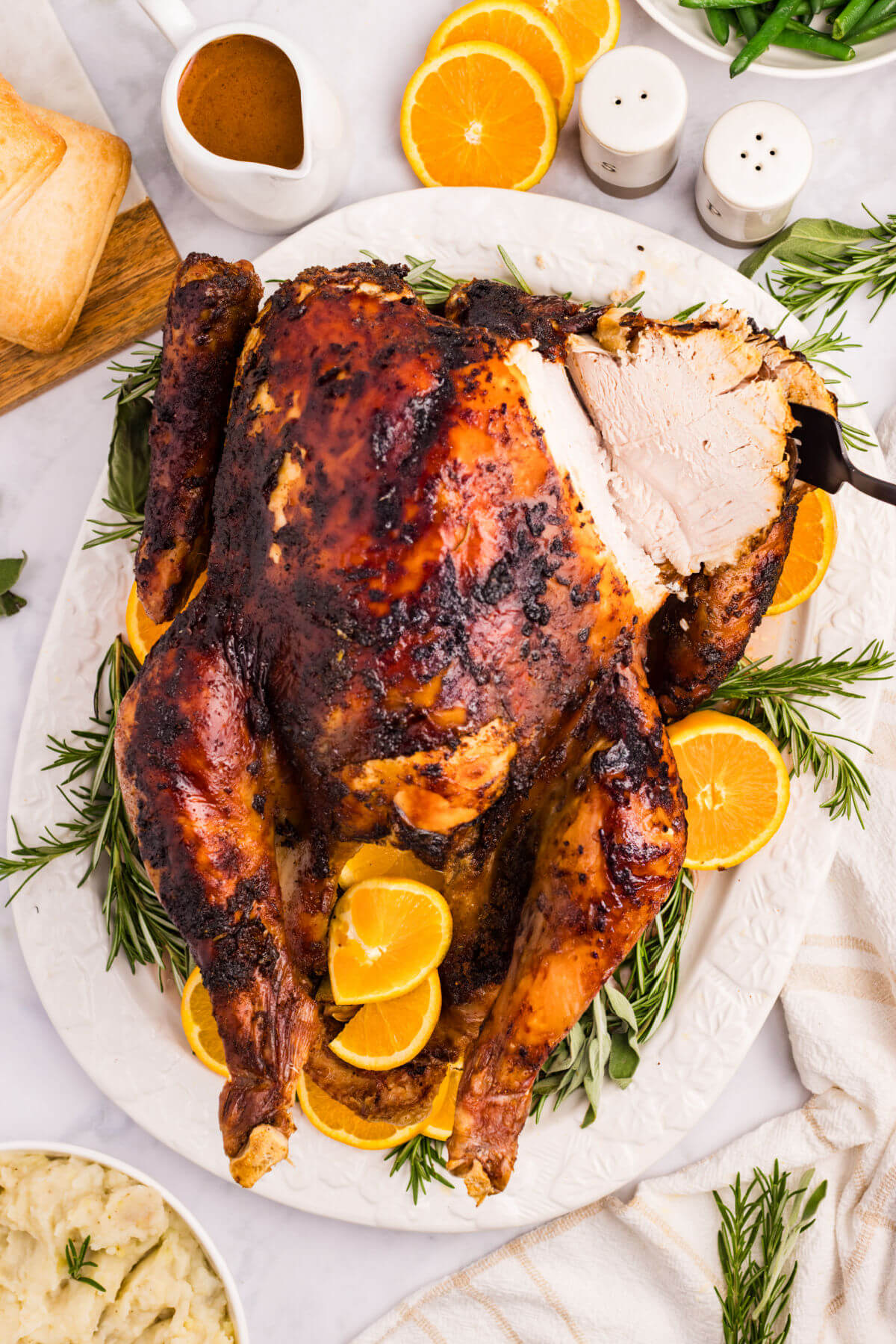
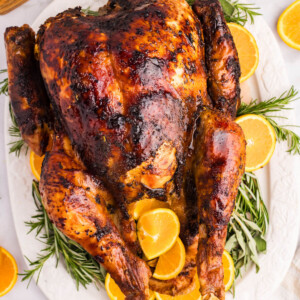
Orange glazed turkey with gravy is the kind of showstopper that makes your holiday table shine. The citrusy sweetness of the glaze balances beautifully with savory herbs and butter, giving you a whole bird that’s juicy, flavorful, and absolutely gorgeous to serve.
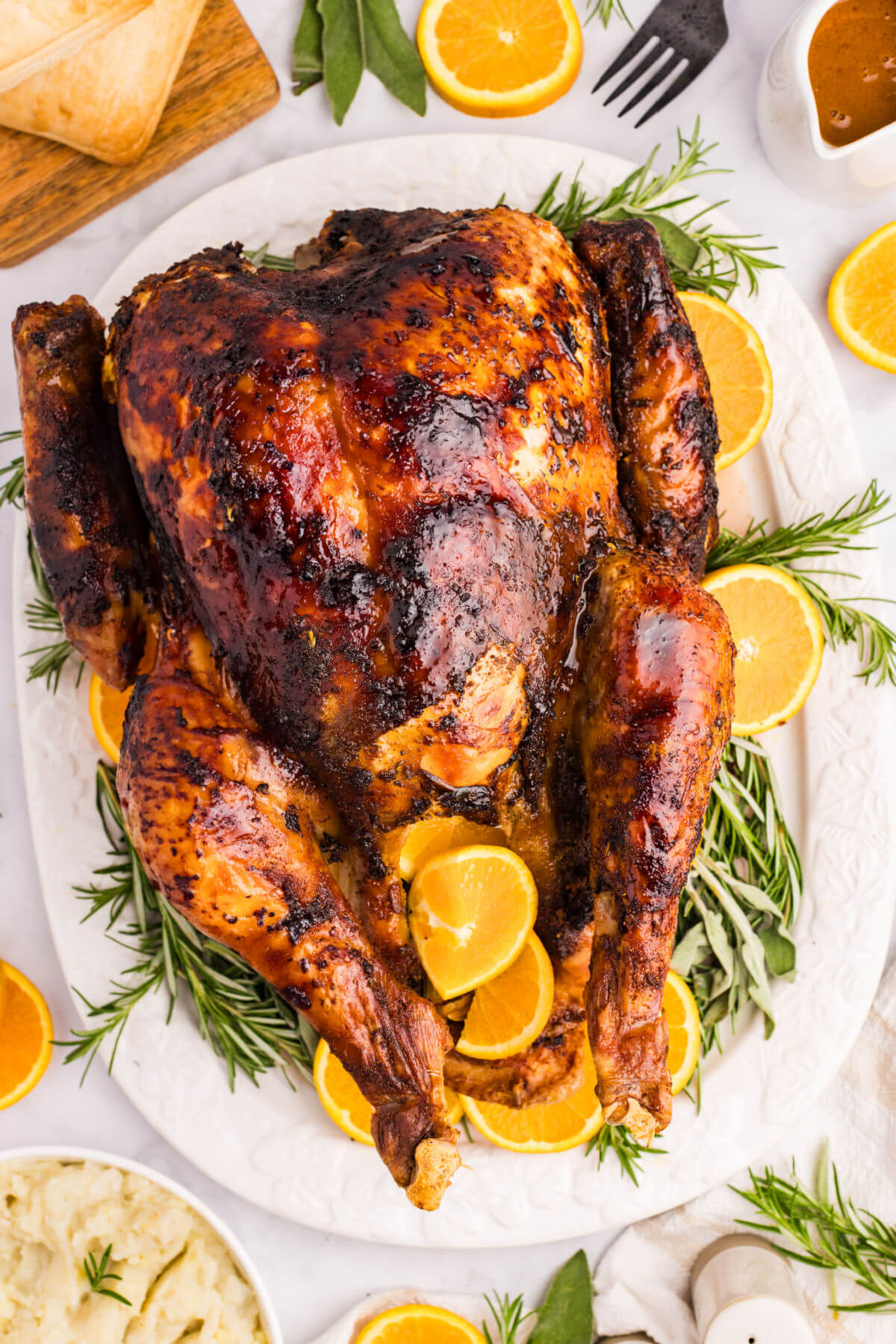
If you’re after the perfect Thanksgiving turkey, this orange glazed turkey recipe is a delicious place to start.
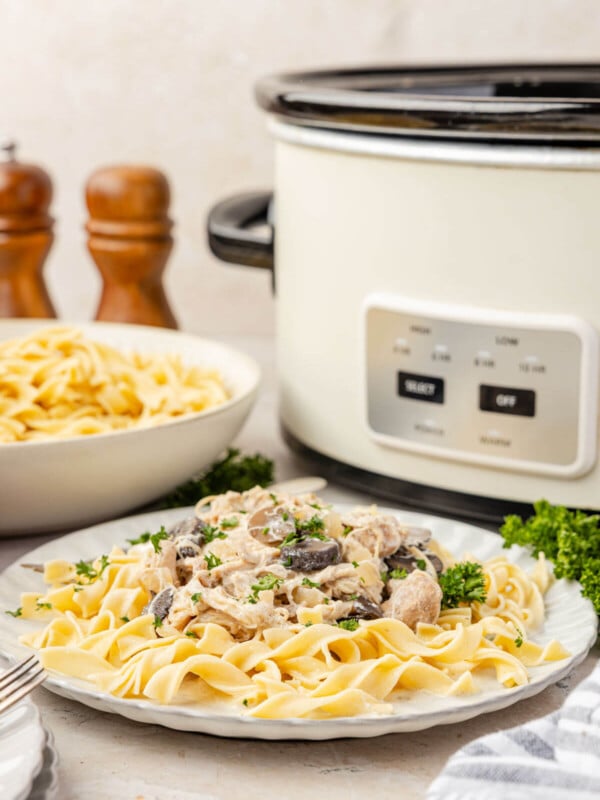
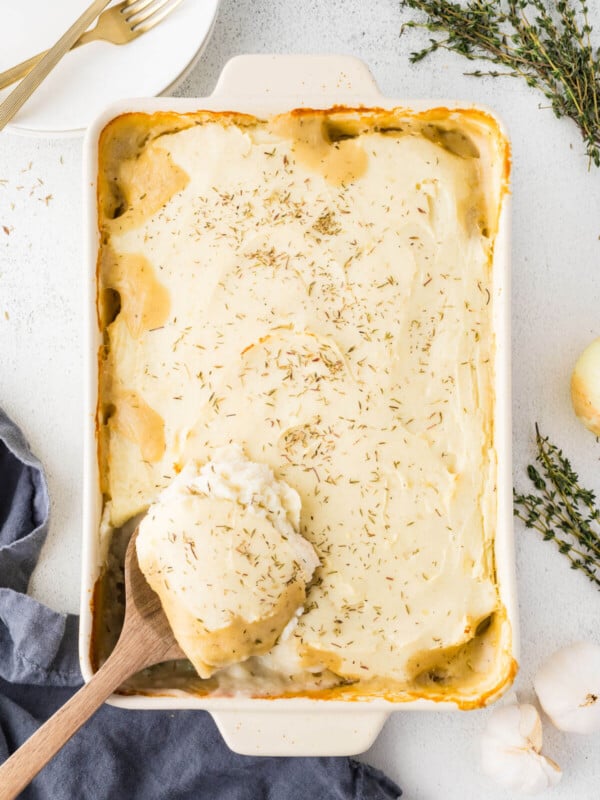
Of course, the joy of roasting a big turkey goes well beyond having it as the centerpiece of your meal. You’ll want to pair it with sides like sweet potato casserole, cranberry sauce, mashed potato casserole, and green bean casserole. (And don’t forget the rolls: sourdough discard rolls, oatmeal dinner rolls, or my mom’s recipe for easy yeast rolls.)
If you have leftovers, they can be easily transformed into a hearty turkey pot pie or a flavorful turkey salad,
Why You’ll Love This Orange Glazed Turkey Recipe
- Sweet and savory glaze: The orange marmalade and herbs create a flavorful coating that’s sticky, shiny, and delicious.
- Juicy, tender meat: Butter and broth keep the turkey moist from the inside out.
- Holiday centerpiece: A beautiful, golden-brown bird for the Thanksgiving holiday season that looks as amazing as it tastes.
Equipment
Ingredients
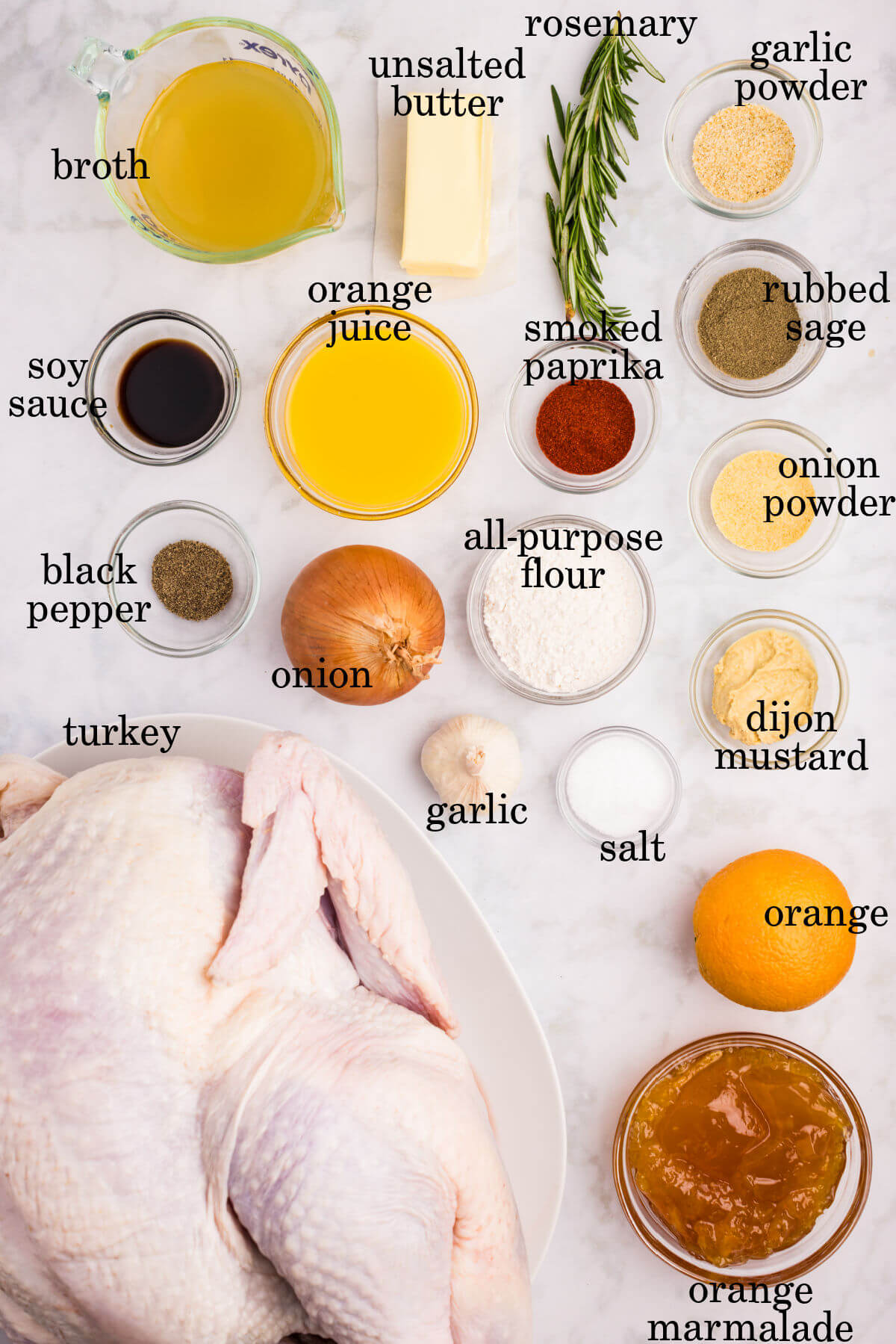
Find the full list of ingredients, amounts, and instructions in the recipe card at the bottom of this post. Here are a few of the key items you’ll need:
- Whole bird: A fresh or thawed turkey makes the base for this recipe.
- Unsalted butter: Helps keep the meat tender and adds rich flavor under the skin.
- Fresh rosemary: Infuses both the cavity and glaze with aromatic depth.
- Orange marmalade: Brings natural sweetness and shine to the glaze.
- Dijon mustard: Balances the sweetness with a bit of tang.
- Chicken or turkey broth: Keeps the turkey moist while roasting and forms the base for the gravy.
How to Make Orange Glazed Turkey
Here are the step-by-step instructions for making the best orange glazed turkey.
Step 1: Preheat oven to 325°F. Remove giblets and neck from the turkey cavity; pat the bird dry with paper towels.
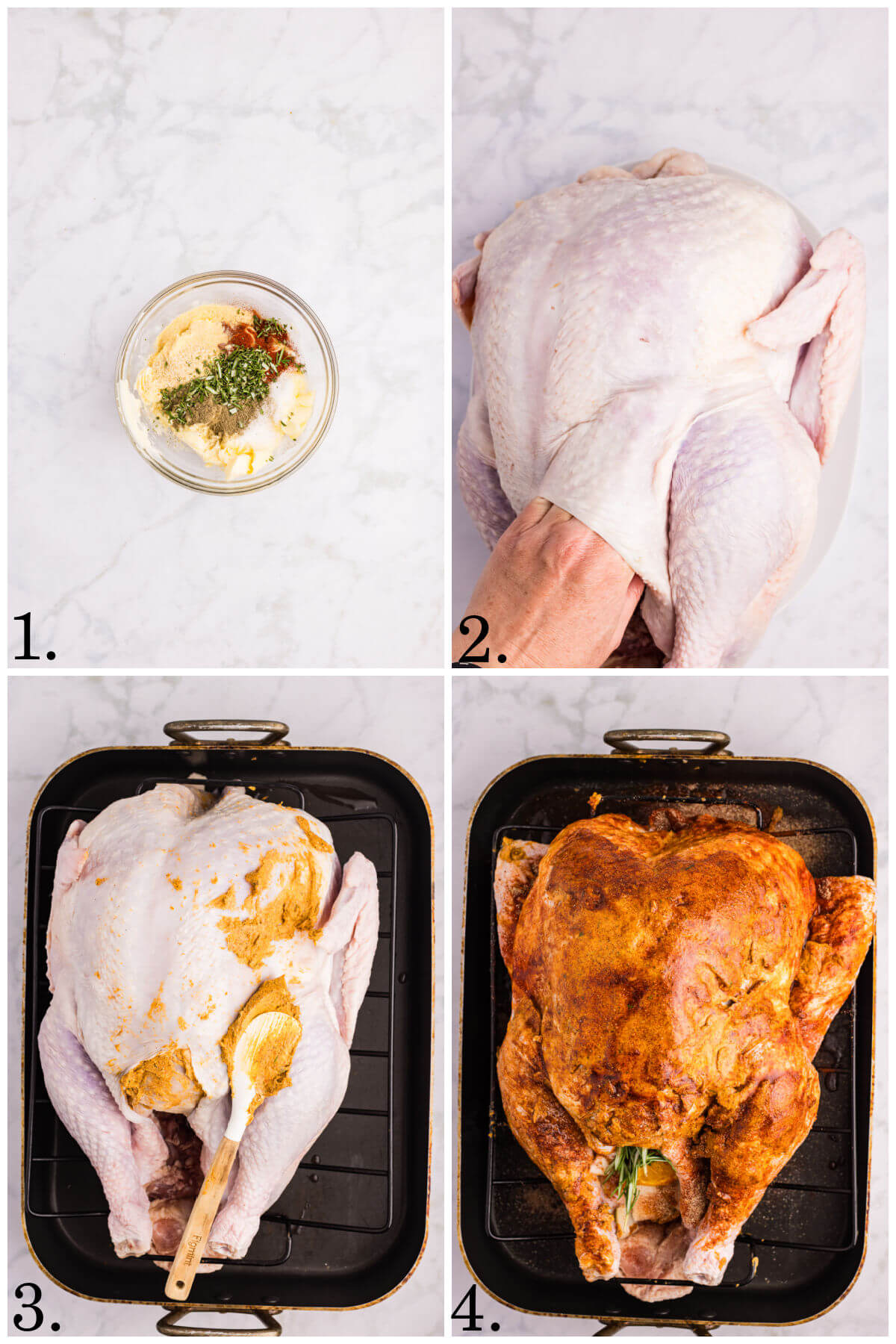
Step 2: In a small bowl, mix the softened butter with garlic powder, onion powder, salt, pepper, paprika, rubbed sage, and chopped rosemary (Photo 1).
Step 3: Gently loosen the skin over the breast side and rub some of the seasoned butter under the skin (Photo 2). Slather the remaining butter mixture all over the outside of the turkey (Photo 3).
Step 4: Add the onion quarters, orange halves, and rosemary sprigs to the cavity of the turkey (Photo 4).
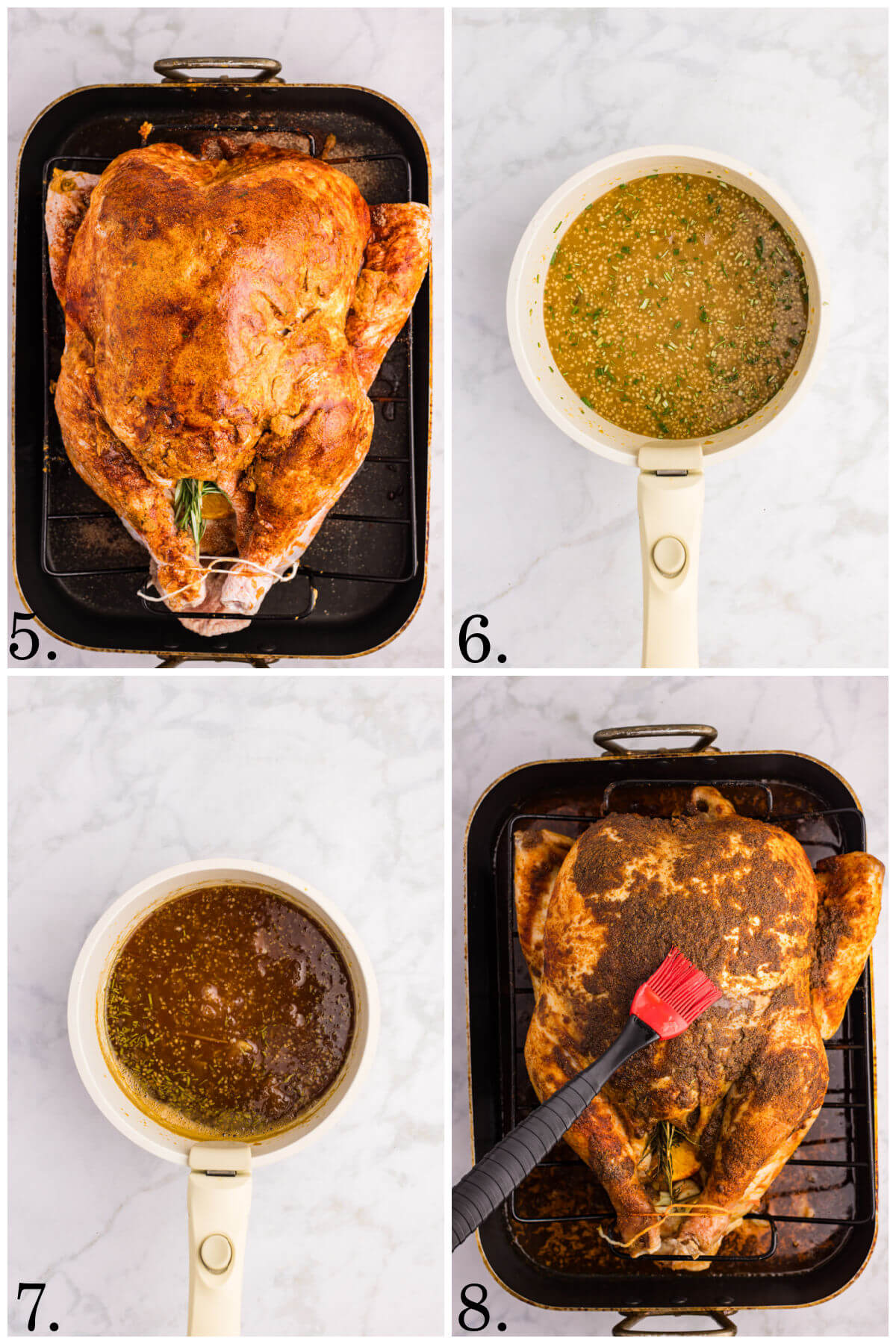
Step 5: Tie the legs together with kitchen twine and tuck the wing tips under to prevent the tips from overcooking (Photo 5).
Step 6: Transfer the turkey onto a rack in a large roasting pan, then pour the broth into the bottom of the pan.
Step 7: Roast the turkey for about 14 minutes per pound, or for about 3 hours for a 12-pound turkey or 4.5 hours for a 20-pound turkey, until an instant-read thermometer inserted in the thickest part of the thigh reads 165°F.
Step 8: While the turkey roasts, combine the marmalade, orange juice, Dijon mustard, garlic, soy sauce, and rosemary in a small saucepan (Photos 6 and 7).
Step 9: Simmer over medium-low heat for 5–7 minutes, until slightly thickened. Set aside.
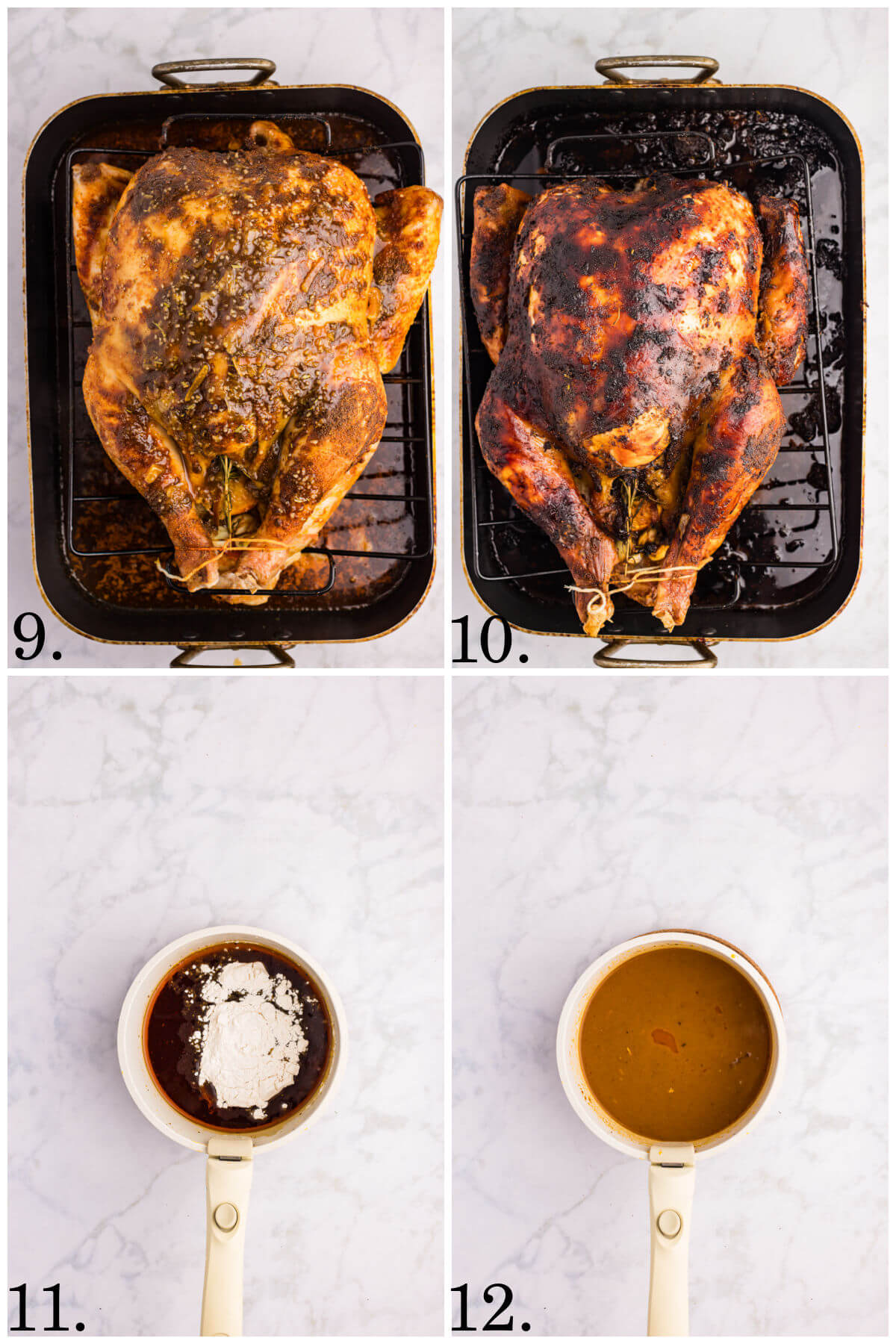
Step 10: During the last hour of roasting (about when the turkey hits an internal temperature of 130 degrees F), begin brushing the turkey with the orange glaze every 10–15 minutes (Photos 8 and 9).
Step 11: Keep a close eye during this stage to prevent burning due to the sugars in the glaze.
Step 12: Once the turkey reaches 165°F, remove it from the oven and tent with foil. Allow the roasted turkey to sit and rest for at least 30 minutes before carving to allow pan juices to redistribute (Photo 10).
How To Make the Gravy
Step 1: Once the turkey is out of the oven and resting, pour the drippings into a bowl or a fat separator (if you have one). Let the fat rise to the top and skim off most of it, leaving about 2 tablespoons of fat with the drippings.
Step 2: To a medium saucepan, add the broth, flour, and the drippings (Photo 11). Set over medium heat and stir to combine so the flour is fully incorporated.
Step 3: Bring to a boil and allow to thicken (Photo 12). Test the taste and season with salt and pepper as necessary.
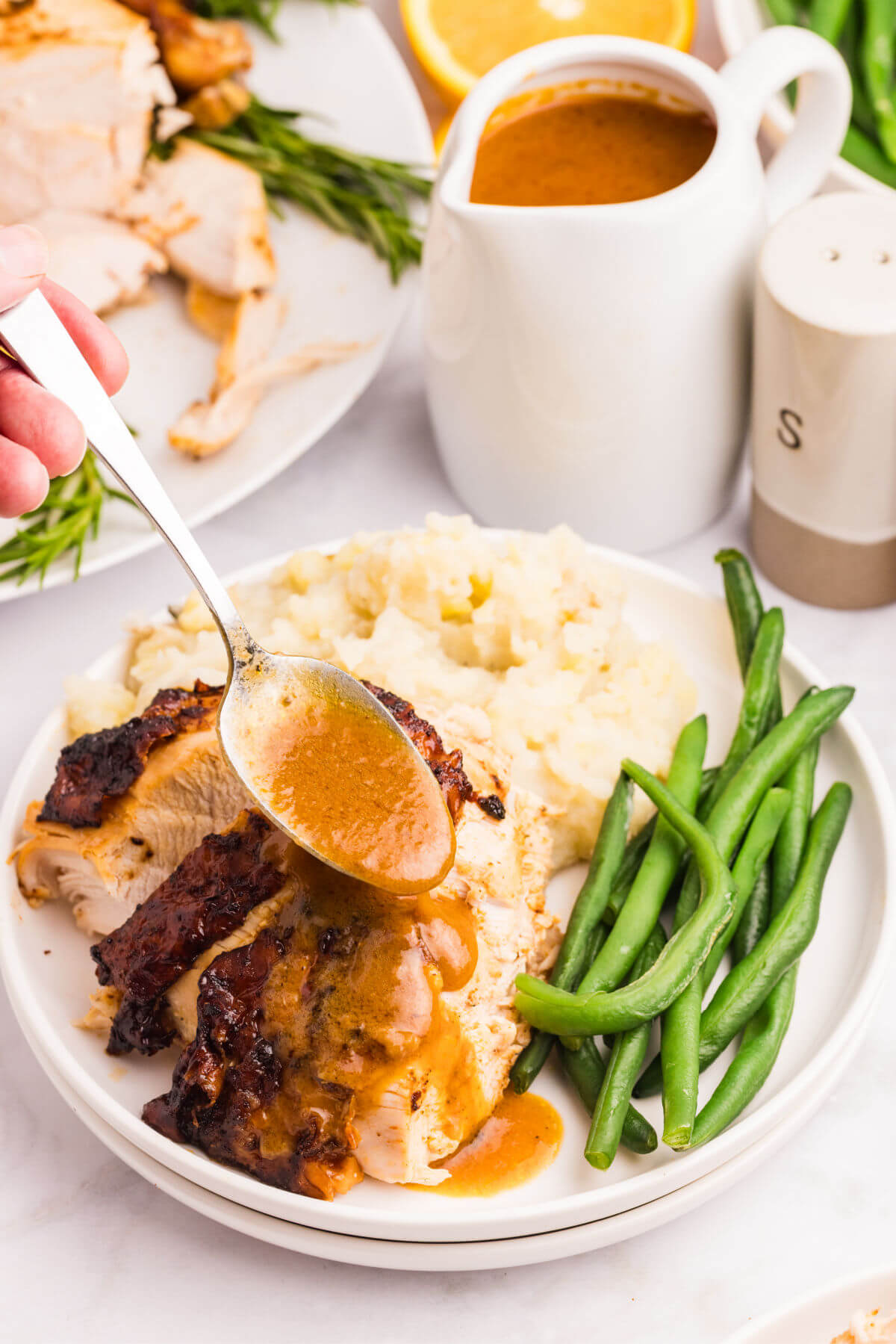
Step 4: Once thickened, remove from the heat and transfer to a gravy boat. Serve over sliced orange glazed turkey and homemade mashed potatoes.
How to Store
Refrigerator storage: Store the cooled leftover turkey in an airtight container or tightly wrap and cover turkey in some plastic wrap and foil in the refrigerator for up to 4 days. Store the cooled gravy in a sealed container in the refrigerator also for up to 4 days.
Freezer storage: To freeze the turkey meat, allow the turkey to cool completely. Remove the meat from the bone and store the meat in an airtight freezer-safe container or bag and freeze it for up to 3 months.
You can place the carcass in a freezer-safe container or bag and freeze it for up to 3 months. I like using the carcass to make an amazing broth. Here’s how to make broth in a slow cooker or in an Instant Pot!
To freeze the gravy, transfer the cooled gravy to a freezer-safe container or ice cube trays (for small, quick-grab portions) and store the gravy in the freezer for up to 3 months.
Reheating Instructions
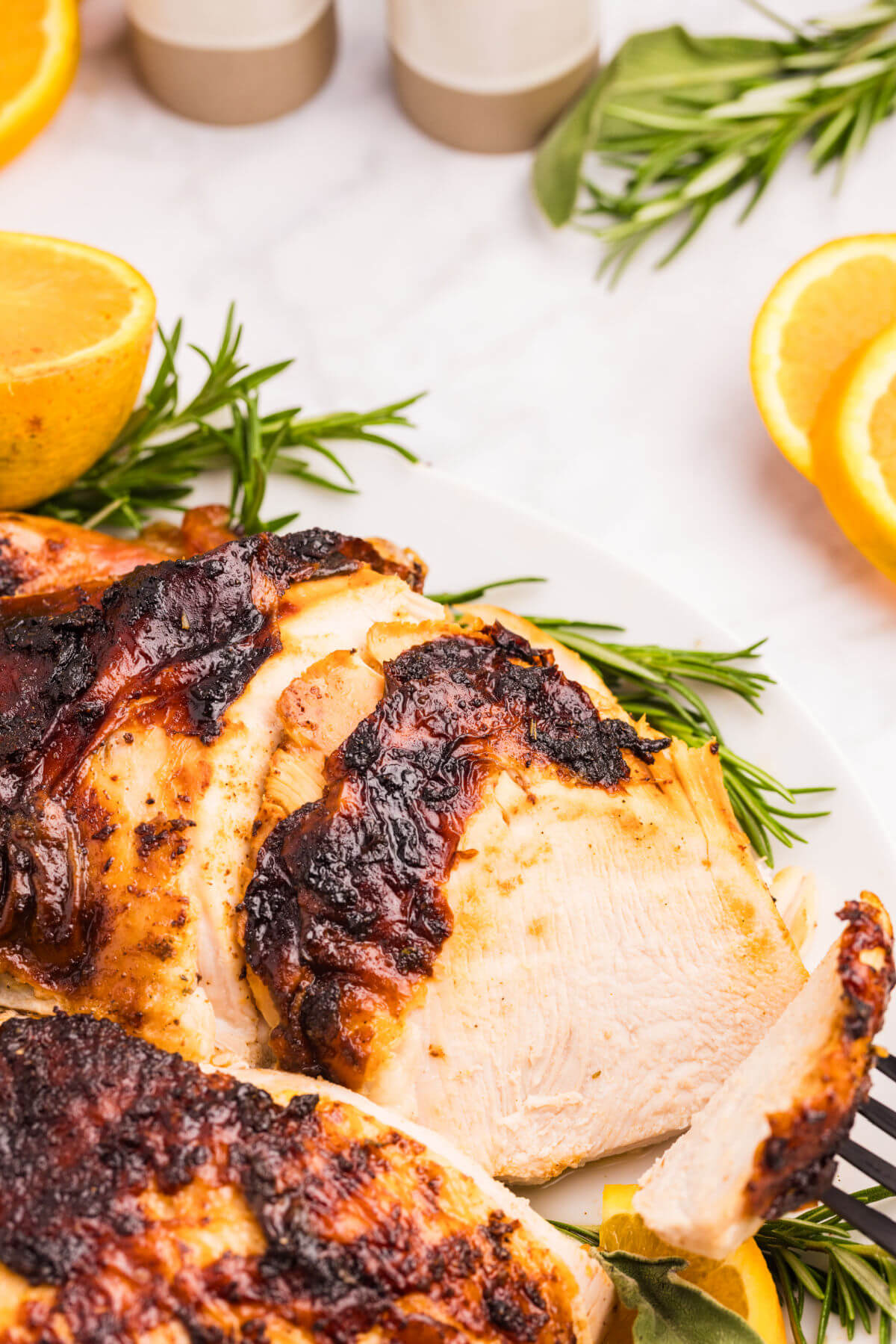
Oven reheating method: Preheat oven to 300 degrees F. Transfer slices of orange glazed turkey into a baking dish with a splash of chicken broth, water, or even some gravy. Cover with foil or a lid and reheat for 20-30 minutes or until the internal temperature reaches 165 degrees F.
Stovetop reheating method: Add sliced turkey with a splash of broth, water, or gravy to a skillet. Cover and warm over medium-low heat until heated all the way through, between 5-10 minutes depending on the serving size.
Microwave reheating method: Place the sliced turkey on a microwave-safe dish, add a splash of broth, water, or gravy. Cover with a microwave-safe lid or a damp paper towel (this prevents the meat from drying out and keeps your microwave clean). Microwave in 30-second intervals until warmed fully, about 90 seconds to 2 minutes depending on the serving size.
To reheat gravy: Reheat the gravy in a saucepan over the stovetop on low heat, whisking while it’s warming.
Tips
- If working with a very cold turkey, it can be hard to get the butter to spread evenly on the outside of the turkey. I recommend removing the turkey from the refrigerator to allow it to warm for about 90 minutes before working on the bird.
- Pat the turkey dry before applying the butter rub to help the skin crisp up in the oven and allow for easier distribution of the butter.
- Start glazing only during the last hour of roasting to avoid burning the sugars in the marmalade.
- Use a meat thermometer to ensure perfect doneness. You want an internal temperature of 165°F (74°C) in the thickest part of the thigh.
- Rest the turkey for at least 30 minutes after roasting to allow juices to redistribute. Resting the turkey keeps the meat moist and flavorful.
- If you want an extra-deep flavor, brine the turkey (wet or dry brine) one day before roasting.
Frequently Asked Questions
Yes! You can season and butter the turkey up to 24 hours in advance. Keep it covered in the refrigerator, then let it sit at room temperature for 1 hour before roasting. The orange glaze can also be made up to 2 days ahead and stored in the fridge.
Apply the glaze during the last 30–45 minutes of roasting. This prevents the sugars in the marmalade from burning and allows the glaze to caramelize beautifully on the skin.
Yes. Apricot preserves or peach jam work as good substitutes, but orange marmalade gives the best balance of sweetness and citrusy bitterness for this glaze.
The turkey is fully cooked when a meat thermometer inserted into the thickest part of the thigh (without touching bone) reads 165°F (74°C). Always rely on a thermometer rather than just cook time.
No roasting rack, no problem. You can place some halved onions, chopped carrots, and celery stalks in the bottom of the roasting pan to lift the turkey up and prevent it from sitting in the drippings.
Yes! The glaze adds a mild sweetness and citrus note, which can make for a delicious and slightly different gravy. Deglaze the pan with broth or white wine, then strain and thicken as usual. If you’d like, balance the sweetness with a splash of soy sauce or a touch of Dijon mustard.
Let the turkey rest for at least 30 minutes, tented loosely with foil. This helps retain juices and makes carving easier.
More Thanksgiving Recipes
- Turkey Salad
- Sourdough Pumpkin Pie
- Turkey Pot Pie With Biscuits
- Green Bean Casserole From Scratch (With Fresh Onions)
- Healthy Sweet Potato Casserole Recipe
If you make this recipe and enjoy it, please leave a 5-star recipe rating and let me know! Thank you so much!
Orange Glazed Turkey
Ingredients
For the Turkey
- 20 lb. whole turkey, thawed
- 1 cup unsalted butter , (2 sticks), softened
- 2 teaspoons garlic powder
- 2 teaspoons onion powder
- 1 tablespoon salt
- 2 teaspoons black pepper
- 2 teaspoons smoked paprika
- 1 tablespoon rubbed sage
- 2 tablespoons fresh rosemary, finely chopped
- 1 onion, quartered
- 1 orange, halved
- 4 sprigs fresh rosemary
- 2 cups low-sodium chicken broth or turkey broth, for roasting pan
For the glaze
- 1 cup orange marmalade
- 1/3 cup orange juice, freshly squeezed or orange juice concentrate
- 1 tablespoon Dijon mustard
- 2 cloves garlic, finely chopped
- 1 tablespoon soy sauce
- 1 teaspoon fresh rosemary, finely chopped
For the gravy
- Drippings from the pan
- 1/4 cup all-purpose flour
- 1 1/2 cups chicken or turkey broth
Instructions
- Preheat oven to 325°F. Remove giblets and neck from the turkey cavity; pat the bird dry with paper towels.
- In a small bowl, mix the softened butter with garlic powder, onion powder, salt, pepper, paprika, rubbed sage, and chopped rosemary.
- Gently loosen the skin over the breast side and rub some of the seasoned butter under the skin. Slather the remaining butter mixture all over the outside of the turkey.
- Add the onion quarters, orange halves, and rosemary sprigs to the cavity of the turkey.
- Tie the legs together with kitchen twine and tuck the wing tips under to prevent the tips from overcooking.
- Transfer the turkey onto a rack in a large roasting pan, then pour the broth into the bottom of the pan.
- Roast the turkey for about 14 minutes per pound, or for about 3 hours for a 12-pound turkey or 4.5 hours for a 20-pound turkey, until an instant-read thermometer inserted in the thickest part of the thigh reads 165°F.
- While the turkey roasts, combine the marmalade, orange juice, Dijon mustard, garlic, soy sauce, and rosemary in a small saucepan.
- Simmer over medium-low heat for 5–7 minutes, until slightly thickened. Set aside.
- Make the Glaze: During the last hour of roasting (about when the turkey hits an internal temperature of 130 degrees F), begin brushing the turkey with the orange glaze every 10–15 minutes.
- Keep a close eye during this stage to prevent burning due to the sugars in the glaze.
- Once the turkey reaches 165°F, remove it from the oven and tent with foil. Allow the roasted turkey to sit and rest for at least 30 minutes before carving to allow pan juices to redistribute.
- Make the Gravy: Once the turkey is out of the oven and resting, pour the drippings into a bowl or a fat separator (if you have one). Let the fat rise to the top and skim off most of it, leaving about 2 tablespoons of fat with the drippings.
- To a saucepan, add the broth, flour, and the drippings. Set over medium heat and stir to combine so the flour is fully incorporated. Bring to a boil and allow to thicken. Test the taste and season with salt and pepper as necessary. Once thickened, remove from the heat and transfer to a gravy boat.
Notes
- If working with a very cold turkey, it can be hard to get the butter to spread evenly on the outside of the turkey. I recommend removing the turkey from the refrigerator to allow it to warm for about 90 minutes before working on the bird.
- Pat the turkey dry before applying the butter rub to help the skin crisp up in the oven and allow for easier distribution of the butter.
- Start glazing only during the last hour of roasting to avoid burning the sugars in the marmalade.
- Use a meat thermometer to ensure perfect doneness. You want an internal temperature of 165°F (74°C) in the thickest part of the thigh.
- Rest the turkey for at least 30 minutes after roasting to allow juices to redistribute. Resting the turkey keeps the meat moist and flavorful.
- If you want an extra-deep flavor, brine the turkey (wet or dry brine) one day before roasting.
- Apricot preserves or peach jam work as good substitutes, but orange marmalade gives the best balance of sweetness and citrusy bitterness for this glaze.
- Store the cooled leftover turkey in an airtight container or tightly wrap the turkey in some plastic wrap and foil in the refrigerator for 4 days.
- For the gravy, store the cooled gravy in a sealed container in the refrigerator for up to 4 days. Reheat the gravy in a saucepan over the stovetop on low heat, whisking while it’s warmi
Nutrition
Nutrition information is automatically calculated, so should only be used as an approximation.